
The Governor said that welfare measures for poor and vulnerable will not be compromised and all departments will follow clear accountability standards to strengthen people's trust in public institutions.
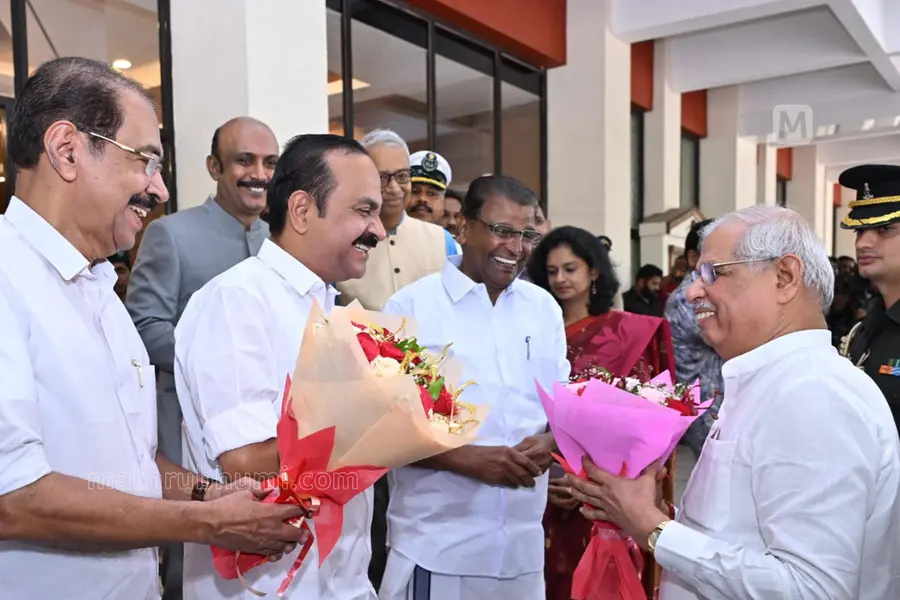
Thiruvananthapuram: Kerala Governor Rajendra Arlekar on Friday unveiled an expansive roadmap for welfare-driven growth, institutional reforms and long-term development in the policy address of the newly elected VD Satheesan-led UDF government.
The policy address, the first by a UDF government in a decade, outlined major initiatives across sectors including welfare, healthcare, education, agriculture, tourism, fisheries, creative industries, infrastructure and governance.
In his address, the Governor said a White Paper would be prepared to give people clarity on the actual financial position of the state, including liabilities and obligations.
Arlekar said welfare measures for poor and vulnerable sections would not be compromised and stressed the importance of clean governance, fiscal discipline and efficient administration.
“Clean governance, fiscal discipline, and efficient administration are essential to restore public trust and accelerate development,” the Governor said.
Welfare and social security
The government announced a major expansion of welfare schemes and social security initiatives.
Key announcements include:
-
Social security pension to be increased to ₹3,000.
-
Free KSRTC travel for women to be implemented.
-
Monthly stipend of ₹1,000 for college-going girls.
-
‘Oommen Chandy Health Insurance Scheme’ to be introduced.
-
Elderly-friendly welfare and healthcare schemes to be implemented.
-
Expansion of mobile Maveli stores across the state.
-
Supplyco outlets and ration shops to be expanded.
-
Special schemes for cooperative societies.
Cinema, culture and creative economy
The government announced plans to position Kerala as an international film-shooting destination through a comprehensive cinema policy.
Major announcements include:
-
Comprehensive cinema policy to be introduced.
-
Development of a ‘Media City and Creative Industries Hub’.
-
Integration of film production, animation, VFX, gaming and digital media sectors.
-
Production incentives and international co-production agreements.
-
Promotion of film tourism initiatives.
-
International Film Festival of Kerala (IFFK) to be expanded to more cities.
-
Digital art museums to be established.
-
Pension and health insurance support for cultural workers above 60 years.
Anti-drug measures and law enforcement
The Governor announced a strict anti-drug policy with major reforms in enforcement systems.
Key measures include:
-
“Zero tolerance” policy towards drugs.
-
Comprehensive reforms in the Excise Department.
-
Measures to dismantle drug networks.
-
School and college campuses to be made drug-free.
-
Properties of those involved in drug-related cases to be confiscated.
Agriculture and rural economy
The policy address focused on improving farm income and modernising agriculture.
Announcements include:
-
Support for more than 10,000 MSMEs to achieve global competitiveness.
-
Fair prices and better storage systems for paddy, coconut and rubber.
-
Relief measures for farmers affected by wildlife attacks.
-
Formation of a ‘Women Farmers Consortium’.
-
Digital crop surveys and soil-testing policy.
-
Establishment of spice parks.
Fisheries and coastal development
The government unveiled ‘Mission Samudra’ for the comprehensive development of coastal regions.
Key announcements include:
-
Modernisation of fishing vessels.
-
Expansion of scientific aquaculture methods.
-
Enhancement of group insurance and welfare pensions for fishermen.
-
Expansion of savings-cum-relief schemes.
-
Special assistance for fishermen involved in accidents at sea.
Tourism and pilgrimage projects
The government announced initiatives to strengthen tourism infrastructure.
Key announcement:
-
Launch of the ‘Malabar Temple Pilgrimage Project’ connecting temples through tourism circuits.
Education and skill development
The policy address placed strong emphasis on modernising Kerala’s education sector and reducing academic migration.
Major announcements include:
-
3 days of menstrual leave every month for girl students as part of a landmark initiative aimed at ensuring dignity, inclusion and gender-sensitive education.
-
Global-standard higher education institutions to be developed in Kerala.
-
Government schools and colleges to be digitally modernised.
-
Greater focus on skill development and research.
-
Increase in Plus One seats across districts.
-
Formation of an ‘Academic Syndicate’.
-
Launch of a statewide apprenticeship exchange platform.
-
Establishment of Jawaharlal Nehru Scientific Centres.
-
Introduction of the ‘Semester in Kerala’ programme for foreign students.
Healthcare sector reforms
The government announced plans to improve public healthcare infrastructure and services.
Key initiatives include:
-
Strengthening infrastructure and manpower in medical colleges, district hospitals and taluk hospitals.
-
Modernisation of Primary Health Centres (PHCs) through digital systems and specialist services.
-
Greater focus on preventive healthcare, palliative care and geriatric care.
-
Special programmes for lifestyle diseases, cancer treatment, maternal and child healthcare.
-
Efforts to position Kerala as a global hub for affordable and world-class healthcare services.
SC/ST welfare and tribal rights
The policy address announced several initiatives for the upliftment of the Scheduled Castes and the Scheduled Tribes.
Major announcements include:
-
Modernisation of ITIs and training centres with advanced labs and smart classrooms.
-
Entrepreneurship and skill-development programmes for SC youth and women.
-
Strict implementation of the Forest Rights Act.
-
Action against land encroachments in tribal areas through a time-bound mission.
-
Resolution of long-pending land title issues.
-
Clarification of ambiguities in Adivasi land laws.
-
Renovation of houses under the LIFE Mission.
-
Expansion of higher education benefits for SC/ST students.
-
Special PSC and UPSC coaching programmes.
-
Loan assistance schemes for SC/ST entrepreneurs.
Governance and administrative reforms
The government announced several governance and administrative reforms.
Key announcements include:
-
IT Department renamed as “IT, Future Technology and Startup Department”.
-
Revenue Department to be fully digitised.
-
Waqf system to be modernised.
-
Forest boundaries to be scientifically demarcated.
-
Special portal for migrant worker registration.
-
Bypasses across the state to be widened into four-lane roads.
The Governor said the government’s broader vision was to ensure balanced growth, welfare protection and institutional accountability while rebuilding public trust in governance.
Published: 29 May 2026, 09:54 am IST
Related Topics
Disclaimer: Kindly avoid objectionable, derogatory, unlawful and lewd comments, while responding to reports. Such comments are punishable under cyber laws. Please keep away from personal attacks. The opinions expressed here are the personal opinions of readers and not that of Mathrubhumi.
