
Kerala Transport Minister C P John announced that Central laws apply to vehicle alterations, completely ruling out excessively loud and bright modifications.
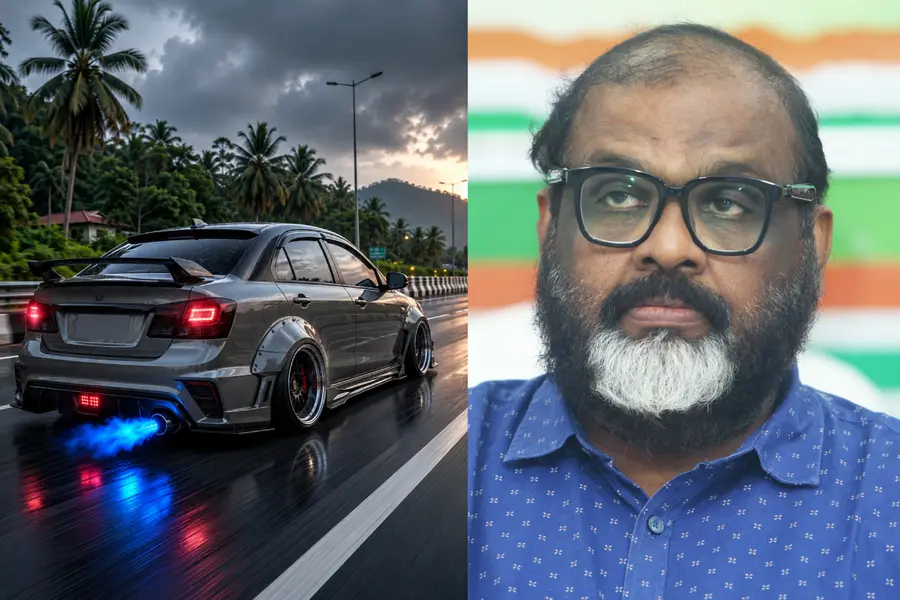
Thiruvananthapuram: Kerala Transport Minister C P John clarified in the Legislative Assembly that Central Government guidelines will strictly govern vehicle modifications across the state. While addressing the House, the Minister firmly stated that altercations producing excessive noise or blinding illumination will not be tolerated. He added, however, that discussions are actively underway regarding specific aesthetic alterations, such as vehicle colour codes.
The Assembly debate on youth demands
The Minister's statement came as a direct reply to a query raised by MLA Saji Cheriyan during the Assembly session. Cheriyan had questioned whether the state government intended to accommodate the modifications desired by the youth, if existing laws permitted it, and which specific alterations the government was planning to greenlight.
"Central guidelines are strictly applicable when it comes to permitting vehicle modifications. However, non-hazardous modifications will be allowed," Transport Minister C P John stated in his response. "Modifications that emit excessive sound or light cannot be accepted under any circumstances. Having said that, detailed discussions are currently taking place regarding color codes, non-dangerous fittings and alterations that do not protrude dangerously outside the vehicle body," he added.
The political context and pre-election promises
The debate surrounding vehicle customisation in Kerala has drawn huge political attention recently. Chief Minister V D Satheesan had previously gained viral traction on social media right before the Assembly elections through a video reel, where he hinted that a UDF administration would look into approving vehicle modifications.
When questioned about his stance immediately after taking office, Satheesan responded with a confident "everything promised will be delivered"—a moment that triggered wide social media engagement, earning him the internet moniker 'Pookie CM' among state youth.
What the Transport Commissioner’s report permits
Following the political momentum, the Transport Commissioner submitted a detailed report outlines a framework for vehicle upgrades. The report categorises modifications into two streams: 18 types of alterations that can be done without prior approval, and a separate set requiring special authorisation.
Interestingly, many of the listed "approval-free" modifications are already standard market practices. These include installing additional audio speakers, Android infotainment consoles, floor mats and steering wheel wraps.
On the other hand, major transformations require strict regulatory clearance. These include changing the primary vehicle colour, installing retrofitted LPG or CNG kits, altering a vehicle to be disability-friendly, converting internal combustion engines to electric powertrains or replacing crucial components like the engine block and chassis frame.
Published: 30 Jun 2026, 08:10 pm IST
Disclaimer: Kindly avoid objectionable, derogatory, unlawful and lewd comments, while responding to reports. Such comments are punishable under cyber laws. Please keep away from personal attacks. The opinions expressed here are the personal opinions of readers and not that of Mathrubhumi.
