
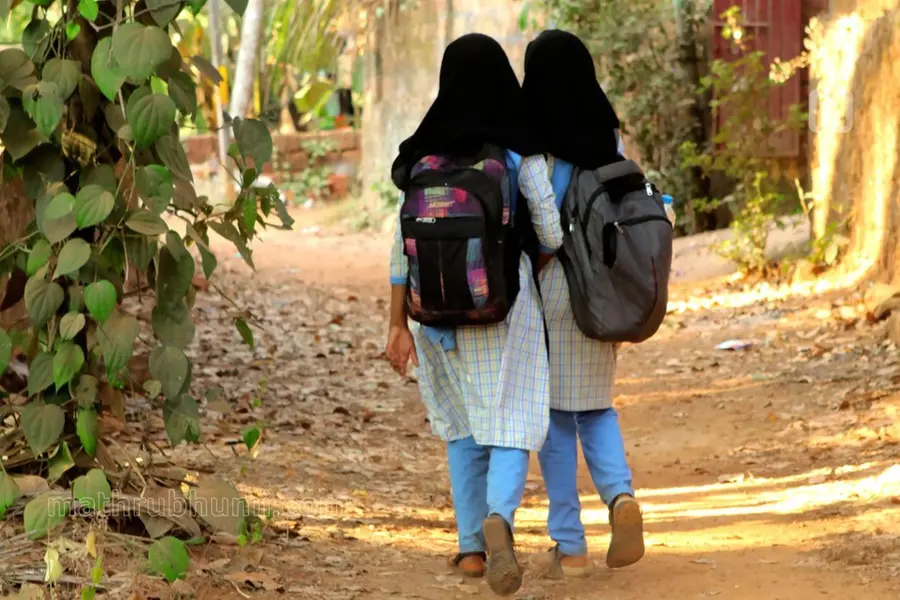
Thiruvananthapuram: Authorities have clarified that the directive from the National Commission for Protection of Child Rights (NCPCR) to dissolve madrassa boards will not affect Kerala. There are no madrassa boards in the state that operate with government funding, and no madrassa teachers receive government salaries. Therefore, the NCPCR’s directive will not apply to Kerala. The directive specifically targets madrassas that function under government-aided madrassa education boards, which do not exist in Kerala, according to relevant sources.
The only existing support for madrassa teachers in Kerala is a welfare fund, which is funded by monthly contributions from the teachers themselves and is used to provide pensions. The government does not pay salaries to madrassa teachers. Both the madrassa management and teachers are members of this welfare fund, and both are required to contribute financially. The funds are held in the state treasury, but even the interest earned from these funds is not accepted, as it is considered religiously inappropriate.
When the welfare fund was established, the government provided a corpus fund. Apart from this, no other financial support comes from the government. The NCPCR's decision has caused some confusion. Madrassas in Kerala function under local mosque committees (mahall committees). There are concerns that rumours might arise, suggesting that these madrassas could be shut down. As a result, the government may take necessary precautions to address the situation.
Kerala stands apart from North Indian states on this matter as well. In Kerala, children receive formal education as part of the public education system. However, this is not the case in many North Indian states like Uttar Pradesh, Maharashtra, Bihar, and Jharkhand, where some regions have fewer opportunities for public education, leading them to rely on madrassas for education.
In Uttar Pradesh alone, some madrassas have been operating for over 120 years, with around 1.7 million students currently enrolled. Of these, 16,500 madrassas have government recognition, and around 500 of them receive government funding. Similar madrassas operate in other North Indian states, and some reports suggest that students of other faiths also attend these institutions. These are the types of madrassas that will be affected by the NCPCR's decision.
Published: 13 Oct 2024, 12:39 pm IST
Related Topics
Disclaimer: Kindly avoid objectionable, derogatory, unlawful and lewd comments, while responding to reports. Such comments are punishable under cyber laws. Please keep away from personal attacks. The opinions expressed here are the personal opinions of readers and not that of Mathrubhumi.
