
This season, consumers are better able to distinguish between genuine and fake products, resulting in higher demand for the original Marayoor jaggery.
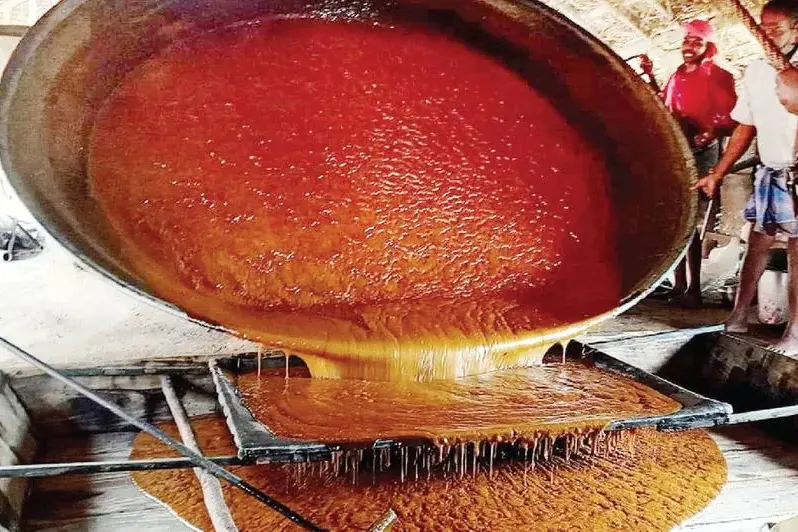
Marayoor: Renowned for its unparalleled sweetness and exceptional quality, Marayoor jaggery earned a Geographical Indication (GI) tag in 2019. With the Onam festivities in full swing, the demand for this local delicacy has risen sharply, leading to brisk sales. Currently, the product commands a minimum price of ₹120 per kilogram in the open market.
However, the influx of counterfeit jaggery from Tamil Nadu remains a significant issue. Every year, these fake products flood the Kerala market, driving down the prices of authentic Marayoor jaggery. This season, though, consumers have become more discerning and are now able to distinguish genuine jaggery from the counterfeit variety, resulting in a higher demand for the authentic product.
Also Read

What sets Marayoor jaggery apart from other varieties is its higher sugar content, with more sugar molecules packed into each piece. Traditionally made from locally grown sugarcane, it is also rich in antioxidants. Its unique flavour makes it the preferred choice for preparing traditional payasam, whether made with rice, wheat, dal, or other grains. Locals often say that once someone has tasted payasam made with Marayoor jaggery, it is difficult to go back to any other sweetener.
No increase in profit for farmers
The distinctive sweetness of Marayoor jaggery stems from the sugarcane cultivated by farmers in the fields of Marayoor. Despite the growing demand for the product, however, farmers are not benefitting as they should. Traders continue to purchase jaggery directly from producers at rates between ₹70 and ₹80 per kilogram—exactly the same as last year—despite the higher retail price of ₹100 in the market. As a result, the profit margin for farmers has remained unchanged. This price stability is largely thanks to the intervention of the Marayoor Service Co-operative Bank, which helps procure and store the jaggery at fair prices.
Despite the increasing recognition of Marayoor jaggery, sugarcane farming in Marayoor and nearby Kanthalloor has seen a steep decline. Once spread over 2,500 hectares, the area under sugarcane cultivation has now shrunk to just 500 acres. The decline is due to several factors, including the exploitation by middlemen, the prevalence of counterfeit products, lack of adequate government support, and insufficient subsidies, which have all led many farmers to abandon sugarcane cultivation altogether.
In the past, the state agriculture department offered subsidies to sugarcane farmers to help sustain production. However, government intervention has waned in recent years, and there is little support for farmers now. This lack of support threatens the future of the traditional craft of Marayoor jaggery-making, and government action is crucial to ensure its survival.
Published: 02 Sept 2025, 08:37 pm IST
Related Topics
Disclaimer: Kindly avoid objectionable, derogatory, unlawful and lewd comments, while responding to reports. Such comments are punishable under cyber laws. Please keep away from personal attacks. The opinions expressed here are the personal opinions of readers and not that of Mathrubhumi.