
Mannathu Padmanabhan was a staunch believer that true progress required the eradication of the caste system’s rigidities
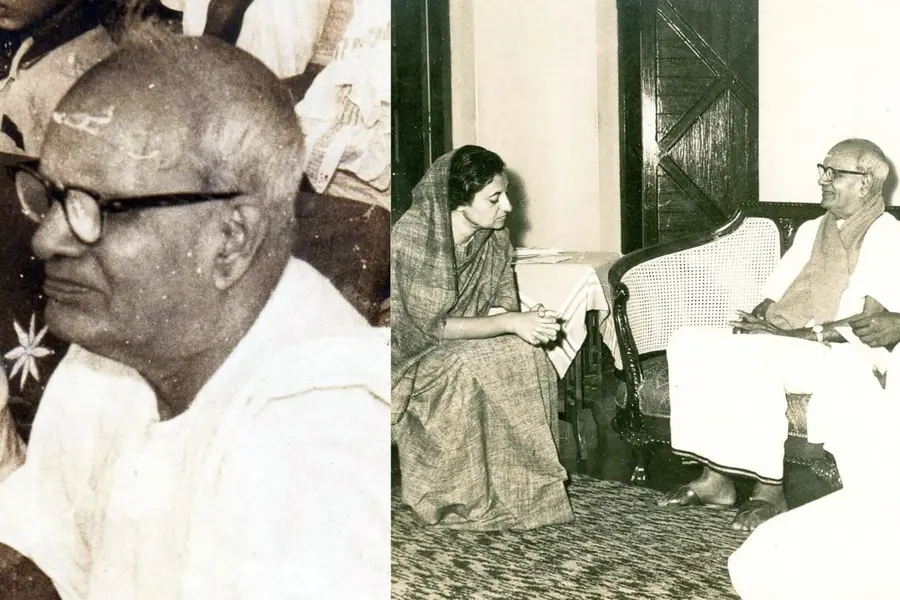
On the birth anniversary of Mannathu Padmanabhan (2 January 1878 – 25 February 1970), India pauses to remember a titan of social reform whose legacy is etched into the cultural and political fabric of Kerala. Described by Prime Minister Narendra Modi as a "revolutionary visionary," Padmanabhan dedicated his 92 years to the ideals of equality, education, and social justice.
Often referred to as the "Madan Mohan Malaviya of Kerala" by Sardar K.M. Panicker, Mannam (as he was affectionately known) transitioned from a humble teacher to a legal practitioner, and eventually, the moral compass of an entire community.
The Architect of the Nair Service Society (NSS)
Mannam’s most enduring legacy is the Nair Service Society (NSS), established on 31 October 1914. While his primary goal was to uplift the Nair community, his vision was never isolationist. He aimed to modernize society by:
Abolishing Orthodox Customs: He fought against superstitious practices and outdated traditions within the community.
Structural Reform: He played a pivotal role in the Nair Regulation, which transitioned the community from a matriarchal joint-family system to a more modern property division model.
Education and Health: Under his leadership, the NSS established numerous schools, colleges, and hospitals, believing that progress was impossible without intellectual and physical well-being.
A Crusader Against Untouchability
Mannathu Padmanabhan was a staunch believer that true progress required the eradication of the caste system’s rigidities. He was a key figure in some of the most significant civil rights movements in Kerala’s history:
Vaikom Satyagraha (1924): He led the movement to open public roads around the Vaikom Temple to "low-caste" Hindus.
Guruvayur Satyagraha (1931): He advocated for the entry of untouchables into the Guruvayur Temple.
Personal Example: In a radical move for his time, he opened his own family temple to all individuals, regardless of their caste.
Political Impact and the Freedom Struggle
Mannam’s influence extended deep into the political landscape of Travancore and modern Kerala:
Freedom Struggle: Joining the Indian National Congress in 1946, he campaigned vigorously against the autocratic administration of Sir C.P. Ramaswamy Iyer and was imprisoned in 1947 for his involvement in the Independence movement.
Vimochana Samaram (Liberation Struggle): In 1959, he spearheaded the Vimochana Samaram against the first Communist ministry in Kerala, a movement that led to the dismissal of the E.M.S. Namboodiripad government.
Regional Politics: In 1964, he was instrumental in forming the Kerala Congress, which holds the distinction of being the first regional party in India.
Honors and Legacy
The Government of India recognized his monumental contributions with two of its highest honors:
Padma Bhushan (1966)
Bharata Kesari title, awarded by the President of India.
Today, the Mannam Memorial (Samādhi) at the NSS Headquarters in Changanacherry serves as a place of pilgrimage for those who value social reform.
Published: 02 Jan 2026, 10:25 am IST
Related Topics
Disclaimer: Kindly avoid objectionable, derogatory, unlawful and lewd comments, while responding to reports. Such comments are punishable under cyber laws. Please keep away from personal attacks. The opinions expressed here are the personal opinions of readers and not that of Mathrubhumi.
