

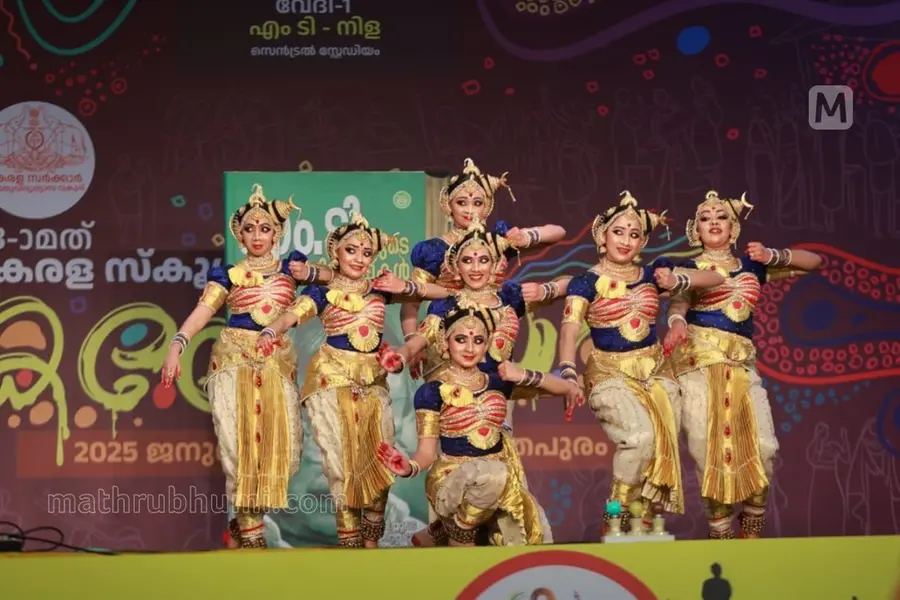
Thiruvananthapuram: Kerala School Kalolsavam, a grand celebration of talent and culture, has grown into more than just a platform for student artistry—it’s now a stage where money can often dictate the shine of performances. As the festival grows in scale and prestige, so do the expenses associated with participation, creating barriers for students from financially weaker backgrounds.
From Bharatanatyam to Kathakali, the cost of costumes, training, and accessories has soared to unprecedented levels. Parents, trainers, and teachers agree that these rising expenses are leaving many talented but underprivileged students unable to compete on equal footing.
“For classical dance competitions like Bharatanatyam, we end up spending anywhere between Rs 1 lakh and Rs 1.5 lakh,” said a parent whose child is competing this year. “This includes everything from the costume to the makeup, choreography, and training fees. It’s a heavy burden, but we feel compelled to do it because appearance matters as much as performance on stage.”
Are costumes causing a financial strain?
The cost of costumes alone is staggering. For classical dance categories like Bharatanatyam, parents are reportedly spending Rs 1 lakh to Rs 1.5 lakh per participant. This includes costumes, lessons from renowned trainers, choreography fees, and even professional makeup. Group events such as group dances cost at least Rs 50,000 per participant, taking the total expenditure for a team of eight to Rs 4 lakh.
When it comes to Mohiniyattam, even though the costumes look simpler in appearance, the cost can reach up to Rs 6,000 based on the material and the overall cost including training and other expenses can reach up to Rs 1 lakh. Kathakali costumes, steeped in tradition and intricacy, can cost upwards of Rs 30,000, and a single Nangyarkoothu costume may set parents back by Rs 60,000.
The emphasis on appearance has intensified the financial burden with the costs of creating a ‘winning look’ have skyrocketed. “It’s not just about dancing well anymore,” said the parent of a Mohiniyattam participant. “The judges notice how you look as soon as you step on stage. It’s hard to ignore the influence of visual presentation.”
“While well-off families can afford the best fabrics and jewelry, others have to make do with older costumes or rentals,” said a Bharatanatyam teacher. “Unfortunately, visual impact along with the performance plays a significant role in the judging process, which puts those with fewer resources at a disadvantage.”
Even less elaborate events like Padakam and Chavittu Nadakam demand significant investments, often ranging between Rs 10,000 and Rs 20,000 per participant.
Training: A growing industry
The training aspect adds another layer of financial strain. Some trainers, in high demand, charge exorbitant fees, further driving up the cost of participation. “The fees for classical dance training have doubled in recent years,” said a teacher from a prominent school in Thiruvananthapuram. “Parents are willing to pay a premium for renowned trainers because they believe it increases their child’s chances of winning.”
In most cases, the participants do receive financial assistance from schools, but in some case it is often insufficient. "It's unfair that talent is being overshadowed by financial constraints. Without changes, we risk losing a generation of talented performers,” said the mother of a student who participated in the Kathakali event.
This year’s Kalolsavam, running from January 4 to 8, featured 249 events across 25 venues in Thiruvananthapuram, with over 15,000 participants expected. The main venue, the Central Stadium, is equipped with modern facilities, including green rooms, toilets, and filtered water connections. Innovative features like QR codes for venue navigation add convenience, but the increasing costs of participation threaten to overshadow these advancements.
Published: 08 Jan 2025, 01:14 pm IST
ABOUT THE AUTHOR
Related Topics
Disclaimer: Kindly avoid objectionable, derogatory, unlawful and lewd comments, while responding to reports. Such comments are punishable under cyber laws. Please keep away from personal attacks. The opinions expressed here are the personal opinions of readers and not that of Mathrubhumi.