
Unverified claims about Narendra Modi’s “darker appearance” at a Tamil Nadu rally spark massive social media debate, memes, and a sharp north–south narrative online.
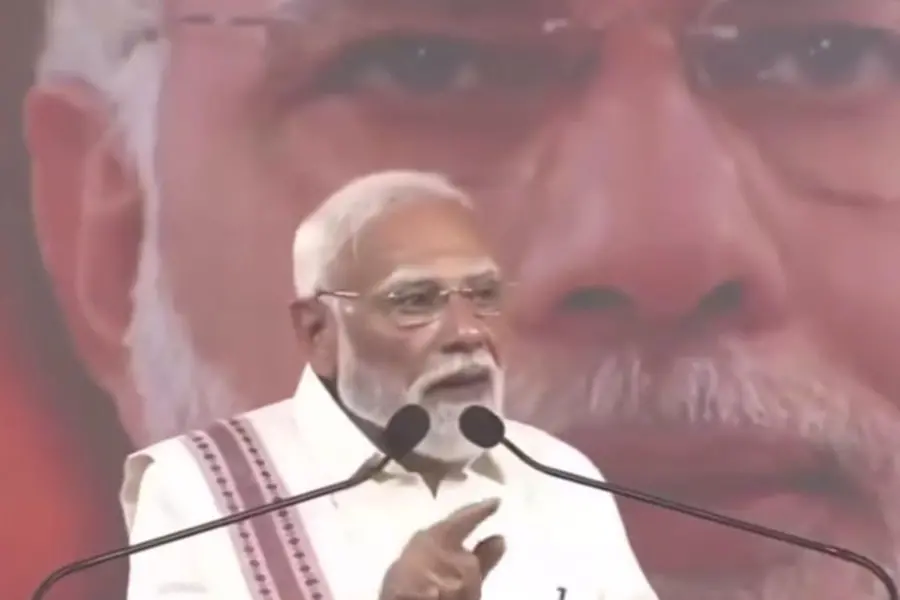
A campaign appearance by Prime Minister Narendra Modi in Tamil Nadu ahead of the April 23, 2026, elections has sparked a massive social media debate, after viral videos and images led to unverified claims about a noticeable change in his skin tone.
Clips from the rally, widely circulated across platforms such as X and Instagram, show the Prime Minister addressing a large gathering under bright outdoor conditions.
Also Read

Soon after, several users began speculating that he appeared darker than usual, with some alleging that darker-toned makeup or bronzer may have been used as part of a calculated outreach to local voters.
These claims, however, remain purely speculative and are not backed by any official confirmation or credible evidence.
The issue quickly escalated online, with memes, satire, and sharp commentary flooding timelines.
Some users mocked the visuals, calling it a “Tamil Nadu makeover,” while others took a more critical tone, questioning whether such an alleged move reflected political messaging rooted in optics.
A few posts even drew parallels to performance and acting, further fuelling the controversy.
At the same time, a significant section of users pushed back against the narrative, arguing that the perceived difference in appearance could easily be explained by lighting variations, harsh sunlight, camera exposure, or post-processing effects.
Experts in visual media note that outdoor rallies, especially in peak daylight, can dramatically alter skin tones on camera, depending on angles and equipment used.
Despite the lack of verified information, the debate has taken on a sharper edge, with some social media users framing it within a broader North–South divide, intensifying reactions and widening the discourse beyond the original claim.
The online space has since become deeply polarised, with both criticism and defence trending simultaneously.
Political observers say such controversies are increasingly common during high-stakes election periods, where fragmented visuals and viral amplification often shape narratives faster than factual verification.
They caution against concluding from selectively circulated clips, especially in a charged political environment.
As of now, there has been no official response from government sources or the Prime Minister’s office addressing these specific claims.
The controversy, however, continues to trend, underscoring how quickly perception-driven narratives can dominate digital discourse.
The episode highlights the growing influence of social media in shaping political conversations, where even subtle visual differences can trigger widespread debate, speculation, and division, often blurring the line between reality and interpretation in the middle of an intense election season.
Published: 21 Apr 2026, 09:42 am IST
Related Topics
Disclaimer: Kindly avoid objectionable, derogatory, unlawful and lewd comments, while responding to reports. Such comments are punishable under cyber laws. Please keep away from personal attacks. The opinions expressed here are the personal opinions of readers and not that of Mathrubhumi.