
In 2022, a public interest litigation was filed in the Kerala High Court after a school holiday was announced nearly an hour after classes had begun.
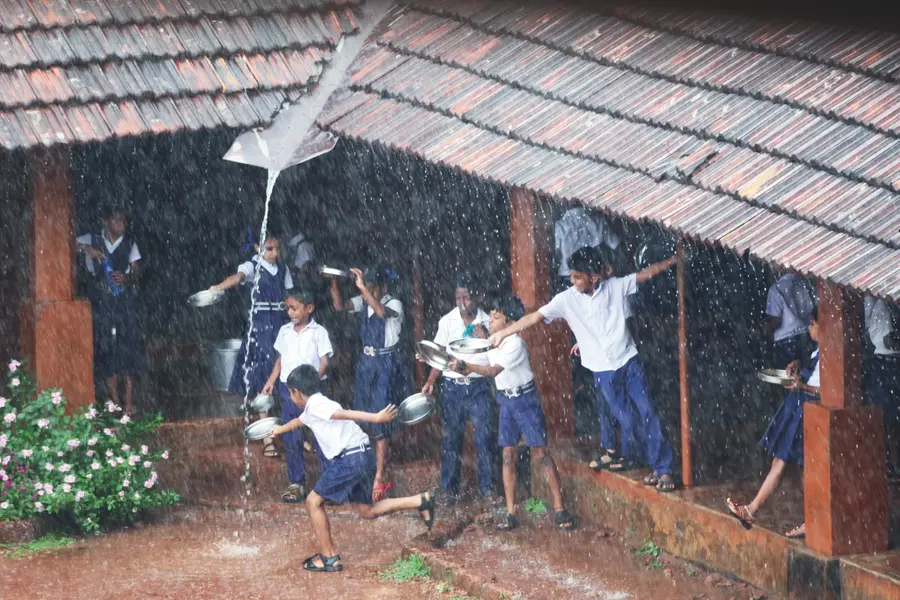
For District Collectors across Kerala, deciding whether to close schools during intense monsoon rain is far from straightforward.
A red alert issued by the India Meteorological Department (IMD) usually makes a holiday almost certain. But orange and yellow alerts require officials to assess the situation more closely before taking a decision.
The final call involves much more than checking the day's weather forecast. Collectors must consider several sources of information, often while weather conditions are changing rapidly.
Ground reports guide decisions
Administrators cross-check IMD forecasts with data from automatic weather stations and reports from the ground.
Village officers and tahsildars provide updates on local conditions, including waterlogging, the possibility of landslides and rising river levels. These reports can give officials a clearer picture of the risks in different parts of a district.
Conditions can also change within a few hours. Climate change has contributed to increasingly unpredictable rainfall, with intense bursts capable of triggering sudden flash floods.
As a result, a morning that appears relatively safe can quickly become hazardous. This leaves officials with a narrow window in which to assess the threat and announce a decision. The issue was highlighted in a social media post by Kozhikode District Collector MS Madhavikutty.
Public pressure adds to the challenge
The pressure does not end with assessing weather conditions. Officials also face intense reactions on social media when school holidays are announced — or when they are not.
Their social media accounts are often filled with criticism, sarcasm and, at times, abusive comments. Some people demand holidays across an entire district even when weather conditions differ from one area to another.
Others react strongly if an announcement is perceived as being delayed.
Officials say public opinion is often formed without access to the detailed technical information and field reports available to the administration. Collectors, meanwhile, have to balance these concerns against the actual conditions on the ground.
A holiday also has social and economic costs
Closing schools unnecessarily can result in the loss of academic time, which can be difficult to recover later.
For families dependent on daily wages, the impact can be more immediate. If a school closes, a parent may have to remain at home to look after a child, potentially resulting in a day's loss of income.
There is also a safety concern beyond school premises. Monsoon holidays can leave children with more free time to venture outdoors. Safety data indicate that several child drowning incidents during the rainy season occur on holidays, when children may go near flooded areas without adequate supervision.
This adds another layer to a decision that is already being made under uncertain and rapidly changing conditions.
Delayed announcements can have legal consequences
The timing of a holiday announcement has also resulted in legal challenges in the past.
In 2022, a public interest litigation was filed in the Kerala High Court after a school holiday was announced nearly an hour after classes had begun.
The delayed decision left some students stranded on the streets or while travelling. It also caused panic among parents who were unable to contact their children because mobile phones were banned in schools.
Such incidents have added to the pressure on administrators to get the timing right.
Collectors and other officials may spend entire nights monitoring weather forecasts, station data and field reports before deciding whether schools should remain closed. The aim is to protect children from rapidly changing weather conditions while also avoiding unnecessary disruption and confusion.
Published: 07 Aug 2026, 09:34 am IST
Disclaimer: Kindly avoid objectionable, derogatory, unlawful and lewd comments, while responding to reports. Such comments are punishable under cyber laws. Please keep away from personal attacks. The opinions expressed here are the personal opinions of readers and not that of Mathrubhumi.
