
Kerala is ready to hire private buses for the Priyadarshini scheme after an expert panel recommended leasing them to address the sector's concerns.
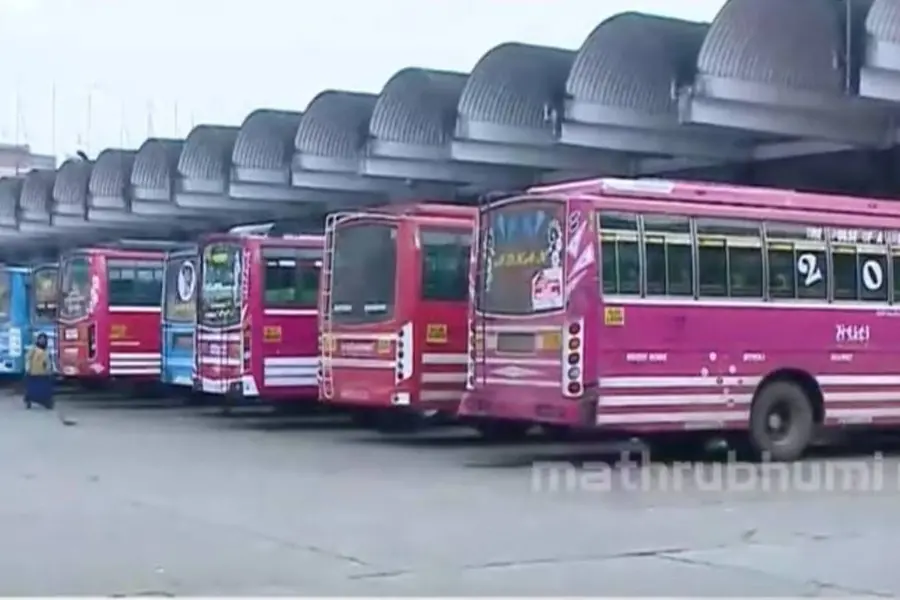
Thiruvananthapuram: Private buses that found themselves competing with Kerala's Priyadarshini scheme could soon become part of it.
The Kerala government is ready to hire private buses for operations under the Priyadarshini scheme, Transport Minister C P John said, welcoming a recommendation by an expert committee set up to study the difficulties faced by the private bus sector.
Also Read

The government is also prepared to hold discussions with private bus owners on the rental rates, the minister said after receiving the committee's report.
Private luxury buses are already being hired for long-distance services. A similar arrangement is now being considered for short-distance routes as well, with rental payments proposed on a per-kilometre basis.
According to committee chairman and former DGP K Padmakumar, the recommendation is to operate one hired private bus for every two KSRTC buses.
The proposal could mark a major shift in the government's approach to the concerns raised by private bus operators following the launch of the Priyadarshini scheme.
The expert committee was appointed by the government to examine the crisis faced by private bus operators in the wake of the scheme. While the minister said private buses had not stopped services because of Priyadarshini, he acknowledged that operators in certain regions were facing difficulties.
Kerala currently has around 12,000 private buses, the minister said. The government will hold discussions and take decisions on the committee's other recommendations as well.
Key recommendations of the expert committee
Apart from hiring private buses, the committee has suggested a series of measures aimed at easing the financial burden on private bus operators.
1. Rescheduling Priyadarshini services
The committee has recommended revising Priyadarshini schedules in areas where KSRTC services directly compete with private buses. Deputy Transport Commissioners should be entrusted with route rationalisation, it said.
2. Industry status for private bus services
Private bus services should be declared an industry and given MSME consideration, according to the committee. This could help operators access bank loans and financial assistance.
3. Monthly road tax payment
The committee has proposed allowing private bus operators to pay road tax every month instead of the existing quarterly system, reducing their immediate financial burden.
4. Extending the operational life of buses
It has also recommended increasing the permitted lifespan of private buses from 22 years to 25 years. The move could benefit around 1,500 private buses.
5. Access to KSRTC fuel outlets
Private buses should be allowed to purchase diesel from KSRTC fuel outlets, potentially enabling operators to access fuel at rates lower than the market price.
6. Easier permits for special services
The committee has suggested simplifying and moving online the permit process for special bus services operated during holidays and other occasions.
7. More advertising opportunities
Private buses could be allowed to carry more advertisements by paying an annual fee. Operators would not have to seek separate permission every time an advertisement is changed under the proposed system.
8. State insurance cover
The committee has recommended extending state insurance protection to private buses, which could offer lower premiums compared with private insurance providers.
9. Changes to welfare fund rules
Another recommendation is to reduce the number of employees for whom welfare fund contributions are mandatory from three to two.
The committee has also called for a comprehensive transport policy for Kerala's public transport sector.
Published: 03 Sept 2026, 11:20 am IST
ABOUT THE AUTHOR
Disclaimer: Kindly avoid objectionable, derogatory, unlawful and lewd comments, while responding to reports. Such comments are punishable under cyber laws. Please keep away from personal attacks. The opinions expressed here are the personal opinions of readers and not that of Mathrubhumi.