
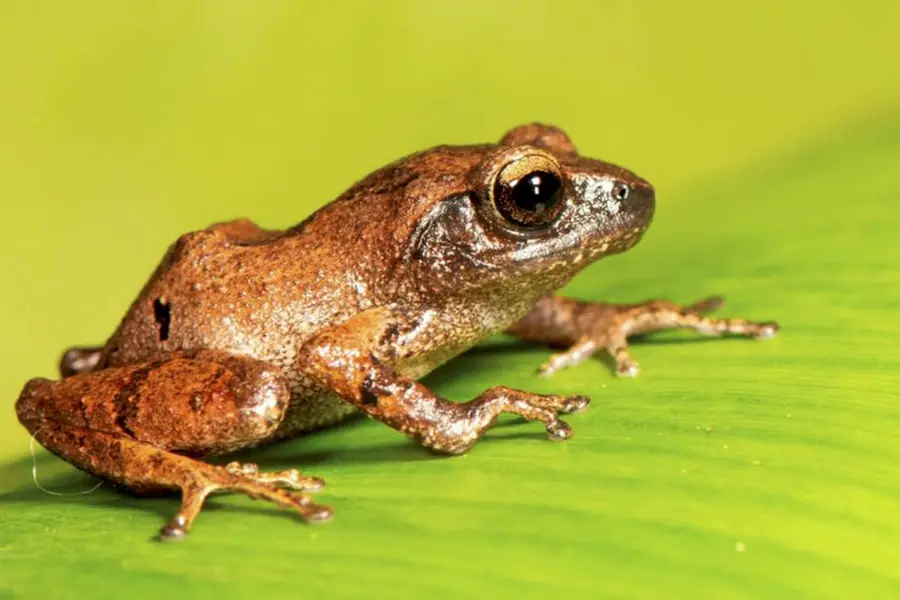
In the past, on rainy nights in Kerala, the flickering light of a Petromax lantern or the beam of a torch would cut through the darkness, casting eerie shadows on house windows. Inside, startled families would call out, “Who is there?” The response, often calm and reassuring, would come back: “No need to panic. We are not thieves, we are out for frog catching. Be at peace.”
Frog catching was a common, but a skillful activity. Though croaking sounds would signal presence of frogs, it required a sharp eye to distinguish between edible frogs and those harmful to consume. Typically, a team of four to five individuals would venture into the darkness with sacks and Petromax lanterns. The torchlight, which eventually replaced the lantern, made the process easy. The light will temporarily stun the frogs, allowing them to be easily gathered and thrown into sacks. After the catch, the hind legs were amputated, and the bodies discarded for scavenger birds. The catch was often shared with neighbours, and the night would end with fried frog legs, enjoyed as a late-night delicacy.
Though traditionally a nighttime activity, frog catching also occurred during the day. For some, it became a fond memory, with people catching frogs from nearby canals, marinating their legs, and frying them up for meals. This practice wasn’t isolated but part of daily life for many in Kerala.
Frog legs, particularly when fried or made into curry, became a popular dish, often served at toddy and arrack shops in Kerala, especially in the central regions of the state. With an increase in demand, some frog catchers even ventured into neighbouring Tamil Nadu and Karnataka during the monsoon breeding season to gather more frogs.
Over time, frog catching evolved into a niche export business, with frog legs being shipped to other countries. Notably, Kerala exported frog legs worth Rs 11.2 crore between 1981 and 1982. Other states also contributed to India’s export of frog legs.
With the growing frog leg export industry, researchers from the union government-run Central Institute of Fisheries Technology in Kochi explored ways to utilise commercial frog waste by converting it into a protein-rich meal for poultry and livestock. It may be noted that nearly 5,400 tonnes of waste were discarded annually. The researchers developed a process involving steam cooking, drying, and pulverisation to create a nutrient-rich meal. Their analysis showed that frog meal contained 62.6% to 72.3% crude protein, meeting the standards for fish meal and livestock feed. The study suggested that proper utilisation of frog waste could increase industry profitability, provide an alternative protein source, and help reduce environmental waste. Additionally, it showed potential for use in aquaculture, particularly in prawn feed. This research demonstrated a sustainable approach to waste management while supporting India’s agricultural and fisheries sectors.
Movement against frog catching and business
The business of frog catching, which brought in foreign revenue, became a subject of controversy after a period. Environmentalists and NGOs consistently pressured the Union government to halt the export of frog legs, citing the cruel practice of amputating frogs' hind legs and the resulting ecological imbalance. India, as a leading supplier of frog legs to the US and Europe, earned approximately $15 million annually from this trade. Concerns were also raised about the Indian bullfrog (Rana tigrina), with up to 150 million of these frogs being killed each year. Additionally, critics argued that the killing of mosquito-eater frogs had led to an increase in malaria-causing mosquitoes.
In response to mounting criticism, the government imposed a ban on frog hunting during the summer breeding season and introduced new regulations. The introduction of an export licence system aimed to regulate frozen frog leg operations. Meanwhile, a government scientist worked on breeding frogs in captivity, aiming to disprove the argument that declining frog populations would result in an increase in malaria. The critics questioned the government's research, suspecting economic interests were driving the policy. Officials reassured the public, asserting that India’s vast frog population meant that trade could continue.
The Marine Products Export Development Authority (MPEDA) allegedly made several attempts to support the frog leg trade. In April 1986, they organised the First World Conference on Trade in Frogs' Legs vis-à-vis Environmental Considerations in Kolkata. This was yet another effort by the Commerce Ministry to prevent a ban on exports, despite the Ministry of Environment & Forests recommending a total ban on the practice.
Kerala's protest
Amid these developments, Kerala saw the Kerala Frog Catchers' Association leading a protest against the new regulations. The protest was a response to unfavourable licensing formalities and the imminent ban on frog catching and the export of frog legs, as enforced by the Wildlife Protection Act. According to media reports, the protests, held at the Kerala State Secretariat, saw demonstrators carrying frogs and making them croak while chanting slogans in defiance of the government's move. The protesters strongly opposed the government's decision, arguing it would devastate their livelihoods.
However, by 1987, India implemented a ban on the activity, causing a major shift in the global trade of frog legs.
Indian scene
It may be noted that India was a leading supplier of frog legs, particularly from species like Euphlyctis hexadactylus and Hoplobatrachus tigerinus. In 1985-86, India exported around 1,215 tonnes of frog meat, with 871.5 tonnes reaching importing countries, according to CITES trade data.
Despite the ban, India continued to make small contributions to the European Union market. Studies show that in 2010 and 2019, India exported 15 tonnes of frog legs, accounting for just 0.05% of the EU's total imports. This suggests that India's market presence persisted, albeit on a much smaller scale. In 2018, five tonnes of frog legs were exported to the Netherlands, raising questions about the possible circumvention of the ban or inaccuracies in trade data. Meanwhile, India attempted to promote frog farming as a sustainable alternative, starting in 1988. However, these efforts were largely unsuccessful.
NGOs claim that the practice continues in hidden and small-scale operations despite the legal restrictions.
Inputs: Mathrubhumi archive, India Today archive
Published: 12 Feb 2025, 04:50 pm IST
ABOUT THE AUTHOR

Disclaimer: Kindly avoid objectionable, derogatory, unlawful and lewd comments, while responding to reports. Such comments are punishable under cyber laws. Please keep away from personal attacks. The opinions expressed here are the personal opinions of readers and not that of Mathrubhumi.