
Discover how Karkidaka Vavu rituals falling on July 24 awaken inner awareness, align subtle energies, and honour generations past
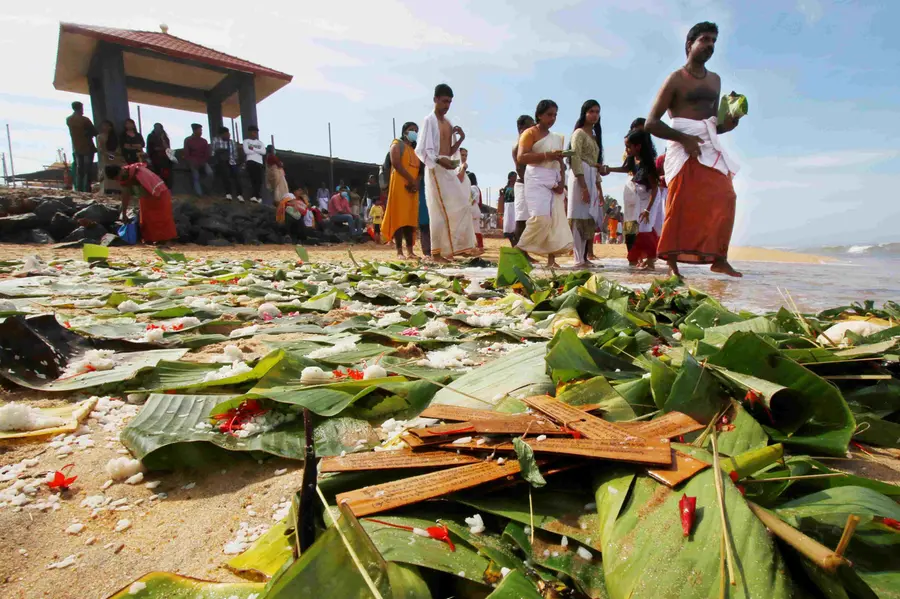
Karkidaka Vavu is the day dedicated to performing rituals at sacred sites for the peace and liberation of ancestral souls. It is believed that the 'shraddham' or 'bali' (a ritual involving food offerings to ancestors) performed on this day will be felt by the departed souls every day for an entire year. This year, Karkidaka Vavu falls on July 24.
It is also believed that the Karkidaka Vavu offering extends to all living beings on the planet.
The Method of Offering
During the 'shraddham' or 'bali' ritual, the practitioner invokes the offering by holding it close to the chest, awakening inner awareness and merging it with the divine.
This ritual acts as a spiritual bridge, guiding one’s consciousness from its limited, individual state to the vastness of the universe, an ultimate goal shared by all spiritual paths.
The offering is made in remembrance of the entire ancestral lineage. In this context, Uttarayanam (the sun’s northward journey) is considered suitable for divine practices, while Dakshinayanam (the southward journey) is associated with ancestral rites.
The first new moon (Amavasya) of Dakshinayanam is known as Karkidaka Vavu.Though not an eclipse, Vavu refers to a time when the Earth, Moon, and Sun align. The black Vavu occurs when the Earth's shadow falls on the Moon. This alignment corresponds with the Agni, Soma, and Surya mandalas within the human body. The Ida, Pingala, and Sushumna nadis, energy channels linked to these mandalas, are believed to experience a shift during this time, influencing the body’s subtle energies.
During Karkidaka Vavu, energy flows through the Sushumna nadi, affecting human consciousness. Moreover, since the Moon governs the mind (Jata), these cosmic changes also impact mental states and inner awareness. For this reason, it is traditionally said that spiritual practices (sadhana) are especially effective during such celestial events.
Published: 23 Jul 2025, 03:06 pm IST
Related Topics
Disclaimer: Kindly avoid objectionable, derogatory, unlawful and lewd comments, while responding to reports. Such comments are punishable under cyber laws. Please keep away from personal attacks. The opinions expressed here are the personal opinions of readers and not that of Mathrubhumi.
