
Experts advised against using fire, warning that provoking the bees could trigger a mass attack.
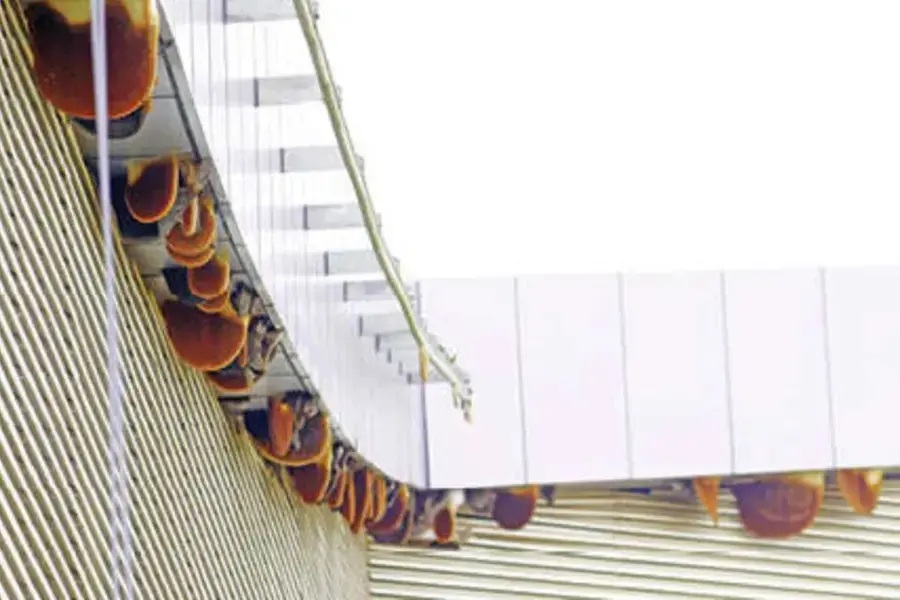
Kannur: Dozens of golden-hued honeycombs, hanging as if deliberately designed to enhance the building’s appearance, are visible from a distance at Kannur International Airport. A total of 63 beehives — both small and large — cling to the roof of the massive terminal, creating a striking and unusual sight that has drawn attention.
The hives are located along the roof of the departure terminal on the second floor. Thirty-three are on the right side of the building and 30 on the left. While bees have vacated a few of the hives on their own, many remain large and elongated, firmly intact.
The airport was inaugurated on December 9, 2018, and officials say the bees and their hives have been present for nearly seven years. Crucially, there have been no reported attacks on passengers or staff so far, which has come as a major relief.
Authorities have carried out several precautionary attempts to remove the bees, but none have proved successful. Although the bees occasionally fly away, they soon return. Experts note that bees tend to build hives only in locations that offer highly favourable living conditions.
Repeated but unsuccessful removal efforts
The hives are attached to the roof of the airport building at a height of nearly 60 metres, making removal particularly challenging. Attempts were made to sedate the bees and relocate them, with assistance sought from the Forest and Wildlife Department, but the operation had to be abandoned due to the height involved.
Later, a specialised agency sprayed organic pesticides, which temporarily drove the bees away. However, they returned within days. Experts advised against using fire, warning that provoking the bees could trigger a mass attack.
Honey to be donated to tribal communities
Airport authorities are now exploring the possibility of engaging members of indigenous communities, who are experienced in working closely with forests and wildlife. The honey from all the hives would be given to them free of charge. The objective is to relocate the bees without harming them and remove the hives safely.
The honeycomb structures themselves are noted for their remarkable precision. Each cell is formed in a perfect hexagonal shape. Bees soften wax by chewing it before binding large quantities into the cells. When bees cluster inside a hive, the temperature rises to between 30 and 35 degrees Celsius — the ideal range for maintaining the structure of the wax.
Published: 06 Jan 2026, 10:37 am IST
Disclaimer: Kindly avoid objectionable, derogatory, unlawful and lewd comments, while responding to reports. Such comments are punishable under cyber laws. Please keep away from personal attacks. The opinions expressed here are the personal opinions of readers and not that of Mathrubhumi.
