
The Minister warned that while over 800 H5N1 cases were reported globally last year with no human-to-human transmission so far, the virus’s potential mutation poses a serious pandemic threat, possibly exceeding COVID-19.
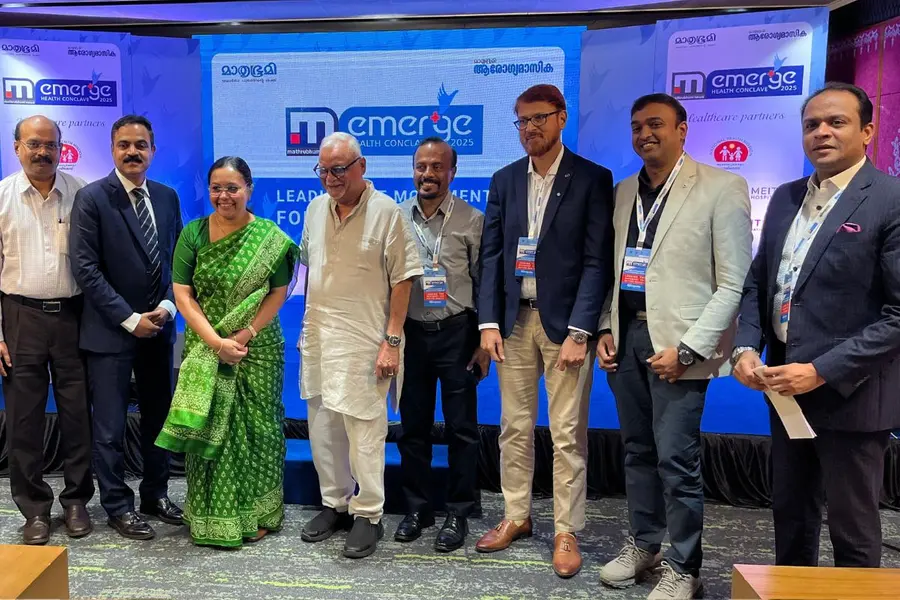
Kozhikode: Kerala Health Minister Veena George on Sunday underscored the state’s proactive approach to epidemic forecasting and healthcare modernisation, cautioning that the next major outbreak in Kerala could be H5N1, or bird flu. Speaking at the Mathrubhumi Emerge Health Conclave, she outlined a multi-pronged government strategy to strengthen epidemic intelligence and public health readiness.
Highlighting Kerala’s track record in tackling diseases such as Nipah, COVID-19 and amoebic meningoencephalitis, the minister credited the state’s robust public-private healthcare partnerships and its sensitive diagnostic systems. She stressed that Kerala’s frequent visibility in national health debates stems not from poor outcomes but from vigilant reporting and early detection.
Addressing concerns over higher case numbers, she explained that Kerala adheres to stringent diagnostic protocols, including viral panel testing and extensive follow-ups for complex infections. She cited the case of a Wayanad native, now stable at Kozhikode Medical College after contracting amoebic meningoencephalitis from a swimming pool in another state, noting that the patient had not received satisfactory care elsewhere.
The Health Minister underlined Kerala’s success in reducing mortality rates for rare and deadly infections. Primary amoebic meningoencephalitis (PAM), which has a global fatality rate of 97 per cent, was brought down to 23 per cent in Kerala through timely detection and follow-up. “Our ASHA workers and health coordinators are at the heart of this system,” she said.
Similarly, during Nipah outbreaks, the state contained the virus’s fatality rate to 33.3 per cent, compared with about 70 per cent worldwide. “In most parts of the world, Nipah mortality does not fall below 70%. In Kerala, we could contain it at a third of that. This reflects the strength of preparedness and public health coordination,” she added.
On the threat posed by H5N1, George pointed to WHO data showing more than 800 infections worldwide last year. While human-to-human transmission has not yet been confirmed, she warned that mutation could create “a risk far more serious than COVID-19.”
To strengthen epidemic prediction, the government is expanding data analysis aimed at forecasting outbreaks. A key initiative is the Kerala Centre for Disease Control (K-CDC), modelled on its American counterpart in Atlanta and based on the principle of “One Health” — recognising the link between human, animal and environmental health.
The minister also stressed the importance of therapeutic innovation. India currently sources monoclonal antibodies for Nipah from Australia, but two Indian institutes — including one in Kerala — are now developing them domestically. “These antibodies are designed to block viral attachment and reduce viral load if given early. If successful, Kerala will not just use them but also contribute to global preparedness,” she said.
The minister further highlighted Kerala’s reputation for transparent reporting, recalling that during the COVID-19 pandemic, the World Health Organization recognised the state’s data as among the most accurate globally.
She also noted progress in developing indigenous antibodies, expanding PCR testing, and community-level interventions such as training ASHA workers, cancer screenings, yoga clubs, and dedicated wellness clinics for women, diabetes and hypertension.
Concluding her address, Veena George said that the ethical use of emerging technologies such as AI and robotics could help transform Kerala into a model health hub for India.
Kerala has led the way in grassroots healthcare, says M V Shreyams Kumar
In his introductory remarks, M V Shreyams Kumar, Managing Director of Mathrubhumi, underlined Kerala’s long-standing leadership in the field of healthcare. He credited this success to the state’s sustained efforts in strengthening healthcare delivery from the grassroots level, in contrast to many other Indian states.
He also voiced concern over the rising burden of lifestyle-related diseases, warning that these could become the next major health crisis if not addressed with urgency. Shreyams Kumar further emphasised that the ethical use of artificial intelligence (AI) presents a significant challenge for healthcare systems globally in the years to come.
The Mathrubhumi Emerge Health Conclave, held in Kozhikode, brought together some of North Malabar’s most respected medical professionals, researchers, and health entrepreneurs, making it a landmark event focused on advancing health equity and innovation in Kerala.
Published: 31 Aug 2025, 12:07 pm IST
Related Topics
Disclaimer: Kindly avoid objectionable, derogatory, unlawful and lewd comments, while responding to reports. Such comments are punishable under cyber laws. Please keep away from personal attacks. The opinions expressed here are the personal opinions of readers and not that of Mathrubhumi.
