
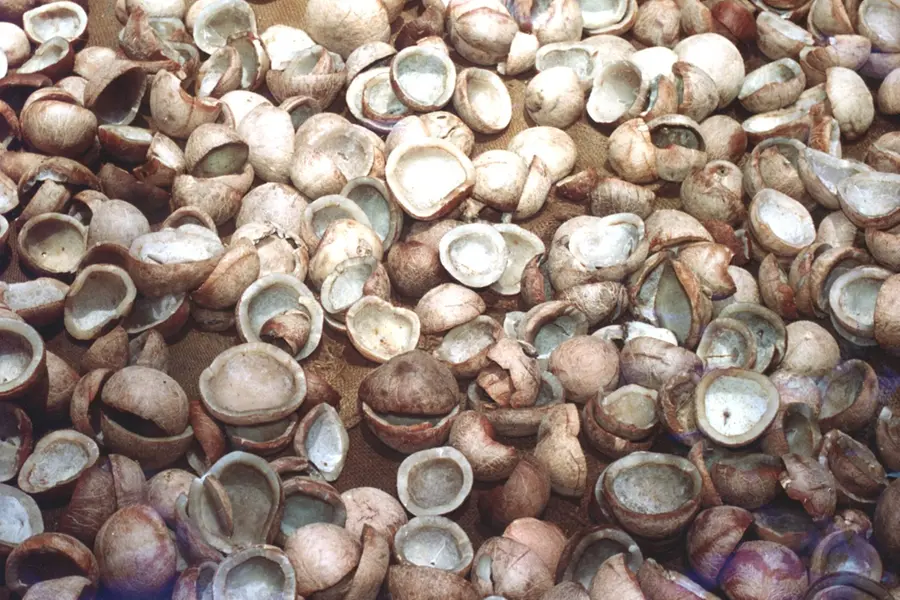
Vadakara: The Kerala government proposed ₹19,385 per quintal as the support price for copra this year, but the Centre, based on the recommendation of the Commission for Agricultural Costs and Prices (CACP) under the Union Ministry of Agriculture, approved only ₹11,582. States like Karnataka, Tamil Nadu and Andhra Pradesh also sought a higher price, but their demands were not considered. The cost of copra production submitted to the Centre varies across states, with Karnataka estimating it at ₹16,442 per quintal, Tamil Nadu at ₹17,500 per quintal and Andhra Pradesh between ₹15,000 and ₹16,000 per quintal.
The difference in support price arises due to the varying methods used by the CACP and states to calculate the cost of production. Farmers argue that the lower cost estimation by the CACP denies them a fair price, as it does not reflect actual expenses. The cost calculated by the CACP is significantly lower than that estimated by individual states.
Also Read

Currently, the cost of production is determined based on A2 (expenses such as seeds, fertilisers, pesticides and wages) and FL (family labour). However, the Swaminathan Commission has recommended including the C2 (comprehensive cost) factor, which accounts for land rent and capital costs. Despite this, the C2 factor is not considered in the final support price calculations.
The CACP has estimated the national cost of production of copra for 2025 at ₹7,721 per quintal, while in Kerala, it stands at ₹9,438. When the C2 factor is included, the cost of production rises to ₹10,896 at the national level and ₹12,484 in Kerala. However, Kerala, in its recommendation to the CACP, estimated the cost at ₹19,365 per quintal with the C2 factor included—₹6,881 more than the Centre’s estimate. The cost of production per coconut is ₹21.40, whereas the CACP’s estimate is ₹14.50.
For ball copra, Kerala proposed a support price of ₹20,098, while the Centre approved only ₹12,000. Although both estimates are based on nearly the same figures, the reason for such a large discrepancy remains unclear.
The CACP’s report this year attributes the variation to differences in the methodology used to calculate production costs. Currently, the gap does not pose an immediate problem since market prices for coconut and copra are higher than the support price. However, with potential fluctuations in the coconut market, farmers are pushing for a standardised cost calculation method to ensure fair pricing.
Setback for Kerala
Kerala has consistently faced setbacks due to the method used to determine copra’s support price. The primary issue is that the cost of production in the state is higher than in other states. The Centre’s policy is to provide 50 pc more of the cost of production as a support price. However, as Kerala’s production costs exceed the national average, the state receives a lower percentage increase.
This year, the national cost of production was set at ₹7,721 per quintal, with the support price calculated at 50% above this figure. Meanwhile, Kerala’s approved cost of production was ₹9,438, but the additional amount granted was only 22% above this, leaving farmers at a disadvantage.
Published: 17 Feb 2025, 09:40 am IST
Related Topics
Disclaimer: Kindly avoid objectionable, derogatory, unlawful and lewd comments, while responding to reports. Such comments are punishable under cyber laws. Please keep away from personal attacks. The opinions expressed here are the personal opinions of readers and not that of Mathrubhumi.