
Walayar lynching exposes racial stereotyping, violence and systemic neglect faced by migrant workers in Kerala
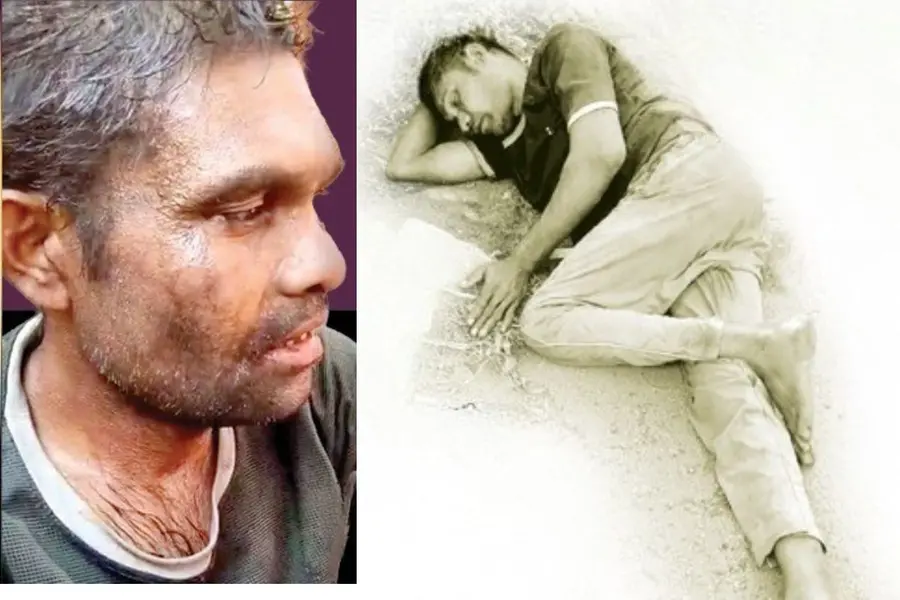
The year 2025 ended with a dent in Kerala’s much-boasted progressive stature as a brutal mob lynching in Walayar claimed a Dalit migrant labourer’s life. While the state government and its police department are seen as proactive in taking action against the accused individuals, the incident has raised deeper concerns that go beyond the immediate law enforcement response.
What demands closer examination is not only that a group of people took the law into their own hands over suspicion of theft, but also the gravity of the inhumane attack the victim faced, as revealed by the autopsy. Equally alarming is the racial undertone of the violence. This was evident in the video of the attack that later emerged, where the mob is heard asking, ‘Are you Bangladeshi’, suggesting that identity and appearance played a decisive role in the assault.
This incident is not an isolated one. Data shows that between 2016 and 2025, five mob lynching cases involving migrants were reported in Kerala. In 2016, the victim was from Assam; in 2018, from West Bengal; in 2023, from Arunachal Pradesh; in 2024, from Bihar; and in 2025, from Chhattisgarh. However, NGOs working for migrant worker welfare caution that these figures reflect only officially recorded cases, with several incidents believed to go unreported.
For many migrant workers, the violence is not always fatal, but it is often persistent and intimidating.
Aamina (name changed), a migrant worker from Assam, has lived in Kerala for 18 years. A widowed mason helper engaged in physically demanding foundation work, she had been staying in a rented house in Kollam for the past three years. One day, she heard loud screams outside her house. When she stepped out, she saw a fellow migrant from Assam being brutally beaten by a group of local residents. The man was bleeding. Sensing the seriousness of the situation, Aamina began recording the assault on her phone “so there would be proof,” she later said. The mob noticed her, snatched the phone from her hand and smashed it on the spot.
Another migrant worker alerted the police, who arrived and shifted the injured man to hospital. A migrant labourers’ forum later approached the police station to file a complaint, both about the assault and the destruction of Aamina’s phone. While officials eventually acknowledged it was a mob attack, the inquiry moved slowly.
By then, the fallout had already begun. Those accused of smashing the phone came to Aamina’s rented house and threatened her, warning her to vacate the area. Her landlord told her he could no longer let her stay. “He said he was scared of what they might do,” she recalled. With no police protection and no case registered regarding the threats, Aamina was forced to move elsewhere. Despite repeated follow-ups, the police did not pursue the complaint, telling her that “someone in the crowd must have smashed the phone” and that it was “not practical” to investigate further. Though she was assured the phone would be repaired, the fear lingered. “I had no choice but to leave,” she said.
The Bengali stereotype
At the heart of this pattern lies a deeply entrenched stereotype. In Kerala, North Indian migrant labourers are often called ‘Bengali’, irrespective of their home state. Whether they come from Assam, West Bengal or Bihar, the term is widely used, often casually. Over time, however, it has acquired a derogatory tone, becoming slang used disrespectfully.
Such labelling has tangible consequences. Migrant workers are frequently associated with crime and violence in the public imagination, and these prejudices are sometimes exploited to deflect blame or frame individuals unfairly.
A case just weeks before the Walayar lynching illustrates this clearly. A woman named Sreekutty was kicked off a train in Thiruvananthapuram, leaving her critically injured. Suresh Kumar, a native of Vellarada, was accused of attacking her and her friend Archana while under the influence of alcohol. When brought for medical examination, he initially denied the accusation and told the media that “a Bengali” was responsible, apparently attempting to exploit the prevailing societal stereotype. He made multiple contradictory statements before later confessing to the crime.
The investigation, however, revealed a contrasting narrative. CCTV visuals showed a person in a red shirt rushing to the cries of Sreekutty and Archana. He overpowered Suresh, rescuing Archana from being attacked and pushed out of the train. The man in the red shirt was later identified as Sankar Paswan, a migrant worker from Bihar, underlining how stereotypes often obscure reality rather than reveal it.
For others, the consequences of suspicion and labelling unfold more quietly but are no less devastating. Mafizul, a migrant worker from West Bengal, had lived in Kerala for 14 years after arriving at the age of 14. He initially worked in a poultry farm before moving into construction and eventually settled with his family in Perumbavoor.
Recently, Mafizul began vending fish from a small makeshift structure—a slab above a canal along a road leading to a narrow space beneath a staircase of a building linked to a Civil Police Officer. The spot soon became a gathering point for other migrant workers. That visibility, however, bred suspicion.
Local residents alleged the area was being used for drug trade and alerted the police. Soon after, the police officer who had rented out the space asked Mafizul to vacate immediately, warning that any belongings left behind would be destroyed. Under mounting pressure, Mafizul returned to his native village in West Bengal.
The consequences were severe. His daughter’s education was disrupted, and he suffered a financial loss of nearly ₹1 lakh after selling fish on credit that he could not recover. A case related to the incident is now being pursued by Progressive Workers' Organisation.
Guest worker label
Beyond social slang, even official terminology has come under scrutiny. Dr Benoy Peter, executive director of the Centre for Migration and Inclusive Development, argues that the state government-endorsed ‘guest worker’ label itself reinforces exclusion. “I would say the government should stop calling them guest workers. It gives a sense that they are not supposed to be here and it is at the mercy of people here they are welcomed here. It is there fundamental right to work and reside in any part. The word guest only stigmatize them in society that they are not of here and give a sense that they are only meant to be here for a temporary period,” he said.
According to Peter, this contradiction extends to policy implementation as well. He pointed out that while Kerala offers insurance schemes and other welfare measures for migrant labourers compared to many other states, these initiatives often remain tokenistic. “We have insurance scheme for migrants labourers and many other welfare measures compared to other states. Yet I think we are more inclined towards optics and welfare measures on paper. On the ground the access to social security benefits is almost nil,” he remarked.
The lack of dignity and political voice, he said, further compounds their vulnerability. “Many think who will question when they are attacked or tortured. At police stations, when missing complaints of migrants are intimated, there is a laxity in follow-up procedures. Even so-called proactive trade unions are not welcoming to highlight issues they face despite claims of leading class struggle. They are treated as second class citizens,” he added.
Vulnerabilities faced by migrant workers
Many believe the narrative against migrant labourers is shaped by those who benefit from the neoliberal system. By labelling workers as unhygienic, disease spreaders, violent or uncivilised, their dignity is stripped away. Critics say this is done deliberately to keep migrant labourers weak and dependent, so they do not demand better wages or basic rights.
A 2024 study by Anand Panamthottam Cherian of George Mason University and S Irudaya Rajan of the International Institute of Migrants and Development (IIMAD) sheds light on the vulnerabilities faced by the migrant workforce in Kerala.
The study pointed out that migrants from North India form an integral part of Kerala’s workforce. However, the long-standing development gap between North and South India has contributed to migrant stigmatisation in the state. This divide has encouraged stereotypes that portray migrants as less intelligent, uncivilised and often violent.
The study notes that many migrants attempt to assimilate into Kerala society, particularly with an eye on their children’s future. However, these efforts are frequently undermined by “the poor state of the economy, dishonest intermediaries and obstinate contractors”.
The study also highlights a “serious lack of execution and monitoring” of labour regulations meant to protect workers and penalise fraudulent intermediaries and contractors.
In such an environment, the study concludes, integration becomes increasingly difficult, especially due to the “increasing ethnocentric nature” of Kerala society.
Published: 03 Jan 2026, 07:57 am IST
Related Topics
Disclaimer: Kindly avoid objectionable, derogatory, unlawful and lewd comments, while responding to reports. Such comments are punishable under cyber laws. Please keep away from personal attacks. The opinions expressed here are the personal opinions of readers and not that of Mathrubhumi.
