

As part of Axiom-4 mission’s historic journey, Kerala Agricultural University (KAU) has sent seeds to space
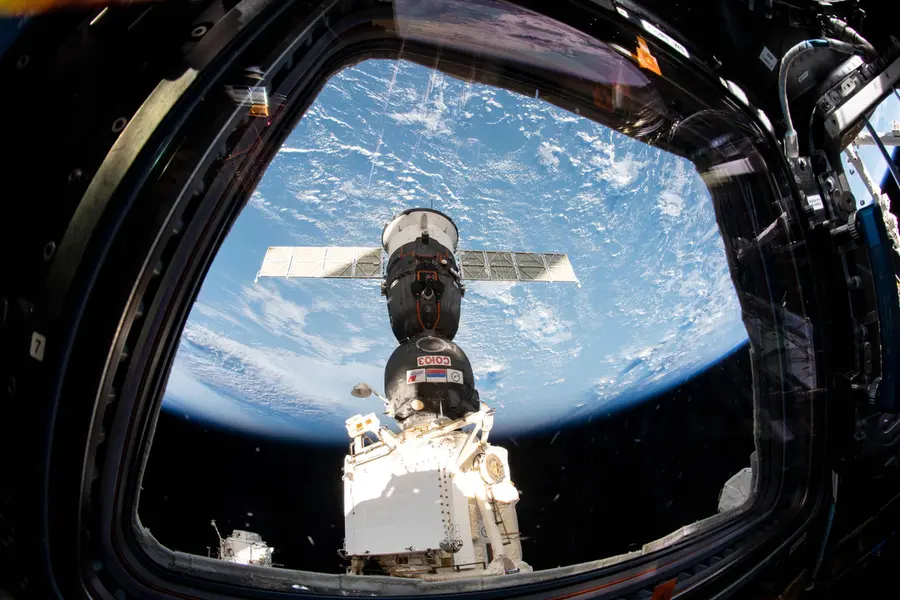
The Axiom-4 (Ax-4) space mission represents a landmark in global space collaboration, reintroducing India, Poland, and Hungary to human spaceflight after a hiatus of over four decades.
But beyond its symbolic value, the mission carries a series of pioneering scientific experiments -- including India's unique contribution to agricultural research in space.
Among the seven experiments contributed by India, two focus specifically on agriculture. Notably, the Kerala Agricultural University (KAU) is sending seeds of native Indian crops such as rice, tomato, brinjal (eggplant), sesame, and legume beans to the International Space Station (ISS) to examine how they react and adapt to microgravity.
KAU's seeds: From Kerala to Earth orbit
This marks the first time seeds developed by Kerala Agricultural University are participating in a human spaceflight mission. These seeds will remain in space for 14 days in a controlled microgravity environment aboard the ISS.
Once they return to Earth, they will be planted and monitored under strict laboratory conditions to assess changes in growth patterns, resilience, gene expression, and possible mutation. Similar microgravity experiments conducted in China in simulated conditions had shown that space exposure can alter seed behaviour.
An expert from KAU told Mathrubhumi, “Rice, tomato, brinjal, sesame seeds, and legume bean pulse seeds are being sent. These seeds are planted in soil in controlled conditions aboard the ISS. The idea is to expose them to 14 days of microgravity and evaluate the changes in the seeds once they are brought back.”
KAU scientist told added, "We are trying again with high expectations. If the experiments prove successful, they could contribute to farming solutions under climate-stressed conditions on Earth."
These experiments are part of a broader collaboration between KAU, the Indian Institute of Space Science and Technology (IIST), and the Indian Space Research Organisation (ISRO), facilitated through Axiom Space’s commercial access to low-Earth orbit.
“The duration could vary from crop to crop. It might take around four months before experimental results and evaluations are available,” the KAU expert clarified.
If these space-exposed seeds demonstrate resilience, faster germination, or desirable mutations, they could revolutionise both space farming and agricultural practices in drought-and heat-stressed regions on Earth.
Experiment timeline and evaluation
The entire process from space exposure to post-return observation is expected to span around four months. Each crop type may respond differently, requiring crop-specific analysis.
Scientists will observe not just plant growth, but also nutritional content, structural adaptations, and microbiological changes.
If the results prove promising, future experiments could test full crop cultivation in space-based greenhouses or bioreactors. “KAU has a collaboration with IIST, and through this, with ISRO, which enabled this opportunity to conduct space-based agricultural research,” the scientist said.
India's broader science agenda aboard Axiom-4
India's participation in Ax-4 includes seven key scientific experiments grouped under three domains:
- Agriculture and food security
- Biological adaptation in microgravity
- Technology optimisation for space habitats
Other experiments include:
- Seed Germination Studies: Moong (green gram) and methi (fenugreek) seeds will be sprouted in space, then brought back to study long-term genetic and microbial changes across generations.
- Microalgae Research: Conducted by ICGEB and the National Institute of Plant Genome Research, this experiment tracks how edible microalgae such as Spirulina and Chlorella behave in zero gravity. These species are known for their nutritional, oxygen-generating, and waste-recycling capabilities — all vital for future space stations or Mars bases.
- Tardigrade Study: The Indian Institute of Science (IISc) is sending water bears -- microscopic, highly resilient animals -- to observe how they survive and reproduce in microgravity. These insights could support space biotechnology and human life support strategies.
- Muscle Recovery Research: The Institute for Stem Cell Science and Regenerative Medicine is examining how astronauts can counteract muscle loss in zero gravity using targeted nutritional supplements. This has dual-use benefits: for space travellers and for people with muscular diseases on Earth.
- Human-Machine Interface Optimisation: Scientists will study how astronauts' visual tracking, focus, and hand-eye coordination are affected in zero gravity, with an aim to design more user-friendly and stress-resistant digital displays.
A step toward space agriculture
While India has previously contributed to space science through satellite launches and lunar missions, Axiom-4 represents a new direction: integrating biotechnology and agriculture into its space narrative.
The experiments from Kerala Agricultural University are rooted in traditional crop science but aim for futuristic goals -- enabling farming on other planets, inside space stations, and under harsh earthly conditions.
With Axiom Space enabling commercial access to the ISS and creating new platforms for scientific exchange, India's participation marks more than a symbolic return to human spaceflight. It is a research-driven stride into the future of space habitation and sustainable life-support systems -- with Kerala's seeds leading the way.
Published: 11 Jun 2025, 02:12 pm IST
ABOUT THE AUTHOR
Disclaimer: Kindly avoid objectionable, derogatory, unlawful and lewd comments, while responding to reports. Such comments are punishable under cyber laws. Please keep away from personal attacks. The opinions expressed here are the personal opinions of readers and not that of Mathrubhumi.