
The new launch date is yet to be announced
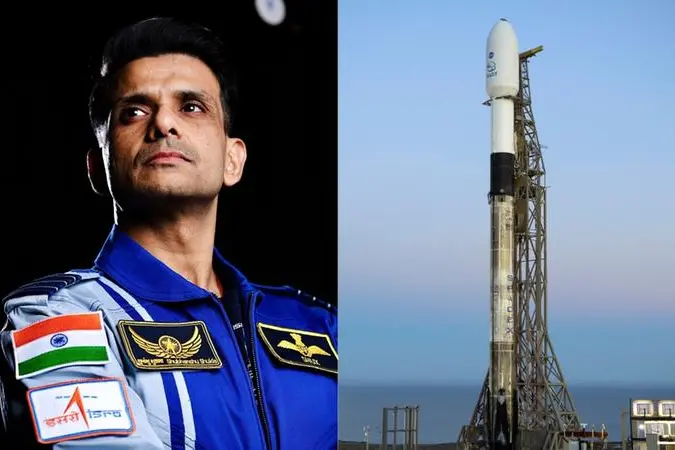
New Delhi: The launch of the Axiom-4 mission, which was set to carry Indian astronaut Shubhanshu Shukla and three other crew members to the International Space Station (ISS), has been postponed once more--this time due to a technical fault in the SpaceX Falcon-9 rocket.
SpaceX announced that it was "standing down" from the planned launch to allow time for repairs after engineers detected a liquid oxygen leak in the rocket’s propulsion bay during post-static fire inspections. The leak was found following a seven-second hot test designed to validate the booster’s performance on the launch pad.
“Once complete and pending Range availability, we will share a new launch date,” SpaceX said in a post on social media platform X.
Indian Space Research Organisation (ISRO) Chairman V Narayanan confirmed the issue, stating: “The ISRO team discussed with experts at Axiom and SpaceX and it was decided that the leak would be fixed and necessary validation tests conducted before clearing for the launch.”
The mission, originally slated for 29 May, has now seen multiple delays—first to 8 June, then to 10 June, and later to 11 June due to poor weather conditions. This latest postponement, however, stems from mechanical issues within the rocket's systems.
Axiom Space, which is coordinating the private spaceflight mission in partnership with SpaceX and international agencies, said: “During the post-static fire investigation of the Falcon-9 booster that supports the Axiom-4 mission, SpaceX teams identified a liquid oxygen leak that requires additional work. SpaceX continues to work closely with Axiom Space and partners.”
The Axiom-4 crew includes veteran astronaut and mission commander Peggy Whitson, Indian pilot Shubhanshu Shukla, Hungarian scientist Tigor Kapu, and Polish astronaut Slawosz Uznanski-Wisniewski. The 14-day mission to the ISS is intended to mark a significant milestone in human spaceflight for India, Poland, and Hungary, as each nation resumes crewed space missions after decades.
Addressing media ahead of the previously intended launch date, SpaceX Vice President William Gerstenmaier revealed that engineers had earlier fixed several issues, including a previously undetected leak from the Falcon-9’s last mission. “We are continuing to troubleshoot that... and installing a purge that will essentially mitigate the leak if it still continues,” he said.
Gerstenmaier also confirmed that a problem with the thrust vector control on engine 5 had been resolved, with the faulty components already replaced.
Published: 11 Jun 2025, 06:56 am IST
Related Topics
Disclaimer: Kindly avoid objectionable, derogatory, unlawful and lewd comments, while responding to reports. Such comments are punishable under cyber laws. Please keep away from personal attacks. The opinions expressed here are the personal opinions of readers and not that of Mathrubhumi.
