
The study explored the social, economic, and psychological impacts of poor road conditions on commuters.
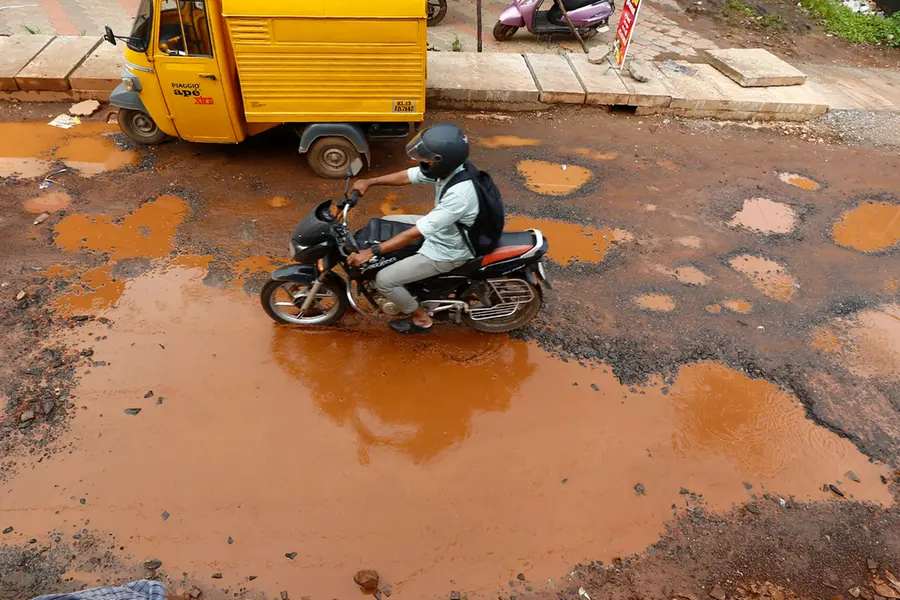
Thrissur, Kerala: Before setting off from his home near Valiyachudukad in Alappuzha, Dr P.N. Vinod Kumar checked his blood pressure. After navigating pothole-filled, winding roads and finally reaching Thrissur, he checked it again, his blood pressure had risen.
Dr. Vinod Kumar, who holds a doctorate in sociology and serves as faculty at the Department of Criminology in the Thrissur Police Academy, has turned his attention to an unusual subject: the sociology of roads.
His study explored the social, economic, and psychological impacts of poor road conditions on commuters.
His research began at 4:30 a.m. near the southern entrance of Thrissur's Swaraj Round, where he observed hundreds of daily wage workers arriving. He also interacted with over 100 traders whose livelihoods were affected after roads were dug up and their businesses forced to close.
The research, co-authored by forensic science graduate and CUSAT assistant professor M.S. Binshad and sociology student Anan Sharaf, was recently published in the European Journal of Military Studies' Res Militaris.
Key findings
The study surveyed over 300 people. As part of the study, 100 participants, 50 affluent individuals and 50 from lower-income backgrounds, were monitored while travelling from Alappuzha to Thrissur. Contrary to expectations, it was the wealthier group that reported higher levels of psychological stress.
The reason? Their travel is often tied to high-stakes activities such as business deals, flights, or official engagements, where delays have significant consequences.
In contrast, the common man’s stress stemmed from concerns like missing school, medical appointments, or attending family functions.
Published: 27 Jul 2025, 11:20 am IST
Related Topics
Disclaimer: Kindly avoid objectionable, derogatory, unlawful and lewd comments, while responding to reports. Such comments are punishable under cyber laws. Please keep away from personal attacks. The opinions expressed here are the personal opinions of readers and not that of Mathrubhumi.
