
Attukal Pongala 2026 counters Kerala Story film claims, highlighting interfaith harmony and women-led traditions.
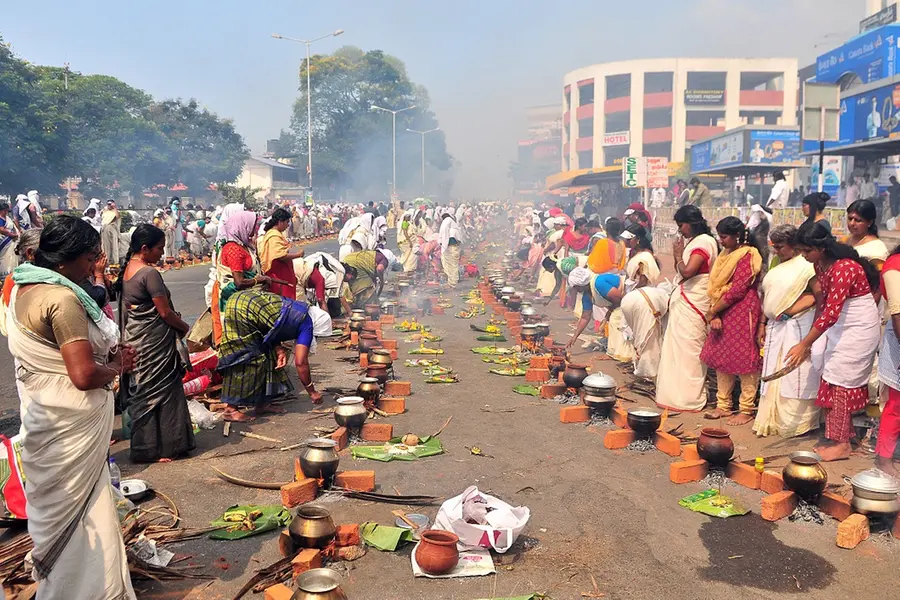
Thiruvananthapuram: Amid debates over The Kerala Story 2: Goes Beyond, the Attukal Pongala festival 2026 has stood out as a vivid demonstration of Kerala’s interfaith solidarity. Religious institutions across the city opened their doors to support the annual festival, ensuring pilgrims were welcomed with warmth and care.
Interfaith support and community arrangements
Mosques such as Manacaud Juma Masjid and Palayam Juma Masjid provided drinking water, rest areas, and meals, while St Joseph’s Church and nearby convents offered resting spaces, toilets, and refreshments. Faith leaders urged communities to prioritise hospitality, especially for women and children.
Special arrangements included bathing facilities, dedicated pavilions for rest, and 24-hour provision of food and water. Local groups supplied morning and lunch meals, fruits, juice, and snacks.
These gestures, repeated year after year, were particularly notable this year amid criticisms that the film misrepresents Kerala. The festival thus served as a tangible reflection of the state’s inclusive culture.
Political leaders hail festival as “real Kerala story”
VD Satheesan, Kerala MLA and Leader of Opposition, described the festival as the “real Kerala story”, highlighting the state’s secular legacy. “All the communities are the host for the devotees coming from various parts of Kerala. This is our legacy,” he said. “This is the real Kerala Story, we must declare that the state is secular... After the elections, we will declare that this is secular Kerala.”
Ruling CPM leader and Kerala MP John Brittas echoed the sentiment on X: “It is a celebration for all of us, all the Malayalees, whether it is Onam, Vishu, Eid or Christmas. Now, the most important aspect, at a time when orchestrated and diabolic attempts are made to create polarization and to dent harmony, this year's Attukal Pongala stood out as a symbol of solidarity among all religious institutions and groups. Unlike many parts of North India, where religious places are sometimes covered to prevent communal tensions, followers of all religions, including Christianity and Islam, in the case of Attukal Pongala, come out here to help the devotees of Attukal Amma."
He added: “Mosques such as Manakkad Juma Masjid and Palayam Juma Masjid opened their doors wide to offer drinking water, rest areas, and food, and food specifically during the Iftar break, as well as shelter for the travellers. For the last two decades, these places have welcomed Hindu devotees without any hesitation. The same spirit is found in Christian churches. Convents and churches remain open for devotees travelling from far-off places. Toilets and rest areas are specifically provided, and refreshments served for the comfort of the Attukal Amma pilgrims. In an era—this is where I am emphasizing my point—films like Kerala Story depict the state in a negative light, Attukal Pongala provides the real Kerala story.”
Festival rituals, participation, and city arrangements
The ten-day Attukal Pongala festival, celebrated at Attukal Bhagavathy Temple, peaked on the ninth day with the ceremonial lighting of the hearth, Pandara Aduppu. Millions of women devotees prepared offerings of rice, jaggery, and banana in earthen pots to Goddess Attukal Devi.
The temple, often called the “women’s Sabarimala”, holds a Guinness World Record for the largest gathering of women, with 2.5 million participants in 2009.
Thiruvananthapuram Mayor V V Rajesh confirmed arrangements for a smooth conduct. “The KSRTC has already deployed vehicles for the convenience of the people. There is no problem; everything is in place,” he said. Women performed rituals at makeshift brick hearths across temple premises and surrounding areas, continuing a tradition maintained for decades.
Published: 03 Mar 2026, 03:43 pm IST
Disclaimer: Kindly avoid objectionable, derogatory, unlawful and lewd comments, while responding to reports. Such comments are punishable under cyber laws. Please keep away from personal attacks. The opinions expressed here are the personal opinions of readers and not that of Mathrubhumi.
