
Two Alappuzha temples introduce life-sized robotic elephants, replacing captive elephants in a Kerala first.
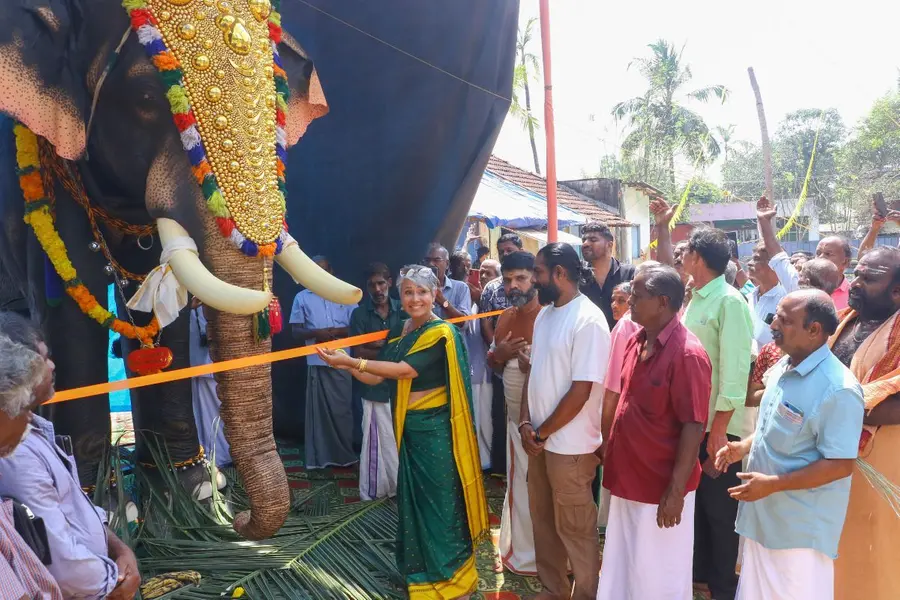
Alappuzha: In a significant shift for Kerala temple traditions, Voices for Asian Elephants (VFAE) on Thursday unveiled two life-sized robotic elephants at temples in Alappuzha district, marking the first time temples in the district have replaced live captive elephants with a mechanical alternative.
The installations were carried out at Panavally Neelamkulangara Sree Narayana Vilasam Sree Maha Vishnu Kshethram and Omkareswaram Sree Rama Subrahmanya Temple, Cherthala. The robotic elephants — Neelamkulangara Vishnudasan and Omkareswaram Rama Senapathy — were welcomed with traditional rituals, temple music and processions.
The initiative also marks the first time a non-profit has launched two robotic elephants in a single Kerala district on the same day.
Humane alternative to live captive elephants
The move comes amid growing scrutiny of the use of captive elephants in Kerala’s temple festivals. Between March 1, 2025 and January 2, 2026, 20 captive elephants died in the state, according to organisers — an average of two deaths per month.
Recent incidents have intensified debate over festival elephant safety. A stampede involving Thechikkotu Ramachandran reportedly resulted in multiple fatalities and injuries, while a separate incident in early February saw a mahout killed after being attacked by a distressed elephant.
Sangita Iyer, Founder and Managing Director of Voices for Asian Elephants Society, said the shift reflects a commitment to safer and ethical temple practices, adding that elephants are highly intelligent, social beings meant to live in forest habitats rather than confined environments.
Design and specifications
Each robotic elephant stands 10 feet tall and weighs approximately 500 kilograms. Made from fibre and rubber, the models feature electronically controlled movement of the eyes, ears, trunk and tail. They can carry up to four people during rituals and processions.
The elephants were designed by Four He-Arts Creations in Chalakudy under artist Prasanth Prakash. These installations are the third and fourth robotic elephants commissioned by VFAE, signalling a broader transition within South Indian temples.
Temple advisory committee representatives at both Alappuzha temples said the decision was taken to prioritise public safety and animal welfare while preserving ritual traditions.
Growing movement across South India
The Alappuzha launch follows earlier installations in Tamil Nadu and Thrissur, where temples introduced robotic elephants as part of similar reform efforts. Campaigners argue that the adoption of mechanical elephants reduces risks linked to crowd control, fireworks and elephant stress during festivals.
This year also marks the 10th anniversary of Gods in Shackles, a United Nations-nominated documentary produced and directed by Sangita Iyer, which highlighted the treatment of captive elephants in temple festivals.
Wider elephant conservation efforts
Beyond temple reform, Voices for Asian Elephants is involved in wild elephant conservation across India. In South Nilambur, Kerala, the organisation has donated four acres of private land to help secure a corridor used by around 340 wild elephants.
In Odisha, 52 acres have been rewilded in partnership with tribal communities, with approximately 100,000 elephant-friendly saplings planted across forest ranges.
The group has also deployed EleSense, an AI-powered system in West Bengal aimed at preventing elephant-train collisions. Organisers say the system has helped avert nearly 1,400 potential accidents over three years.
Published: 19 Feb 2026, 09:34 pm IST
Disclaimer: Kindly avoid objectionable, derogatory, unlawful and lewd comments, while responding to reports. Such comments are punishable under cyber laws. Please keep away from personal attacks. The opinions expressed here are the personal opinions of readers and not that of Mathrubhumi.
