
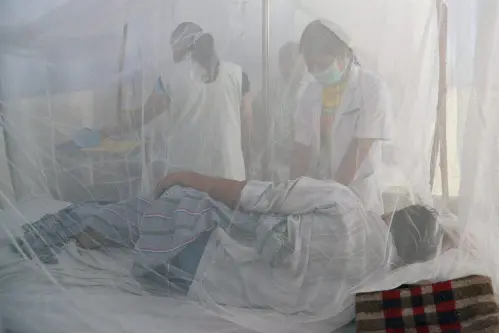
Alappuzha: With the steep rise in the number of dengue fever patients in Kerala, a shortage of platelets in blood banks in the State has also been experienced.
Relatives of patients are returning from the blood bank without getting platelets. At the same time, there are not many takers for the modern system called apheresis which is thought to make a big difference in the blood donation process. The donors are reluctant to switch to an apheresis method that can harvest more platelets.
In the apheresis method, the donor’s blood will be fully fed into the machine, after taking the required components, the blood will be returned to the body. By this method, even six units of platelets can be extracted. The fact that more platelets could be extracted through apheresis is a great relief to patients with rare blood groups as well.
By the current method, only one unit of platelets can be taken.
Advantages
Currently, 150 milliliters of plasma is obtained from a donor. Whereas by apheresis, 500 milliliters of the same can be collected. Normally blood donation is allowed only once every three months. At the same time, in the new method, blood can be donated even three times a month. It's a relief to people with rare blood groups.
Drawbacks
Relatively apheresis is costly. It takes at least Rs 8,000-10,000 for the patients. The cost, however, can be reduced if the government provides kits to the blood banks. The whole process will take at least two hours to complete. Many people hesitate because it is an operation like dialysis.
High blood donation rate
The number of people donating blood in Kerala is increasing every year. Last financial year, a total of 5,90,726 people donated blood. Out of these, 4,44,966 were volunteers. If the blood donation is done through apheresis, the benefit will definitely increase. It is expected that by making people aware of the same, the shortage of platelets could be resolved to a great extent.
Blood donation statistics in the past five years
| Fiscal Year | Number of donors |
| 2018-19 | 4,29,961 |
| 2019-20 | 4,51,530 |
| 2021-22 (Covid period) | 2,74,280 |
| 2022-23 | 5,86,788 |
| 2023-24 | 5,90,726 |
Published: 16 Jul 2024, 08:12 am IST
Related Topics
Subscribe to our Newsletter
Disclaimer: Kindly avoid objectionable, derogatory, unlawful and lewd comments, while responding to reports. Such comments are punishable under cyber laws. Please keep away from personal attacks. The opinions expressed here are the personal opinions of readers and not that of Mathrubhumi.
