
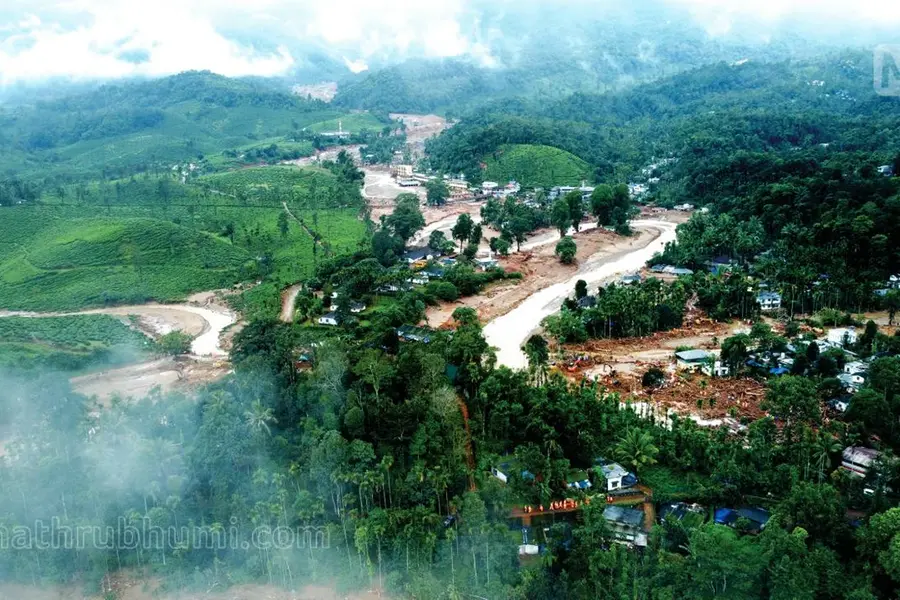
Kozhikode: A recent study by the Kerala University of Fisheries and Ocean Studies (KUFOS) has revealed that 14% of land in Wayanad is prone to landslides. The study also indicates that 13% of the total geographical area in Kerala falls under extreme landslide zones.
The report, prepared by Dr. Gireesh Gopinath (Head of the KUFOS Puthuvype campus) and A.L. Achu (KUFOS landslide researcher), highlights a 3.46 percentage increase in extreme landslide-prone areas in the state since the devastating floods of 2018. This report, which utilised AI-driven technology, was completed earlier this year, before the tragic Wayanad landslides that reportedly claimed over 400 lives.

Alert Systems
To predict landslides more effectively, the study suggests implementing a system that provides rain updates from automated weather stations every 5-10 minutes. Additionally, data on soil moisture and radar-based rain predictions are crucial. Integrating this data with AI-powered devices could enhance landslide prediction accuracy. The report advocates for the establishment of an SMS-based live alert system as an urgent need for Kerala.
The Challenge of Monsoons
While the south-western and north-eastern monsoons are crucial for boosting ecological diversity and agricultural yields, they also pose risks. Torrential rains often lead to landslides, triggered by excessive rainfall over short periods. The report notes that deforestation, unregulated construction, and poor land use strategies exacerbate these risks, leading to frequent disasters.
Published: 14 Aug 2024, 11:51 am IST
ABOUT THE AUTHOR
Related Topics
Disclaimer: Kindly avoid objectionable, derogatory, unlawful and lewd comments, while responding to reports. Such comments are punishable under cyber laws. Please keep away from personal attacks. The opinions expressed here are the personal opinions of readers and not that of Mathrubhumi.