
India marks World Population Day with plans for a digital, caste-inclusive Census 2027 rollout.
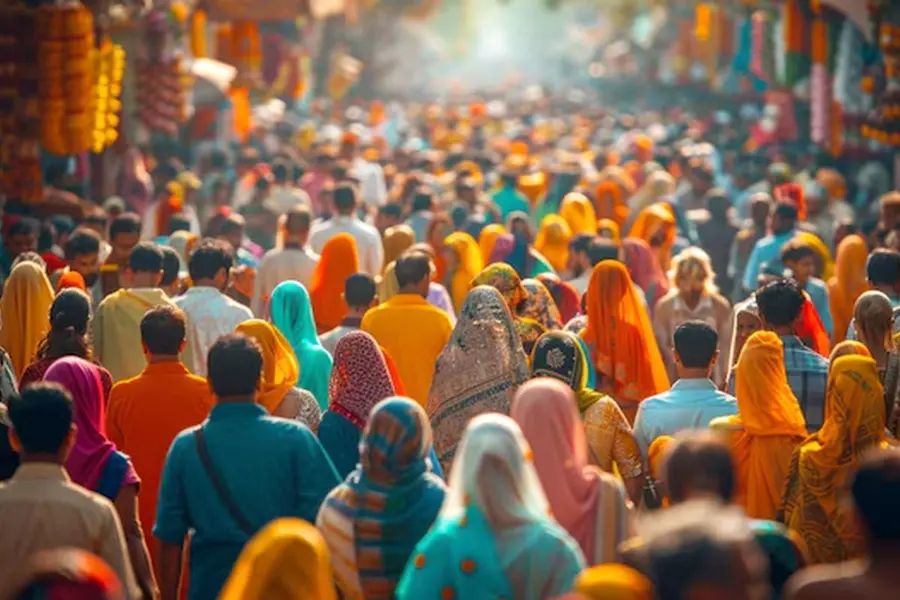
As the world observes World Population Day on July 11, India is preparing for one of the most ambitious demographic exercises in its history — Census 2027. This year’s theme, “Empowering young people to create the families they want in a fair and hopeful world,” resonates strongly with India, where nearly 65% of the population is under the age of 35.
Reflecting the aspirations of this youthful demographic, India is set to modernise its census process with digital technology and inclusive caste data, marking a significant shift in the country's approach to population studies.
A legacy rooted in centuries
India's engagement with population statistics is not new. Ancient texts such as Kautilya’s Arthashastra (321–296 BC) and Abdul Fazl’s Ain-e-Akbari during Akbar’s reign refer to systematic population records.
Modern census operations began between 1865 and 1872, with the first synchronised census conducted in 1881. Since then, the decennial exercise has evolved into the largest single source of statistical data on India's people. The process is governed by the Census Act, 1948 and Census Rules, 1990.
Highlights from past censuses
Over the decades, India’s census has recorded key milestones:
- 1951: Introduced field re-checking to verify data accuracy.
- 1961: Turned into a sociological archive with detailed studies on rural crafts, fairs, and festivals.
- 1971: Began mapping internal migration and allowed state-specific research studies.
- Post-1991: Only 45% of data was digitised, but full digitisation was achieved by 2001 and 2011 using Intelligent Character Recognition (ICR).
- The 2011 Census was the 15th since 1872 and the seventh since independence.
- Census 2027: Tech-driven and socially inclusive
Notification and schedule
The Ministry of Home Affairs officially issued the notification for Census 2027 on June 16, 2025. The exercise will be carried out in two phases:
- March 1, 2027 (00:00 hours): For most of the country.
- October 1, 2026 (00:00 hours): For snow-bound areas of Jammu & Kashmir, Ladakh, Himachal Pradesh, and Uttarakhand.
Digital transformation
For the first time, India’s census will go fully digital, featuring:
- Mobile app-based field data collection
- A Census Monitoring & Management Portal with multilingual support
- Online self-enumeration by the public
- Code Directory to ensure uniform data classification
- An in-built validation mechanism for improved data integrity
- Training for over 35 lakh field functionaries
Caste enumeration
In a major departure from post-independence practice, Census 2027 will include caste enumeration for all individuals. Until now, only Scheduled Castes (SC) and Scheduled Tribes (ST) were included.
Caste surveys conducted independently by some states have raised concerns about politicisation and transparency. To maintain national cohesion and consistency, the government has decided to include caste data within the central census framework.
A turning point for inclusive governance
As India prepares for Census 2027, the country stands at the crossroads of tradition and innovation. The exercise promises to be a cornerstone for evidence-based policymaking, offering insights into housing, language, literacy, economic activity, migration, and more — all while reflecting the diversity and aspirations of India’s youthful population.
By combining historical continuity with digital tools and inclusive practices, Census 2027 is poised to set a new benchmark in demographic research, not just for India but for the world.
Published: 11 Jul 2025, 03:19 pm IST
Related Topics
Disclaimer: Kindly avoid objectionable, derogatory, unlawful and lewd comments, while responding to reports. Such comments are punishable under cyber laws. Please keep away from personal attacks. The opinions expressed here are the personal opinions of readers and not that of Mathrubhumi.
