
Jagdeep Dhankhar, India`s 14th Vice President, resigns due to health reasons, triggering a new election.
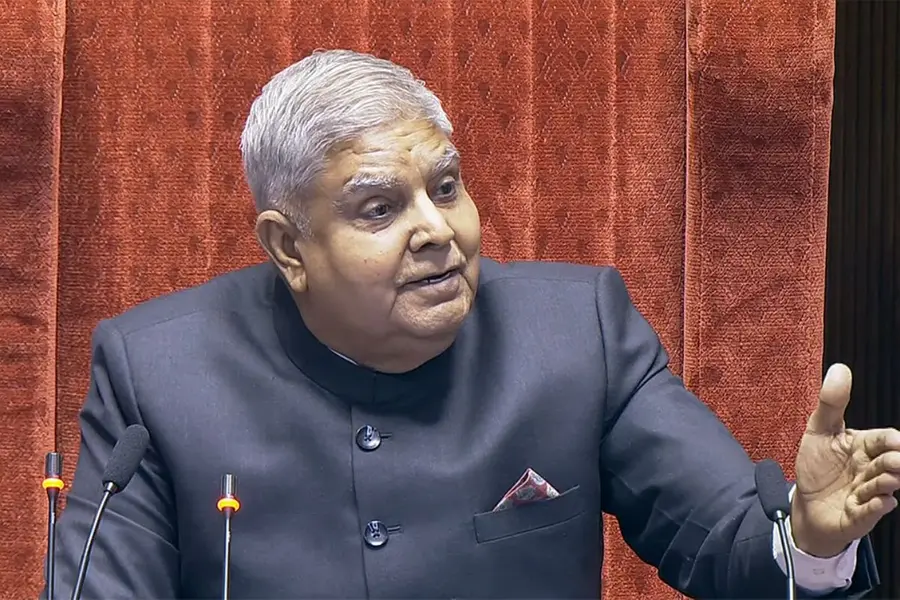
Jagdeep Dhankhar, the 14th Vice President of India, resigned from office late Monday, citing health concerns and adherence to medical advice. His decision, communicated through a letter to President Droupadi Murmu, invoked Article 67(a) of the Constitution and took immediate effect.
Having assumed office in August 2022 after a landslide electoral win, Dhankhar’s resignation comes with nearly two years left in his five-year term. His exit now triggers the constitutional process to elect his successor, a move experts believe will unfold swiftly.
Health concerns prompt early exit
“To prioritise health care and abide by medical advice, I hereby resign as Vice President of India, effective immediately,” Dhankhar wrote in his resignation letter.
Over the past year, the 74-year-old had been hospitalised on several occasions, most recently in Nainital, though the specifics of his illness remain undisclosed.
What happens next?
With the Vice Presidency now vacant, the Election Commission is expected to initiate the electoral process in line with constitutional provisions, according to TOI. Articles 63 to 71 of the Constitution and the Vice-President (Election) Rules, 1974, govern the election process.
Article 66 specifies that the Vice President is elected by an electoral college comprising members of both Houses of Parliament — the Lok Sabha and Rajya Sabha — through a proportional representation system using the single transferable vote and secret ballot. The Constitution mandates the vacancy be filled "as soon as possible".
The electoral college currently comprises 788 MPs — 543 in the Lok Sabha and 245 in the Rajya Sabha. Experts believe that in order to maintain procedural order in the Rajya Sabha, where the Vice President serves as the ex-officio chairman, the new election will be expedited.
Who can contest?
To be eligible for the Vice Presidency, a candidate must:
- Be a citizen of India
- Be at least 35 years of age
- Be qualified for election to the Rajya Sabha
- Not hold any office of profit
Role of the Vice President
The Vice President of India holds the second-highest constitutional position in the country. Apart from chairing the Rajya Sabha, the Vice President may also serve as the acting President in the event of the President’s resignation, death, or removal — until a new President is elected.
Political analysts say the coming days will see intensified consultations across party lines as parties begin zeroing in on potential candidates to replace Dhankhar. The Election Commission is likely to issue a detailed schedule and notification soon.
From farmer's son to Vice President
Born on May 18, 1951, in Kithana village of Rajasthan’s Jhunjhunu district, Dhankhar's rise from modest beginnings as a “Kisan Putra” to one of the highest constitutional offices in the country has been widely acknowledged.
He was educated at Sainik School in Chittorgarh and went on to earn degrees in science and law from the University of Rajasthan. Dhankhar began practising law in 1979 and was designated a Senior Advocate by the Rajasthan High Court in 1990. He later practised in the Supreme Court and served as president of the Rajasthan High Court Bar Association.
Entering politics in 1989 as a Janata Dal MP from Jhunjhunu, he held the role of Minister of State for Parliamentary Affairs in the Chandra Shekhar cabinet. From 1993 to 1998, he served as an MLA in Rajasthan. In 2019, he was appointed Governor of West Bengal, where his tenure saw frequent friction with the TMC government.
Record victory in 2022
The BJP-led NDA named Dhankhar its Vice Presidential candidate on July 16, 2022. With formal nomination filed two days later, he won the August 6 election by a historic margin — receiving 528 votes out of 710, defeating opposition nominee Margaret Alva who managed 182 votes. It marked the largest victory margin since 1992. The TMC had abstained from voting.
(With inputs from IANS)
Published: 21 Jul 2025, 11:21 pm IST
Related Topics
Disclaimer: Kindly avoid objectionable, derogatory, unlawful and lewd comments, while responding to reports. Such comments are punishable under cyber laws. Please keep away from personal attacks. The opinions expressed here are the personal opinions of readers and not that of Mathrubhumi.
