
From safety fears to welfare promises, Bengal’s women voters dramatically shifted towards BJP in the 2026 election, weakening Mamata Banerjee’s strongest support base.
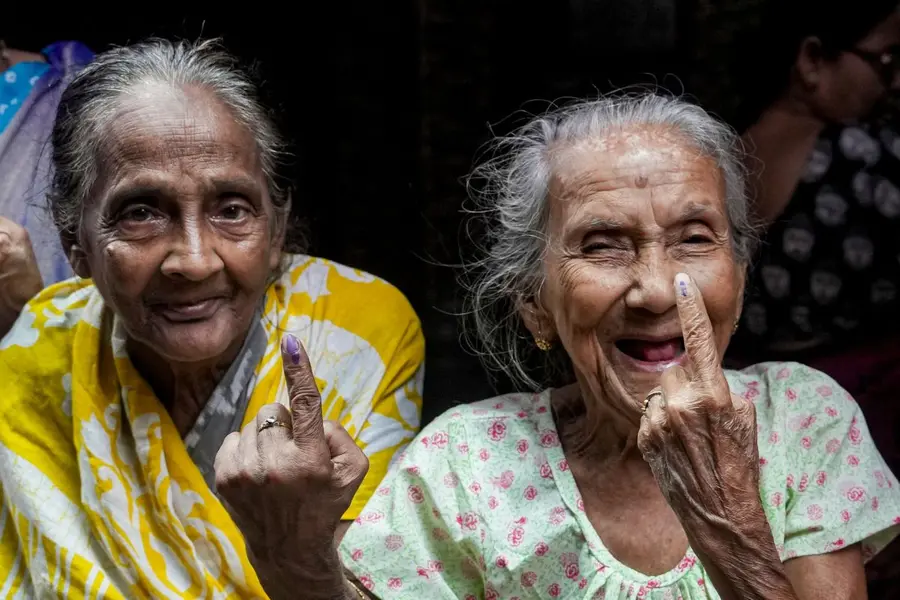
A woman in North 24 Parganas reportedly summed up Bengal’s election mood while standing outside a polling booth: “Money matters, but safety matters more.”
For years, women were seen as the backbone of Mamata Banerjee’s political dominance in West Bengal.
Also Read

From the emotional “Banglar Meyei” pitch in 2021 to direct cash transfer schemes that reached millions of households, the Trinamool Congress (TMC) had built a near-unshakable connection with female voters. But in 2026, that equation cracked dramatically.
The BJP’s massive victory was not just about anti-incumbency or organisational expansion.
It was also about a silent but significant churn among women voters, many of whom appeared willing to move beyond Banerjee’s welfare-driven politics and experiment with a new promise of financial support, security, and political change.
Safety became bigger than symbolism
The BJP’s campaign repeatedly hammered one emotional point: women no longer felt safe under the Trinamool government.
From the Sandeshkhali unrest to the RG Kar rape-murder case, the Opposition ensured that allegations of intimidation, sexual violence, and administrative failure remained at the centre of Bengal’s political conversation.
The images of women protesting on the streets created a perception battle that severely hurt the ruling party.
The BJP converted that anger into a targeted campaign. It promised women-only “Durga Surokha Squads”, more women police stations, self-defence programmes, and dedicated women’s help desks in police stations.
More importantly, the party gave symbolic political space to women linked to these controversies.
Fielding the RG Kar victim’s mother and Sandeshkhali protest face Rekha Patra was not just an electoral move, it was messaging. The BJP wanted women voters to believe it was carrying their anger into the Assembly battle.
BJP outbid Mamata on welfare politics
For over a decade, Banerjee mastered Bengal’s welfare politics through schemes like ‘Kanyashree’, ‘Rupashree’, and especially ‘Lakshmir Bhandar’.
The monthly financial assistance scheme had become deeply popular among women across rural and urban Bengal, but ahead of the 2026 polls, the BJP directly challenged that model instead of opposing it.
Its proposed ‘Annapurna Bhandar’ scheme promised significantly higher monthly financial assistance for women, along with free bus travel, reservations in government jobs, financial support for pregnant women, aid for female students, and health-related benefits like HPV vaccinations and cancer screenings.
The BJP essentially told Bengal’s women: you do not have to choose between welfare and change, you can get both.
That altered the political contest. Instead of Mamata owning the welfare narrative uncontested, women voters suddenly had a competing offer on the table.
Anger against the system spilled into women’s voting choices
Beyond schemes and campaign slogans, many observers believe frustration with the Trinamool’s local power structure played a major role in the shift.
Allegations involving “cut money”, syndicate networks, corruption, and political intimidation had been growing for years.
In many districts, women, especially from lower-income families, were directly exposed to local-level political control over housing schemes, benefits, and everyday administration.
The BJP successfully turned that resentment into a wider demand for political change. Women voters, once considered Banerjee’s most dependable shield, appeared more willing this time to punish the ruling party despite continuing welfare benefits.
The verdict suggested that identity politics and emotional connection alone were no longer enough to override concerns over governance, safety, and local corruption.
And that may ultimately be the biggest takeaway from Bengal’s 2026 election: the women who once helped build Banerjee’s strongest fortress also played a decisive role in bringing it down.
Published: 06 May 2026, 09:07 am IST
Related Topics
Disclaimer: Kindly avoid objectionable, derogatory, unlawful and lewd comments, while responding to reports. Such comments are punishable under cyber laws. Please keep away from personal attacks. The opinions expressed here are the personal opinions of readers and not that of Mathrubhumi.