
A next-generation hypersonic missile that, once operational, is expected to become the fastest cruise missile in the world.
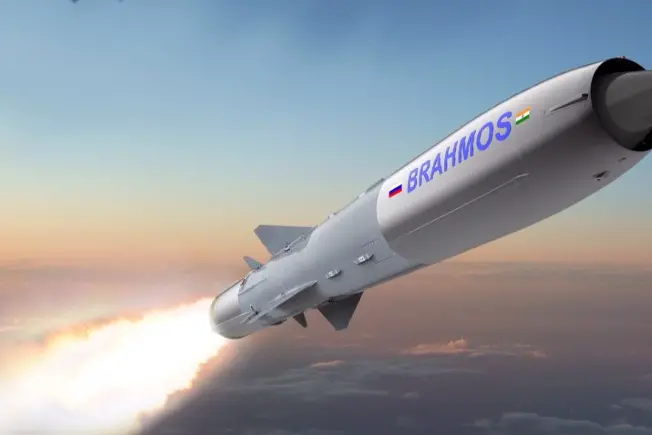
Defence Minister Rajnath Singh on Thursday confirmed the use of the BrahMos cruise missile during India’s recent Operation Sindoor targeting terror camps based in Pakistan.
The announcement sparked widespread interest on social media, with many discussing the capabilities of the BrahMos, which remains the fastest cruise missile currently in India’s arsenal.
However, an even more advanced version is on the horizon. India is set to upgrade to the BrahMos-II — a next-generation hypersonic missile that, once operational, is expected to become the fastest cruise missile in the world.
Currently, under joint development by the Defence Research and Development Organisation (DRDO) and Russia’s NPO Mashinostroyenia, the BrahMos-II (also known as BrahMos-2 or BrahMos Mark II) will be powered by a scramjet airbreathing engine and is expected to reach speeds of Mach 8. The missile will reportedly have a range of 1,500 kilometres and will be capable of precision strikes at unprecedented speeds.
The missile has been named BrahMos-II (K) in honour of former Indian President and missile scientist Dr. A.P.J. Abdul Kalam. While testing was initially planned for 2020, development delays have pushed the timeline forward. According to media reports, the BrahMos-II will likely have similar characteristics to Russia’s 3M22 Zircon, a hypersonic cruise missile upon which it is being based.
The original BrahMos missile, first tested on June 12, 2001, is a product of the Indo-Russian joint venture BrahMos Aerospace. The missile’s name combines the names of two rivers: the Brahmaputra and the Moskva in Russia.
BrahMos is a supersonic cruise missile capable of flying at speeds of Mach 3 and was originally designed for a range of 290 kilometres. Advanced variants, however, can reach up to 500–800 kilometres. The missile can carry a high-explosive warhead weighing between 200 and 300 kilograms and is designed for launch from land, air, sea, and sub-sea platforms, making it a versatile weapon system.
The BrahMos program was initiated in 1998 with an authorised capital of $250 million (over ₹2,135 crore in today’s value), with India contributing 50.5% and Russia 49.5%. Though the exact development cost remains classified, the system has since become a key pillar of India’s strategic deterrent.
With the upcoming BrahMos-II, India is poised to leap into the era of hypersonic weaponry — an area currently dominated by a handful of nations.
Published: 16 May 2025, 05:52 pm IST
Related Topics
Disclaimer: Kindly avoid objectionable, derogatory, unlawful and lewd comments, while responding to reports. Such comments are punishable under cyber laws. Please keep away from personal attacks. The opinions expressed here are the personal opinions of readers and not that of Mathrubhumi.
