
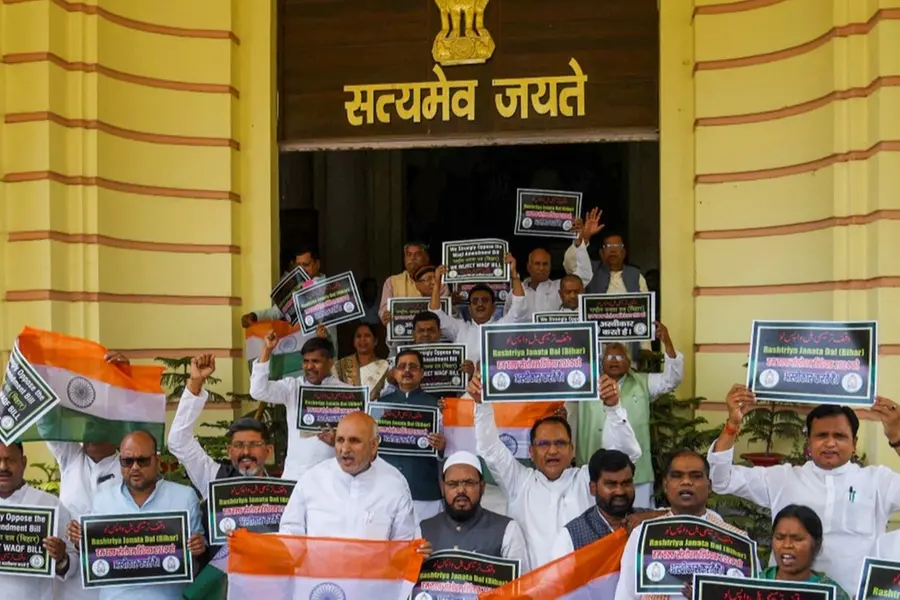
The Parliament will on Wednesday discuss the Waqf Amendment Bill 2024 which, according to the Narendra Modi government, addresses longstanding concerns over the misuse, encroachment, and mismanagement of Waqf properties.
According to the government, Waqf properties, meant for the welfare of the Muslim community in areas such as education, healthcare, and religious purposes, have frequently been subject to fraudulent claims and misappropriation.
Here are 15 key points to know about the Modi government's Waqf Amendment Bill 2024:
* Prevention of Misuse: The bill aims to prevent the encroachment, fraudulent claims, and misuse of Waqf properties, ensuring they serve their intended purpose for community welfare.
* Mandatory Digitization: All Waqf properties must be identified, digitized, and registered online within six months to enhance transparency and prevent illegal claims.
* Legal Ownership Requirement: Only a lawful property owner who has practiced Islam for at least five years can dedicate property as Waqf, preventing fraudulent dedications.
* End of "Waqf by User": Properties can no longer be declared Waqf based on long-term usage alone. Only properties with formal Waqf deeds will be recognized.
* Protection of Existing Waqf: Properties already classified as Waqf under "Waqf by user" will remain protected unless they are disputed or government-owned.
* Government Property Protection: Any government property previously declared as Waqf must undergo verification before being recognized, preventing wrongful classifications.
* Involvement of Collectors in Surveys: The responsibility for pending Waqf surveys is transferred to the jurisdiction of the Collector, ensuring efficient and unbiased assessments.
* Enhanced Accountability for Waqf Boards: State Waqf Boards must hold monthly meetings to improve oversight and decision-making.
* Stricter Oversight on Trusts: Muslim charitable trusts operating under other legal frameworks will not be classified as Waqf, preventing unnecessary control by Waqf Boards.
* Clear Legal Definition of Waqf: The bill restores the pre-2013 definition, ensuring only legally owned properties can be dedicated as Waqf, reducing fraudulent claims.
* Removal of Section 40: The exclusive power of Waqf Boards to declare any property as Waqf has been omitted, preventing arbitrary decisions.
* Strengthening Legal Recourse: A new appellate mechanism under Section 83(9) allows tribunal decisions to be challenged, ensuring fair legal remedies.
* Application of Limitation Act: The bill enforces the Limitation Act on Waqf disputes, ensuring timely resolution of legal cases.
* Transparency Through WAMSI Portal: Waqf Boards are required to upload property details onto the WAMSI (Waqf Management System of India) portal, ensuring public access to records.
* Removal of Section 108A: The bill eliminates Section 108A, which previously granted Waqf laws overriding authority over other legal provisions, ensuring legal uniformity.
Published: 02 Apr 2025, 10:58 am IST
Related Topics
Disclaimer: Kindly avoid objectionable, derogatory, unlawful and lewd comments, while responding to reports. Such comments are punishable under cyber laws. Please keep away from personal attacks. The opinions expressed here are the personal opinions of readers and not that of Mathrubhumi.
