
Mamata alleges SIR in West Bengal is being misused for mass voter deletions during ongoing SC hearing.
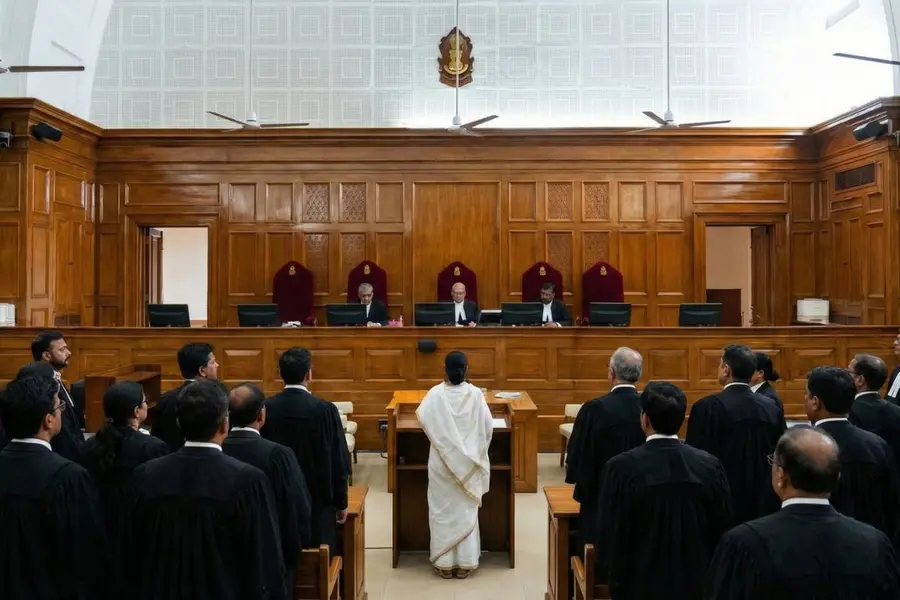
New Delhi: The Supreme Court on Wednesday issued a notice to the Election Commission of India (ECI) in response to West Bengal Chief Minister Mamata Banerjee’s plea challenging the Special Intensive Revision (SIR) process in the state, directing the ECI to file its reply by February 10. During the hearing, Mamata told the court that the SIR of electoral rolls in West Bengal is being misused to facilitate “mass voter deletions” rather than for genuine verification.
Banerjee, appearing in person before a bench headed by Chief Justice Surya Kant, alleged that routine life changes were being flagged as “mismatches” or “logical discrepancies”. She cited examples such as women adopting their husband’s surname after marriage, relocating to in-laws’ homes, or moving for work, which were being incorrectly treated as discrepancies leading to potential deletion from voter lists.
The Chief Minister said residents had welcomed the court’s earlier direction to accept documents such as Aadhaar cards, domicile certificates and government-issued housing papers. However, she alleged that Bengal was being singled out for scrutiny ahead of upcoming elections. Questioning the urgency of the exercise, she asked why a process that could have been conducted over two years was compressed into just four months. She added that notices were issued during peak harvest and festive seasons, making it difficult for many to respond.
Banerjee further claimed that powers traditionally exercised by Electoral Registration Officers (EROs) and Assistant EROs had been effectively sidelined, with around 3,800 “micro-observers”, many from BJP-ruled states, deployed to recommend deletions. She alleged that in the first phase alone, nearly 58 lakh names had been marked as “declared dead”, and that many women were being removed from rolls, terming the exercise “anti-women”. She also stated that in many cases, domicile certificates and other government-issued documents were not being accepted.
Senior Advocate Shyam Divan, representing Mamata Banerjee, placed before the Court data indicating that 32 lakh voters were marked as unmapped, 1.36 crore entries — nearly 20% of the electorate — were flagged under the logical discrepancy list, and around 63 lakh hearings were still pending. He also questioned the appointment of 8,300 micro-observers, arguing that they lacked statutory backing and were rejecting valid documents such as Aadhaar, domicile, and caste certificates.
Responding to these concerns, Senior Advocate Rakesh Dwivedi, appearing for the ECI, said all notices contained reasons and voters were permitted to act through authorised agents. He defended the appointment of micro-observers, stating that the State government had failed to provide adequate Group B/Class II officers despite repeated requests, leaving the Commission with no alternative.
Seeking a practical resolution, the Chief Justice directed the State to provide, by Monday, a list of Group B officers who can be spared to assist in the exercise. The Bench ordered the issuance of notice in both petitions and directed that a connected matter, in which the ECI has already filed an affidavit, also be listed on Monday. The Court said all issues would be heard together on the next date.
The Court also heard exchanges on name discrepancies arising from linguistic and transliteration issues, which the Bench noted occur across India due to local dialects. Senior Advocate Kapil Sibal reminded the Court that assurances had been given earlier that minor discrepancies would not be pressed.
The Chief Justice observed that the court could consider directing that every notice be formally authorised by the Booth Level Officer (BLO), reinforcing accountability in the process. Banerjee maintained that deletions were primarily being driven by micro-observers rather than local electoral officials.
Mamata Banerjee alleged that Bengal was being singled out, while similar exercises were not conducted in other states such as Assam. She questioned the timing of the SIR exercise after 24 years, its conduct during the harvesting season, and claimed that residents were being declared dead despite being alive. She urged the Court, “Please protect the people's rights. We are grateful.”
The hearing concluded with the Court assuring that the matter would receive urgent and comprehensive consideration.
(With ANI inputs)
Published: 04 Feb 2026, 02:00 pm IST
Disclaimer: Kindly avoid objectionable, derogatory, unlawful and lewd comments, while responding to reports. Such comments are punishable under cyber laws. Please keep away from personal attacks. The opinions expressed here are the personal opinions of readers and not that of Mathrubhumi.
