
ECI sets West Bengal 2026 polls for April 23 and 29; counting on May 4. Move to 2-phase voting sparks major debate.
New Delhi: The Election Commission of India on Sunday scheduled the 2026 West Bengal Legislative Assembly elections for April 23 and April 29, a consolidated two-phase timeline that marks a sharp departure from previous cycles.
Chief Election Commissioner Gyanesh Kumar, alongside commissioners Sukhbir Singh Sandhu and Vivek Joshi, detailed the plan at a Vigyan Bhawan press conference. The announcement immediately implements the Model Code of Conduct across the state's 294 constituencies.
The initial phase will involve 152 seats on Thursday, April 23, while the final 142 seats will go to the polls on Wednesday, April 29. All ballots will be tallied on May 4.
Moving to a two-phase system marks a major logistical change from the 2021 contest, which spanned eight phases over 30 days.
| Poll Events | FIRST PHASE (152 ACs) | SECOND PHASE (142 ACs) |
| Date of Issue of Gazette Notification | 30.03.2026 (Monday) | 02.04.2026 (Thursday) |
| Last Date for making Nominations | 06.04.2026 (Monday) | 09.04.2026 (Thursday) |
| Date for the scrutiny of Nominations | 07.04.2026 (Tuesday) | 10.04.2026 (Friday) |
| Last date for the withdrawal of candidatures | 09.04.2026 (Thursday) | 13.04.2026 (Monday) |
| Date of Poll | 23.04.2026 (Thursday) | 29.04.2026 (Wednesday) |
| Date of Counting | 04.05.2026 (Monday) | 04.05.2026 (Monday) |
| Date before which election shall be completed | 06.05.2026 (Wednesday) | 06.05.2026 (Wednesday) |
Bipolar Contest Looms
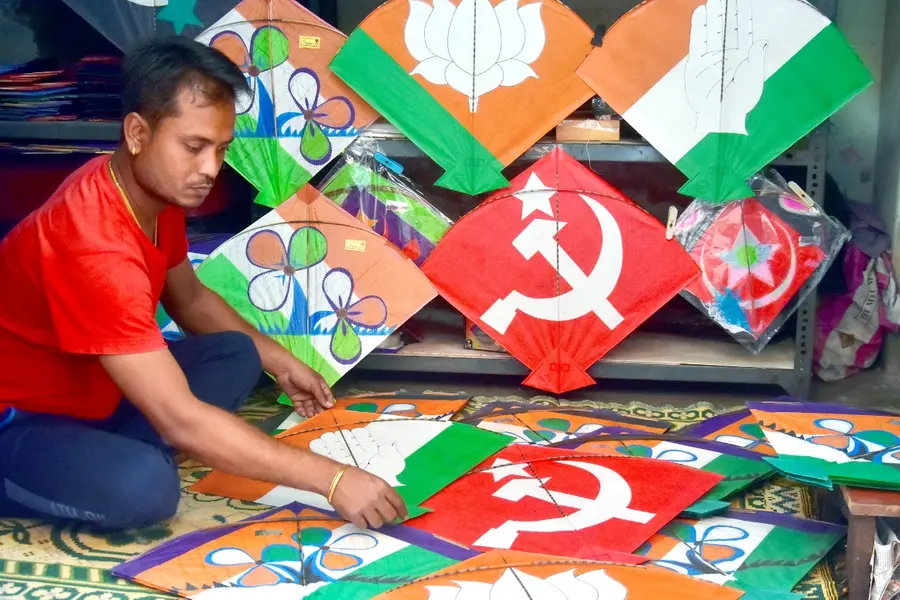
The election is expected to be a primary showdown between the ruling All India Trinamool Congress (AITC), led by Chief Minister Mamata Banerjee, and the Bharatiya Janata Party (BJP), the principal opposition.
- Trinamool Congress: Seeking a fourth consecutive term, the TMC is campaigning on its welfare schemes and regional identity.
- BJP: Armed with an aggressive campaign strategy, the BJP aims to build on its 2021 performance and dislodge the incumbent government.
- The Left-Congress Alliance: The Communist Party of India (Marxist) and the Indian National Congress, along with the Indian Secular Front (ISF), are attempting to reclaim their ground as a third front to prevent a completely bipolar contest.
Security and Logistics
To ensure a "violence-free" election, the commission has authorised a massive deployment of Central Armed Police Forces (CAPF). Nearly 500 companies are already on advanced deployment in the state, with the total strength expected to surpass previous records.
Published: 15 Mar 2026, 04:32 pm IST
Disclaimer: Kindly avoid objectionable, derogatory, unlawful and lewd comments, while responding to reports. Such comments are punishable under cyber laws. Please keep away from personal attacks. The opinions expressed here are the personal opinions of readers and not that of Mathrubhumi.
