
The Centre defended the Waqf (Amendment) Act, 2025 in the Supreme Court
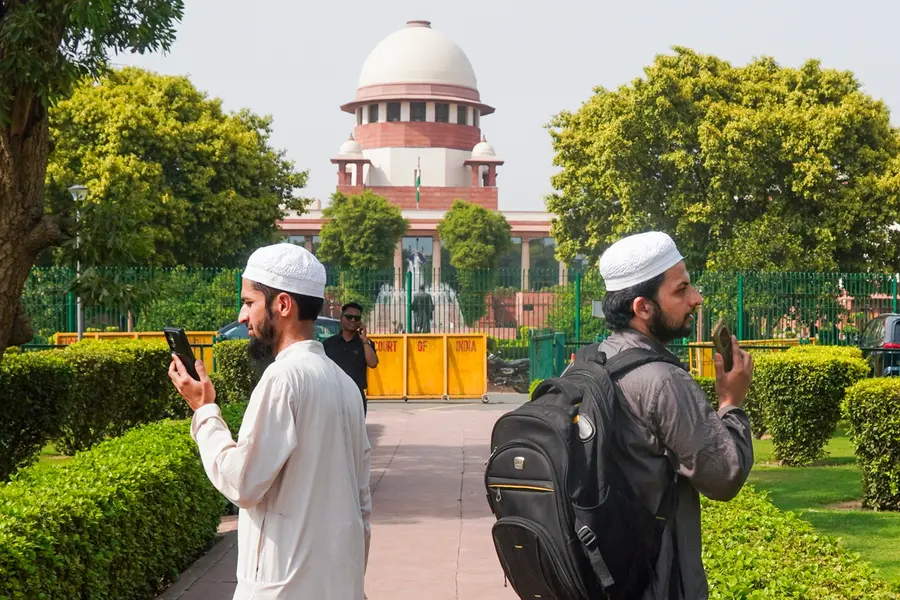
New Delhi: On Thursday, the Centre presented its arguments before the Supreme Court defending the Waqf (Amendment) Act, 2025, amid challenges to its validity.
Solicitor General Tushar Mehta emphasised that while waqf is an Islamic concept, it is not an essential part of Islam and therefore does not enjoy constitutional protection as a fundamental religious practice.
He added waqf should not be considered exclusive or core to Islam. This distinction, he said, means the practice does not automatically qualify for constitutional safeguards under Articles 25 and 26, which protect religious freedom.
The case comes amid growing criticism from some sections of the Muslim community, who view the recent changes as part of a pattern where laws disproportionately impact minority religious practices and institutions. Critics have particularly raised concerns over the amendment’s effect on longstanding waqf properties and the principle of "waqf by user"—a legal recognition of properties based on their long-term use for religious or charitable purposes, even in the absence of official records.
The government argued that this principle is not a religious right but a legislative creation, and can therefore be changed. According to Mehta, the amendment was introduced to stop what the government calls misuse of waqf by user claims to take over public or government-owned lands—a concern that has existed since waqf laws were first framed in 1923.
He assured the bench that the amended law does not allow for sweeping state control over waqf properties, and that any change in possession would follow a legal process, including hearings before the Waqf Tribunal and the right to appeal.
The Centre also insisted that the changes deal only with administrative and secular matters, not religious belief. However, some observers note that in practice, administrative shifts often affect how religious communities manage their internal affairs, especially in cases involving control over land and property.
Addressing fears that the amendment might be used to gradually reduce the rights of the Muslim community over waqf lands, the government denied any large-scale takeover. It said that entries in revenue records can still be contested in court and that state authorities cannot claim ownership without a proper hearing.
The government further emphasised that the law was passed through an extensive and transparent legislative process. A Joint Parliamentary Committee reportedly held 96 meetings, received nearly 10 million representations, and consulted various state governments and Waqf Boards before finalising the bill. Despite these claims, some community leaders and legal experts argue that the changes reflect a broader shift in how minority institutions are treated.
On the issue of allowing non-Muslim members on waqf boards, the government said this was necessary to ensure wider accountability and reflect the fact that people of other religions may also be affected by or benefit from waqf management. But critics see this as potentially diluting the Muslim community's autonomy over its own charitable institutions.
While the Centre maintains that waqf is not an essential religious practice and therefore not subject to constitutional protection, the ongoing hearing in the Supreme Court is likely to test this argument—and its wider implications for religious freedom and minority rights in India.
Published: 21 May 2025, 08:38 pm IST
Subscribe to our Newsletter
Disclaimer: Kindly avoid objectionable, derogatory, unlawful and lewd comments, while responding to reports. Such comments are punishable under cyber laws. Please keep away from personal attacks. The opinions expressed here are the personal opinions of readers and not that of Mathrubhumi.
