
The NDA government’s VB-G Ram G Bill, 2025 proposes a higher 125-day rural job guarantee, a shared funding model with states, and a first-ever pause during peak agricultural seasons as it seeks to repeal and replace the MGNREGA Act, 2005.
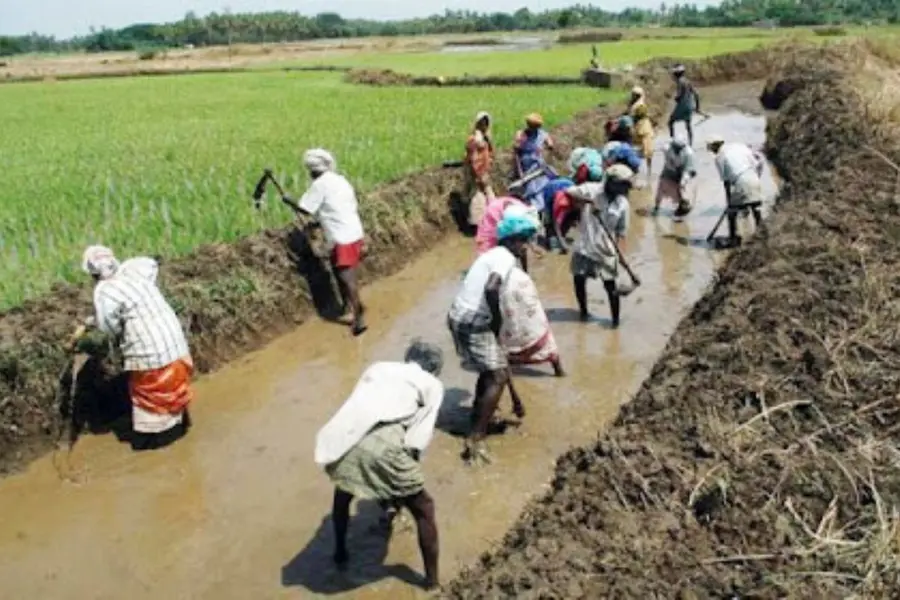
New Delhi: The NDA government has proposed a major overhaul of India’s rural employment guarantee framework through the Viksit Bharat—Guarantee for Rozgar and Ajeevika Mission (Gramin) (VB-G Ram G) Bill, 2025, which seeks to repeal and replace the Mahatma Gandhi National Rural Employment Guarantee (MGNREG) Act, 2005.
The proposed law raises the statutory guarantee of wage employment for rural households to 125 days in a financial year, up from the current 100 days under MGNREGA, but also introduces significant structural changes that are likely to increase the financial burden on state governments and alter the demand-driven nature of the scheme.
The Bill, which has been circulated ahead of its introduction in Parliament, proposes a shared funding model between the Centre and the states and, for the first time, allows a pause in employment guarantee during peak agricultural seasons.
1. Higher job guarantee: 125 days of work
Under the VB-G Ram G Bill, every rural household whose adult members volunteer for unskilled manual work will be legally entitled to 125 days of wage employment per financial year.
Currently, Section 3(1) of the MGNREG Act provides for “not less than 100 days” of employment, which has effectively become the upper limit due to software restrictions, unless additional days are explicitly approved. While the Centre has allowed extensions — such as 150 days for certain Scheduled Tribe households in forest areas and an extra 50 days during notified droughts or natural calamities — these are contingent provisions. The new Bill makes 125 days the standard statutory guarantee across rural India.
2. States to share wage burden
A major departure from MGNREGS is the funding architecture. While the Centre currently bears the entire wage cost for unskilled labour, the VB-G Ram G Bill mandates cost sharing. As per Section 22(2) of the Bill, the funding pattern will be:
- 90:10 between Centre and state for Northeastern states, Himalayan states and Union Territories such as Uttarakhand, Himachal Pradesh and Jammu & Kashmir
- 60:40 for all other states and UTs with legislatures
- 100% Central funding for UTs without legislatures
This marks a significant fiscal shift, as states will now contribute directly to wage payments, in addition to existing liabilities such as unemployment allowance and part of material and administrative costs.
3. Normative allocation replaces labour budget
The Bill replaces MGNREGA’s demand-driven labour budget system with a “normative allocation” model. Under Sections 4(5) and 4(6), the Centre will determine state-wise annual allocations based on prescribed parameters. Any expenditure beyond this allocation will have to be borne by the state government. This effectively ends the open-ended funding mechanism under MGNREGA, where funds flowed based on actual demand for work.
4. Employment pause during peak agricultural seasons
For the first time, the Bill allows states to pause employment guarantee works for up to 60 days in a year during peak sowing and harvesting seasons. States will notify these periods in advance, with flexibility to issue region-specific notifications down to the gram panchayat level. All authorities will be legally bound to ensure that works are undertaken only outside these notified periods. While the provision aims to ensure availability of farm labour, it also compresses the window during which households can avail the 125-day guarantee.
5. Weekly wages, with delay safeguards retained
The VB-G Ram G Bill envisages weekly wage payments, or at the latest within a fortnight, an improvement over the current 15-day limit. Wages will continue to be paid at rates notified under Section 6 of the MGNREGA. Importantly, the Bill retains provisions for compensation for delayed payments, similar to the existing entitlement of 0.05% per day of delay beyond the stipulated period.
The proposed legislation marks one of the most consequential changes to India’s rural employment guarantee since 2005, and is expected to trigger extensive debate over its fiscal, administrative, and livelihood implications.
Published: 15 Dec 2025, 12:11 pm IST
Disclaimer: Kindly avoid objectionable, derogatory, unlawful and lewd comments, while responding to reports. Such comments are punishable under cyber laws. Please keep away from personal attacks. The opinions expressed here are the personal opinions of readers and not that of Mathrubhumi.
