
The debate over whether UPI should continue as a zero-cost payment system has turned into a political face-off between Congress leader Jairam Ramesh and Finance Minister Nirmala Sitharaman.
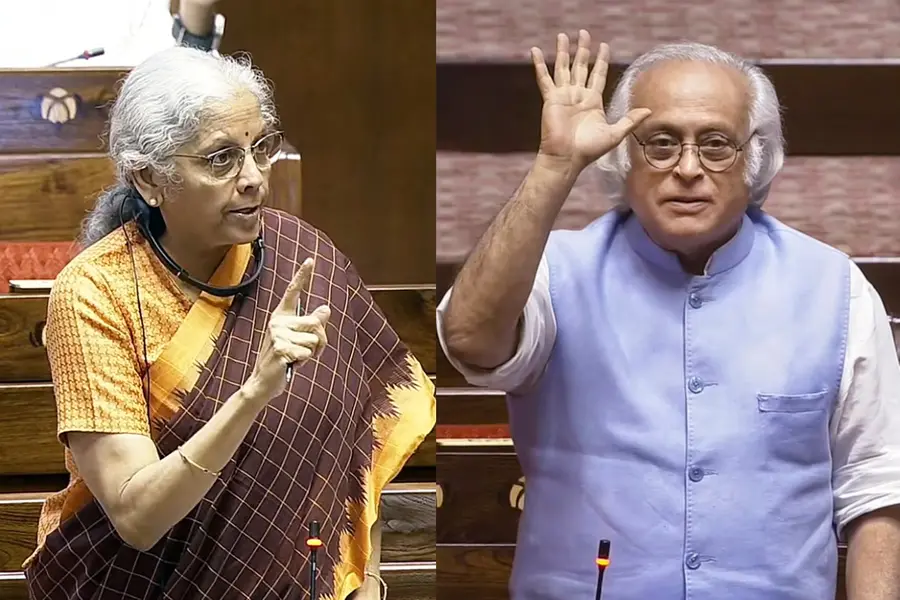
The long-running tug-of-war over whether India’s UPI should remain strictly zero-cost for merchants and users has sharpened into a direct public clash between senior Congress leader Jairam Ramesh and Finance Minister Nirmala Sitharaman, centring on the Merchant Discount Rate (MDR), the removal of the statutory zero-MDR guarantee, and the manner in which the related amendment was passed in Parliament.
At the heart of the controversy is Section 10A of the Payment and Settlement Systems Act, 2007, which currently mandates zero MDR on UPI and RuPay transactions.
Also Read

The government’s amendment in the Taxation and Other Laws (Amendment) Bill, 2026, seeks to drop this statutory guarantee and instead allow the central government to notify MDR limits through rules, effectively ending the legal protection of “zero MDR forever”.
Sitharaman has maintained that MDR is a merchant-facing charge, not a fee on end users. Her contention is that allowing regulated MDR will support banks and fintechs to invest in infrastructure, innovation and security, with benefits flowing back to all UPI users. The actual rate will be decided later by the UPI and Services Steering Committee headed by NPCI, after Parliament passes the Bill.
Ramesh has called these claims “dubious” and argued that while the fee is technically on merchants, transaction costs are inevitably passed on to consumers through higher prices or differential pricing, just as with credit and debit cards.
He stressed that “merchants” include small businesses, kirana stores and street vendors, who have been the backbone of UPI’s rapid adoption precisely because of the zero-charge regime.
'Parliamentary shortcut' vs 'constructive engagement'
The manner in which the Bill was passed has become another flashpoint.
Taking to X (formerly Twitter), Sitharaman has accused the Congress of spreading “canards” and said that “all this could have been discussed on the floor of the House” if the Opposition had engaged constructively when the Bill was tabled in the Lok Sabha and Rajya Sabha.
Ramesh countered Sitharaman's post, saying that the Parliament session was dysfunctional largely because the government refused to allow debates and answers on key issues, including the Opposition’s demand for a statement on police action against students on 20 June.
The government exploited the chaos to pass the Bill through a voice vote within minutes of its introduction in the Lok Sabha, without meaningful discussion, he alleged.
“Government assurances or tweets are no substitute for statutory safeguards,” especially when earlier promises on retaining zero-MDR are now being reversed, he added.
Multiple news reports have highlighted that the amendment was passed in a rushed, contentious manner, with Opposition MPs alleging that they were not given adequate time to debate a measure that could alter the future cost structure of UPI.
Timing and the “foreign pressure” angle
Ramesh also raised concerns about timing, linking the amendment to the US Trade Representative’s 2026 National Trade Estimate Report, which criticised India's UPI and RuPay ecosystem -- as well as Brazil’s Pix -- for taking market share from Visa and Mastercard.
He pointed out that while Brazil has continued to back Pix as strategic public digital infrastructure, the Modi government is now “weakening statutory protections for UPI”.
He further noted that Google Pay and Walmart-controlled PhonePe together process over 80% of UPI transactions, arguing that at a time when foreign-controlled platforms already dominate the ecosystem, India should be strengthening, not diluting, its public digital infrastructure.
The Congress leader also questioned why the RBI’s own capacity to support the UPI ecosystem without charging merchants or consumers is not being considered, and insists that zero-MDR was “critical to UPI’s success” in reaching small shops and roadside vendors.
Earlier in the day, the Union Finance Minister rejected suggestions of foreign pressure, insisting that the move is about sustainability and innovation in the payments ecosystem, not about accommodating external demands.
The government’s case, as articulated by Sitharaman and supported by RBI and industry statements in various reports, is that UPI has grown so fast that banks and fintechs need more revenue to keep upgrading systems, enhancing security and managing fraud risks.
A regulated MDR will create a predictable revenue stream for payment service providers, encouraging further investment in the stack, she said, adding that the Steering Committee will decide the actual MDR after the law is amended, meaning no immediate change for users or merchants until rules are notified.
Published: 07 Aug 2026, 03:53 pm IST
ABOUT THE AUTHOR
Related Topics
Disclaimer: Kindly avoid objectionable, derogatory, unlawful and lewd comments, while responding to reports. Such comments are punishable under cyber laws. Please keep away from personal attacks. The opinions expressed here are the personal opinions of readers and not that of Mathrubhumi.