
The minister argued India's energy decisions were based on cost, availability and national interest, while also criticising European countries for what he called a double standard on defence exports
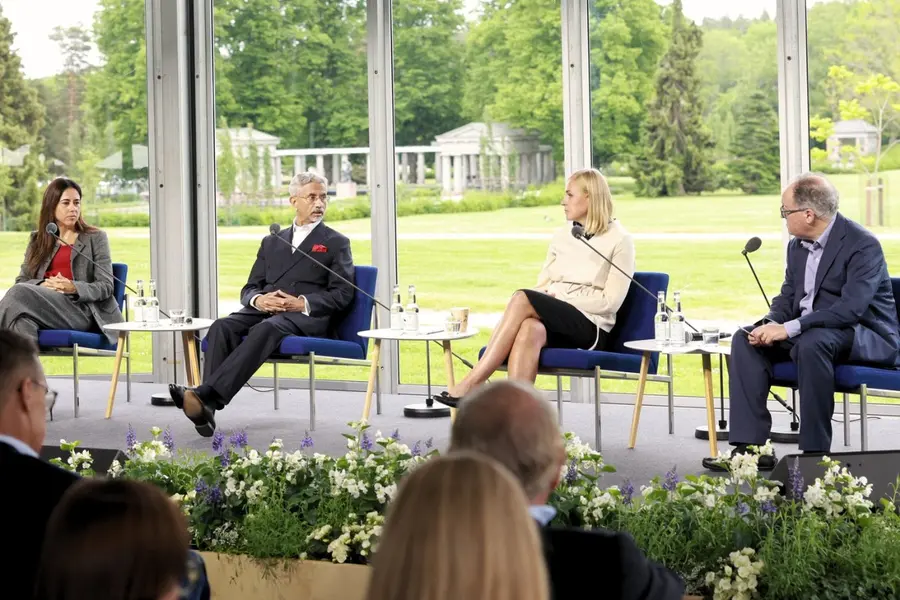
Helsinki: External Affairs Minister S Jaishankar on Friday defended India's decision to purchase Russian crude oil following the outbreak of the Ukraine conflict, stating that the move was driven by affordability and availability.
He also said that the United States had encouraged India to continue buying Russian oil to help prevent a surge in global energy prices.
Speaking at an event in Finland, Jaishankar said India began significantly increasing its imports of Russian oil from 2022 onwards as market conditions changed following Western sanctions on Moscow.
"At that time, the US specifically asked India to buy Russian oil to stabilise the oil market," Jaishankar said.
Shift in global energy trade changed India's options
Explaining the circumstances behind India's energy choices, the minister said the sanctions imposed on Russia after its invasion of Ukraine led many European nations to reduce their dependence on Russian energy supplies.
According to Jaishankar, European countries subsequently turned to the Middle East for oil, a region that had traditionally been India's primary source of crude imports. The increased demand from Europe intensified competition for Middle Eastern supplies and altered the dynamics of the global energy market.
"At that point of time, much of the oil available in the market was from Russia because Europeans were buying up the Middle East oil, which was our traditional supplier. Circumstances pushed us in a certain direction," he said.
India's position on Ukraine war
Jaishankar's remarks came after he was asked about India's approach to the Russia-Ukraine conflict during the event. A journalist questioned whether India had been "too sympathetic to Russia" and excessively willing to continue purchasing Russian oil despite the war.
Responding to the criticism, Jaishankar reiterated that India's energy decisions were based on practical considerations rather than political preferences.
"I buy oil based on cost and availability. So at that point in time, much of the oil available in the market was Russian because Europeans were essentially buying oil from the Middle East, which was our traditional supplier. So circumstances pushed us in a certain direction," he said.
Concerns over European arms exports
During the discussion, Jaishankar also criticised what he described as Europe's inconsistent approach towards India.
Drawing attention to defence exports, he said India had never supplied weapons that were used against European countries, while some European-made weapons had been used in conflicts involving India.
"No European country has been attacked with Indian weapons. I wish I could say that for Europe weapons vis-à-vis India," he said.
He further added, "Europe sells weapons, which are used to attack India. Not just now but for many years. We Indians have never done anything to endanger Europe. I think that's a reasonable point."
Russia remains key energy supplier
The minister noted that Russia is currently India's largest supplier of crude oil, while the United States remains the country's biggest supplier of natural gas.
Describing Russia as a reliable source of energy, Jaishankar said countries around the world are increasingly seeking to reduce risks associated with excessive dependence on the Gulf region for energy supplies.
Jaishankar also pushed back against criticism of India's purchases of Russian oil, arguing that the issue should be viewed in the context of global energy realities rather than moral arguments.
"Let's not pretend that this is about some great principles. I don't think hypocrisy is appropriate here," he said.
The minister pointed out that the United States had initially encouraged India to buy Russian energy to help maintain stability in global oil markets before later imposing tariffs and subsequently withdrawing them.
India continues to prioritise energy security
India has consistently maintained that its decisions on energy imports are guided by national interest and energy security requirements. New Delhi has not joined Western sanctions imposed on Russia following the Ukraine conflict.
In the aftermath of the Ukraine war, Western buyers largely reduced their intake of Russian crude. India, however, increased imports of the lower-cost fuel, and Russia soon became a significant supplier to the Indian market
Published: 12 Jun 2026, 11:14 am IST
Related Topics
Disclaimer: Kindly avoid objectionable, derogatory, unlawful and lewd comments, while responding to reports. Such comments are punishable under cyber laws. Please keep away from personal attacks. The opinions expressed here are the personal opinions of readers and not that of Mathrubhumi.
