
Indefinite RTC strike begins April 22, 2026, across Telangana: 9,000+ buses affected; Metro and MMTS remain operational: Check details.
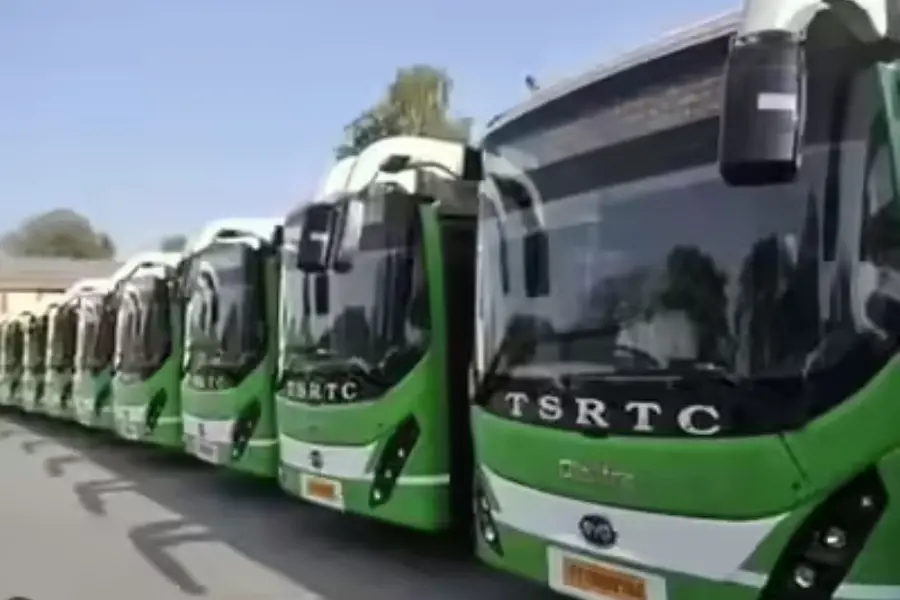
Hyderabad: A major disruption to daily life looms in Telangana as the RTC Joint Action Committee (JAC) has confirmed an indefinite strike beginning midnight of April 22, following a breakdown in talks with the State government and the Telangana State Road Transport Corporation (TGSRTC).
With thousands of buses likely to remain off the roads, lakhs of commuters, especially women, students, and daily-wage earners, are bracing for a tough few days ahead.
Negotiations held late into Tuesday night failed to break the deadlock, with union leaders insisting that long-pending demands, ranging from pay revision and staff welfare to merger with the State government, remain unresolved.
While the government has urged employees to return to work and assured that a committee will examine the demands, unions have termed the move a delay tactic, calling the strike “a last resort”.
What shuts down, what keeps running:
- The biggest impact will be on public bus services, with over 9,000 RTC buses expected to be affected across Telangana.
- These buses form the backbone of daily transport, particularly in Hyderabad and surrounding districts, ferrying lakhs of passengers every day. Their absence will create an immediate gap, pushing commuters to depend on limited alternatives.
- However, not all transport services will come to a halt. Hyderabad Metro Rail and MMTS train services are expected to continue operations, though authorities are anticipating a massive surge in passenger numbers.
- Overcrowding during peak hours is almost certain, making travel uncomfortable and potentially unsafe if not managed properly.
- The government has also initiated contingency measures, including the deployment of private drivers and hiring private buses. Regional Transport Offices (RTOs) have been tasked with identifying and mobilising private vehicles to ease the pressure.
- However, unions have warned against such measures, even threatening to block buses from depots, raising concerns about operational feasibility and safety.
- Essential services, offices, and educational institutions are likely to remain open unless specific local advisories are issued. But reaching them may become the real challenge.
How commuters can prepare and stay safe
- With uncertainty over how long the strike will last, preparation will be crucial. The impact is expected to be particularly severe on women commuters, around 14.2 lakh of whom rely on free RTC bus travel daily, as well as students and low-income workers who depend on affordable transport.
- To navigate the disruption, commuters should plan and stay flexible. Starting early can help avoid peak-hour crowds, especially for those relying on Metro or MMTS services.
- Carpooling with colleagues or neighbours can significantly reduce both cost and inconvenience. Booking cabs in advance may offer some relief, though availability and surge pricing could be major concerns.
- Women and children, in particular, are advised to take extra precautions. Travelling in groups, avoiding isolated routes, and keeping family members informed about travel plans can enhance safety.
- Carrying emergency contact numbers and ensuring mobile phones remain charged will also be important during this period of uncertainty.
- Parents should stay in close touch with schools and colleges, as institutions may adjust timings or issue advisories depending on the situation. For daily wage earners, planning alternative routes and budgeting for higher travel costs will be essential.
Financially, the strike could hit both commuters and the RTC hard. The corporation reportedly earns between ₹13 crore and ₹16 crore daily, and a prolonged strike could result in significant losses.
On the other hand, commuters may face inflated auto and cab fares, as regulating prices during such disruptions may not be fully feasible.
Adding to the pressure, Hyderabad’s roads could see increased congestion as more private vehicles hit the streets.
Authorities are expected to deploy around 5,000 police personnel at key locations to maintain order and prevent escalation.
The situation also raises concerns about safety if inexperienced private drivers are brought in to operate buses.
Past incidents have highlighted the risks involved, making this a point of contention between unions and the administration.
With the JAC making it clear that the strike will continue until all 32 demands are addressed, there is growing anxiety that the disruption could stretch on, reminiscent of the 52-day-long RTC strike in 2019.
For now, Telangana is preparing for a challenging commute phase, where planning, staying informed, and prioritising safety will be key to getting through the chaos.
Published: 22 Apr 2026, 07:53 am IST
Disclaimer: Kindly avoid objectionable, derogatory, unlawful and lewd comments, while responding to reports. Such comments are punishable under cyber laws. Please keep away from personal attacks. The opinions expressed here are the personal opinions of readers and not that of Mathrubhumi.
