
Truckers, taxi operators and private bus services say the new policies are unfair and hurting livelihoods
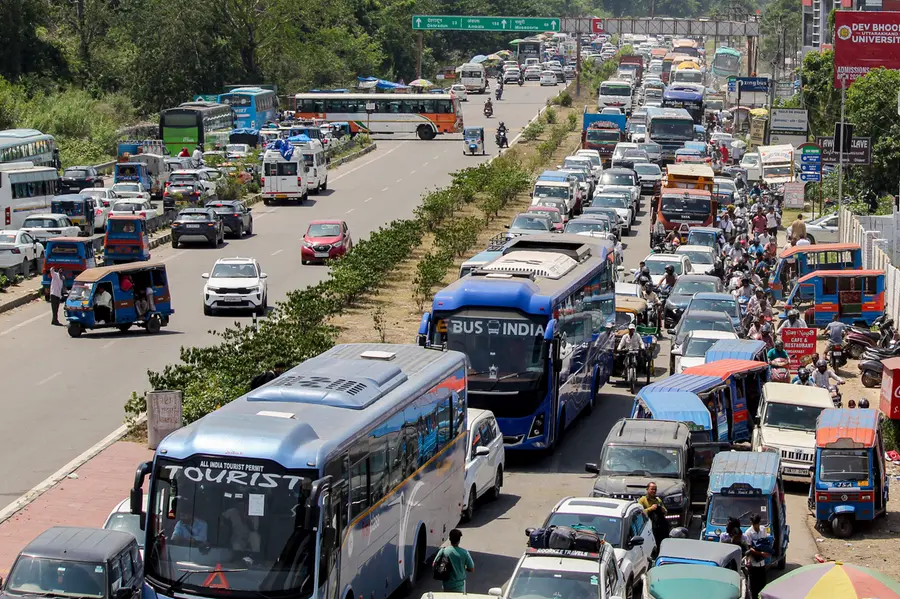
New Delhi: Transport operators and worker unions across Delhi and neighbouring NCR cities have announced plans for a three-day strike beginning May 21, protesting against rising fuel prices and the Delhi government’s increase in the Environment Compensation Charge (ECC) imposed on commercial vehicles.
The proposed agitation is expected to involve a large section of the transport sector, including truckers, private bus operators, taxi services and maxi cab associations.
Unions oppose ECC increase and vehicle restrictions
The protest has been called primarily over what transport bodies described as “unfair and unjust” increases in the ECC levied on commercial vehicles entering Delhi.
Industry groups have also raised concerns over rising petrol and diesel prices in the capital, which they linked to the ongoing US-Iran conflict in West Asia and its impact on global fuel markets.
In a statement, the All India Motor Transport Congress (AIMTC) said 68 unions from Delhi and nearby NCR regions, including Noida, Ghaziabad, Gurugram and Faridabad, would participate in the strike.
The AIMTC represents truck operators, private bus services, taxis and maxi cab operators across the country.
Transport bodies criticise policy implementation
The organisation accused the Commission for Air Quality Management (CAQM) and the Delhi government of imposing the increased cess on all goods vehicles entering Delhi instead of focusing only on transit vehicles using the capital as a passage route.
According to the AIMTC, the original objective behind the Supreme Court’s order was to divert transit traffic towards the Eastern and Western Peripheral Expressways rather than burden vehicles headed into Delhi for business activities.
The unions have also objected to the proposed ban on non-Delhi-registered BS-IV commercial goods vehicles entering the capital.
They argued that the measures have created major socioeconomic difficulties and have negatively affected transport operators and workers dependent on the sector for their livelihood.
Four main demands raised by protesting groups
The transport associations have placed four key demands before the authorities:
- Withdrawal of the increased cess imposed on all Delhi-bound goods vehicles
- Immediate rollback of the proposed restriction on entry of non-Delhi-registered BS-IV commercial goods vehicles from November 1, 2026
- Limiting the ECC only to vehicles merely passing through Delhi
- Exemption from ECC for BS-VI vehicles carrying essential goods and for empty vehicles
Delhi government raised ECC in April
Last month, the Delhi government increased the Environment Compensation Charge on commercial vehicles by more than 50 per cent and also approved a five per cent annual rise in the fee.
The revised rates came into effect on April 19.
Under the new structure, ECC for light commercial vehicles and two-axle trucks was increased from ₹1,400 to ₹2,000. Charges for three-axle and heavier trucks were raised from ₹2,600 to ₹4,000.
The AIMTC, citing official figures, claimed that the government had collected ₹1,753.2 crore through ECC levies up to December 4, 2025. Of that amount, ₹781.4 crore had reportedly been utilised, while ₹971.8 crore remained unspent.
BS-IV vehicle ban also draws opposition
The Delhi government had earlier announced that interstate BS-IV commercial goods vehicles would not be allowed to enter the capital from November 1 as part of its anti-pollution measures.
However, CNG vehicles, electric vehicles and BS-VI-compliant vehicles have been exempted from the restriction.
Chief Minister Rekha Gupta had said the measures were aimed at reducing pollution levels in the city.
Nitin Gadkari signals possible solution
Union Road Transport and Highways Minister Nitin Gadkari expressed hope that the issue could be resolved soon.
Speaking at a press conference in New Delhi, Gadkari said he had already discussed the matter with Chief Minister Rekha Gupta.
“I discussed this issue (collection of cess) with CM Gupta. We will soon find a solution to this issue,” he said.
Published: 19 May 2026, 09:07 pm IST
Related Topics
Disclaimer: Kindly avoid objectionable, derogatory, unlawful and lewd comments, while responding to reports. Such comments are punishable under cyber laws. Please keep away from personal attacks. The opinions expressed here are the personal opinions of readers and not that of Mathrubhumi.
