
While the Indian Air Force is investigating, the incident raises concerns for India's indigenous aerospace program, despite the Tejas' generally good safety record.
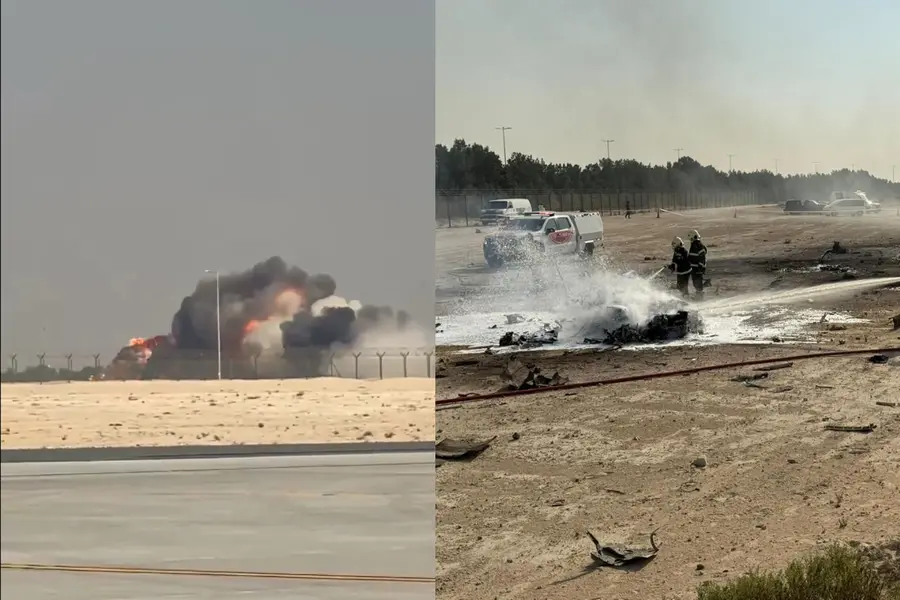
Dubai: The Tejas fighter aircraft of the Indian Air Force that crashed during a sortie at the Dubai Air Show could have occurred due to loss of thrust, experts who analysed the crash footage have suggested.
An IAF pilot was killed in the crash that happened during a demonstration flight at the Dubai Air Show. The incident, which occurred at 2:10 pm local time at the Al Maktoum International Airport in Dubai World Central, marks a major setback for the nation's homegrown aerospace programme.
Video footage of the crash seemed to show the lightweight, single-engine jet losing control and diving directly toward the ground. In a statement, the IAF confirmed the crash but refrained from identifying the deceased pilot.
Expert Analysis Points to Desert Heat and Environmental Factors
Even as the IAF constituted a court of inquiry to ascertain the exact cause of the crash, defence experts have indicated at multiple scenarios around that may have contributed to the indigenous fighter aircraft going down.
According to Girish Linganna, Defence and Space Analyst, the crash may have resulted from a combination of environmental and operational factors unique to desert conditions.
"The LCA Mk1 that crashed is the same aircraft that has flown safely for the past three years, and it uses a zero-zero Martin-Baker seat, which allows the pilot to eject even at zero speed and zero altitude. While Dubai has desert conditions, it is true that India also has deserts, and the aircraft has performed well there, too. The temperature during the display was around 35°C, which is not unusually high for Tejas. This is why it would not be correct to blame the climate alone," he told Mathrubhumi, adding, "What is more likely is that a combination of multiple factors, such as the specific manoeuvre being performed, momentary airflow disruption, a possible compressor stall, or a sudden drop in thrust, may have affected the aircraft’s response at low altitude."
He further elaborated on the narrow window for escape. "In such a situation, even a small delay can reduce the pilot’s margin for recovery, and by the time he attempted to eject, the jet may already have been too close to the ground. These are logical possibilities, but only a detailed technical investigation can confirm what exactly happened."
Background on the Tejas Programme
The Tejas is India's indigenous fighter aircraft, built by state-run Hindustan Aeronautics Limited. The lightweight, single-engine jet is expected to bolster India's depleted fighter fleet as China expands its military presence in South Asia, including by strengthening defence ties with Pakistan.
In September, the Defence Ministry signed a contract with the Hindustan Aeronautics Limited to procure 97 Tejas jets for the air force, with deliveries expected to begin in 2027. The Indian government also signed a deal with HAL in 2021 for 83 Tejas aircraft, though deliveries originally expected last year have been delayed largely because of shortages of engines that must be imported from the United States.
The Tejas programme represents a critical component of India's defence modernisation strategy, with the aircraft designed to replace ageing fighter jets in the Indian Air Force fleet.
Previous Safety Record and Recent Controversy
Prior to Friday's crash, the Tejas had demonstrated a strong safety record during its operational service. A Tejas fighter jet crashed in Rajasthan last year, but the pilot ejected safely in that incident.
On Thursday, just a day before the Dubai crash, Press Information Bureau rejected social media claims alleging that a Tejas aircraft had experienced an oil leak while on display at the air show. In a statement, it called the posts "false" and dismissed them as attempts to undermine the "fighter's proven technical reliability with baseless propaganda."
Published: 21 Nov 2025, 06:31 pm IST
Disclaimer: Kindly avoid objectionable, derogatory, unlawful and lewd comments, while responding to reports. Such comments are punishable under cyber laws. Please keep away from personal attacks. The opinions expressed here are the personal opinions of readers and not that of Mathrubhumi.
