
The Supreme Court has rejected Tamil Nadu's plea for 11 TMC of additional Cauvery water from Karnataka. Tamil Nadu claimed a shortfall of 11.719 TMC, while Karnataka cited drought conditions and water conservation needs.
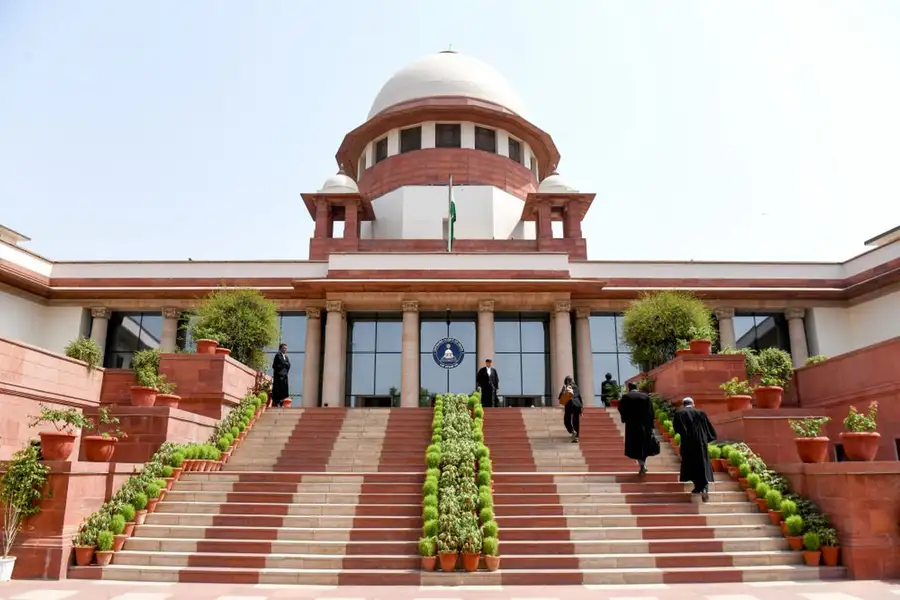
New Delhi: The Supreme Court on Friday declined to grant Tamil Nadu's request for an additional 11 thousand million cubic feet (TMC) of Cauvery water from Karnataka, rejecting the state's plea to make up for what it described as a shortfall in its allocated share.
A bench of Justices Vikram Nath and Aparesh Singh passed the order on Tamil Nadu's applications seeking directions to Karnataka to release the water. The state had argued that the shortage could affect agricultural activities and crops, particularly in the face of inadequate rainfall.
According to the proceedings, Tamil Nadu claimed that there was a shortfall of around 11.719 TMC in the water flows due to it at Biligundlu, the inter-state measuring point, up to October 6. It also alleged that Karnataka had not released the outstanding quantity despite having sufficient water reserves.
Tamil Nadu had approached the Supreme Court seeking implementation of directions issued by the Cauvery Water Management Authority (CWMA), which oversees the implementation of the inter-state water-sharing arrangement. It argued that the directions issued by the authority had not adequately addressed the accumulated deficit in its share.
Karnataka, however, opposed the demand, citing inadequate rainfall and drought conditions in parts of the state. Its counsel argued that the state had to conserve water to protect drinking water supplies and meet its own requirements. Karnataka also submitted that the Cauvery authorities were already monitoring releases and issuing directions at regular intervals.
The dispute centres on the sharing of Cauvery river water between the two states, with Tamil Nadu arguing that it is entitled to receive its proportionate share even during a year of reduced rainfall. Karnataka has maintained that water availability and drought conditions must be considered while determining releases.
What is the Cauvery water dispute?
The Cauvery water dispute involves the sharing of river water among Karnataka, Tamil Nadu, Kerala and Puducherry. The river originates in Karnataka and flows through Tamil Nadu before reaching the Bay of Bengal.
The Supreme Court's 2018 judgment modified the Cauvery Water Disputes Tribunal's award and set out the allocation framework. The Cauvery Water Management Authority and the Cauvery Water Regulation Committee were subsequently established to oversee and regulate the implementation of the water-sharing arrangement.
Why the 11 TMC demand matters
The latest disagreement highlights the difficulties in implementing an inter-state water-sharing arrangement during a year of inadequate rainfall. Tamil Nadu has argued that a shortfall in releases threatens its agricultural operations, while Karnataka has cited the need to manage limited water resources and protect drinking water supplies.
The dispute also raises the question of how the water-sharing formula should be applied during distress years, when river flows fall below normal levels. The two states have presented competing claims over the quantity of water available and the extent of their respective entitlements.
Key details of the court proceedings
Date: November 20, 2026
Bench: Justices Vikram Nath and Aparesh Singh
Water sought: 11 TMC of Cauvery water
Shortfall claimed by Tamil Nadu: 11.719 TMC up to October 6, measured at Biligundlu
Case: State of Tamil Nadu versus State of Karnataka and others
The Supreme Court dismissed two applications seeking additional water releases. Justice Vikram Nath also orally indicated that a third application filed by Tamil Nadu on Friday would be dismissed.
What the decision means for the Cauvery dispute
The order comes against the backdrop of a recurring disagreement over how Cauvery water should be shared during years of inadequate rainfall. Tamil Nadu has argued that Karnataka must make up the deficit in its proportionate share, while Karnataka has maintained that drought conditions and the need to protect drinking water supplies limit the releases it can make.
The Cauvery Water Management Authority and the Cauvery Water Regulation Committee play a central role in monitoring river flows and determining periodic releases. In a November 2025 judgment concerning a separate Cauvery-related application, the Supreme Court reiterated that these expert bodies should handle technical water-management questions and that states could approach the relevant authorities over implementation concerns.
The latest dismissal does not, by itself, resolve the wider disagreement over water availability and allocation between the states. The dispute continues to involve competing claims over the shortfall, the impact of deficient rainfall and the implementation of the existing sharing framework.
Published: 20 Nov 2026, 12:03 pm IST


ABOUT THE AUTHOR

Related Topics
Disclaimer: Kindly avoid objectionable, derogatory, unlawful and lewd comments, while responding to reports. Such comments are punishable under cyber laws. Please keep away from personal attacks. The opinions expressed here are the personal opinions of readers and not that of Mathrubhumi.