
The DMK has agreed to support the Centre's revised delimitation Bills after securing written assurances on Tamil Nadu's parliamentary representation. But as the party changes its position, a bigger question emerges: Has the debate over a national exercise become a negotiation centred primarily on one state's interests?
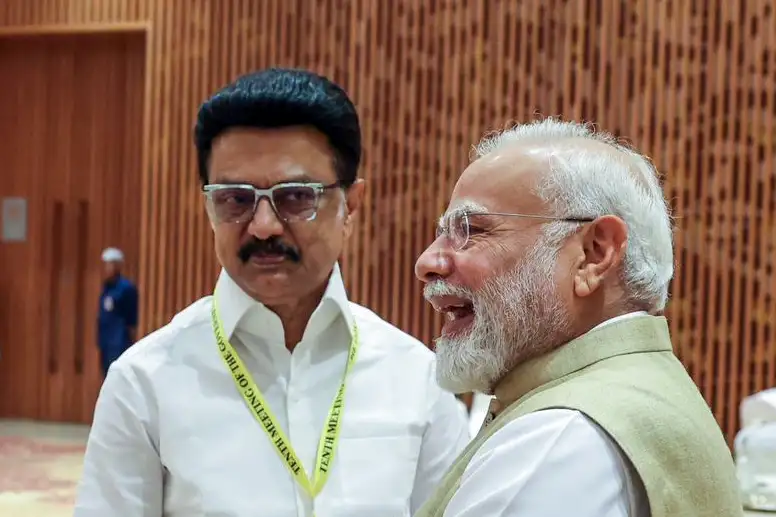
Chennai: The DMK's decision to support the Centre's revised Delimitation Bills has brought a new dimension to the debate over parliamentary representation in India. After opposing the earlier proposal, the party has changed its position following assurances from the Centre on protecting Tamil Nadu's share of Lok Sabha seats and maintaining the existing balance among states for another 25 years.
The development raises an important question: If the DMK has secured what it wanted for Tamil Nadu, what happens to the larger concerns surrounding delimitation across the country?
There is nothing unusual about a political party defending the interests of its state. Elected representatives are expected to protect their constituents and raise concerns about policies that could affect them. However, delimitation is not a state-specific exercise. It determines how parliamentary constituencies are distributed across the country and directly affects the representation of citizens in the Lok Sabha.
The DMK's position therefore deserves examination beyond the immediate political gains for Tamil Nadu.
Why the DMK opposed delimitation
The DMK and several southern political parties have argued that population-based delimitation could disadvantage states that successfully implemented population-control measures.
Tamil Nadu's concern is that states with higher population growth could gain a greater share of parliamentary seats, potentially reducing the relative political influence of southern states.
The argument is rooted in a larger debate about whether states should face political disadvantages for investing in education, healthcare and family planning.
Tamil Nadu is not alone in raising these concerns. Kerala, Karnataka, Andhra Pradesh and Telangana have also been part of the wider discussion about protecting the political representation of southern states.
What changed the DMK's position?
The DMK had opposed the Centre's earlier constitutional amendment in April 2026. Its position changed after MK Stalin announced that the Centre had accepted two of the party's demands in writing:
Protection of Tamil Nadu's existing share of Lok Sabha seats.
Maintenance of the existing balance among states for another 25 years.
The DMK's 22 Lok Sabha MPs had opposed the earlier proposal. Their support for the revised legislation could help the government secure the required constitutional majority.
The political question, however, is whether the assurances secured by the DMK address the broader concerns surrounding the delimitation exercise or primarily protect the interests of Tamil Nadu.
Is the DMK prioritising Tamil Nadu over national interests?
A state government or political party defending its regional interests cannot automatically be described as selfish. Tamil Nadu has legitimate reasons to seek safeguards against a possible reduction in its relative parliamentary influence.
However, a national policy cannot be judged only by whether it benefits one state.
If Tamil Nadu deserves protection because of its population-control achievements, similar concerns raised by other states must also receive attention. The debate should not become a competition in which every political party negotiates safeguards exclusively for its own state.
The DMK's decision also raises questions about the difference between political bargaining and a broader constitutional position. Was the party opposed to the fundamental structure of the proposed exercise, or was its primary concern the possible impact on Tamil Nadu's parliamentary representation?
That distinction matters when assessing its change of position.
Delimitation is bigger than Tamil Nadu
The proposed expansion of the Lok Sabha from 543 elected seats to approximately 815 has implications for the entire country. The revised proposal reportedly seeks to increase the representation of every state and Union Territory by 50 per cent while broadly preserving their existing shares.
Yet, the larger debate involves more than the number of seats.
India must balance the principle of equal representation for citizens with the need to maintain a fair federal structure. States with larger populations have legitimate demands for adequate parliamentary representation, while states that achieved lower population growth have legitimate concerns about losing their relative political influence
Published: 28 Nov 2026, 09:56 pm IST


ABOUT THE AUTHOR

Disclaimer: Kindly avoid objectionable, derogatory, unlawful and lewd comments, while responding to reports. Such comments are punishable under cyber laws. Please keep away from personal attacks. The opinions expressed here are the personal opinions of readers and not that of Mathrubhumi.