
Chief Minister Vijay launches a sweeping anti-corruption crackdown on TASMAC to plug a massive Rs 100-crore monthly revenue leakage.
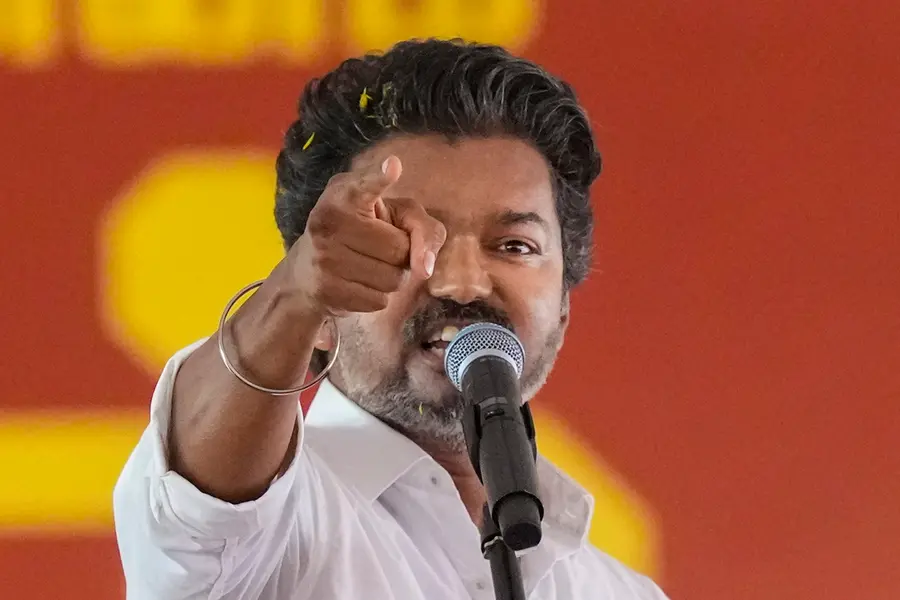
Chennai: In his inaugural Cabinet meeting on Friday, Tamil Nadu Chief Minister Joseph Vijay initiated a comprehensive crackdown on financial leakages, unauthorised collections and informal party fund networks within the Tamil Nadu State Marketing Corporation (TASMAC). The Chief Minister instructed administrative officials to guarantee that all earnings from liquor sales are directed entirely into the state exchequer.
According to senior administration sources, Vijay was briefed on an ongoing system where approximately Rs 102 crore was allegedly diverted each month via unauthorised party collections embedded in TASMAC's network. Official projections indicate that around Rs 1,600 crore might have been siphoned away from public funds over the past five years, drawing sharp administrative scrutiny toward the previous DMK administration's management of the corporation.
The Chief Minister directed authorities to dismantle these long-standing, informal cash collection networks running through the state's 4,048 registered wholesale and retail TASMAC hubs.
The structural reforms are being managed by the Minister for Prohibition and Excise, K Vignesh. NDTV quotes Minister Vignesh as stating that the Chief Minister explicitly communicated during the Cabinet session that the new administration refuses to run on revenues derived from institutional corruption or public distress. The Minister further noted that the directive was straightforward—to plug all systemic leakages immediately and ensure public funds return to the state treasury.
Prohibition authorities and local distilleries have already been notified of the administration's intent to terminate all informal collection protocols linked to TASMAC. This represents the first phase of a massive structural overhaul covering liquor procurement, warehouse logistical dispatch, retail sales, bottle recycling and shop-level transactions. Vignesh confirmed that the administration is designing a secure transparency framework to link all alcohol revenues directly to the state treasury.
The mechanics of the alleged institutionalised siphoning
Excise Department insiders revealed that these unofficial collections had become deeply entrenched within the TASMAC supply chain over the last two decades. Authorities explained that alcohol distribution in Tamil Nadu follows structured packaging rules based on container volume.
- 180 ml bottles are distributed in cases of 48.
- 375 ml bottles are distributed in cases of 24.
- 750 ml bottles are distributed in cases of 12.
- Beer and wine cases typically contain 12 bottles each.
A senior administrative source alleged that approximately Rs 90 was siphoned off as a political fund from every standard liquor case. For beer and wine cases, the illegal collections allegedly amounted to Rs 40 and Rs 20 per case respectively, intended for ministerial or political reserves. These unauthorised levies were reportedly collected across transport routes, supply warehouses and retail shops.
With nearly 88 lakh consumers purchasing products through TASMAC monthly, internal departmental reviews concluded that over Rs 102 crore was being siphoned into unofficial channels every month. Sources added that this crackdown is merely the preliminary phase of a broader anti-corruption campaign targeting multiple government sectors. The Chief Minister has tasked officials with identifying financial leaks across all departments, prioritising TASMAC due to the sheer volume of its unregulated cash flows. The mining sector is expected to face similar scrutiny next.
Overhauling the empty bottle refund system
The government is also auditing the disputed Rs 10 deposit-and-buyback scheme for empty bottles at TASMAC stores. Under this process, buyers pay an extra Rs 10 deposit per bottle, which is refunded upon returning the empty container. Officials suspect this system left considerable room for unrecorded cash maneuvers.
Internal data indicates that nearly one crore bottles are sold monthly across the state. An official pointed out that out of every one lakh bottles sold, only about 60,000 were successfully tracked back into the recycling system. The unreturned deposits accumulated as unaccounted funds, forming a core hub for corrupt practices. Insiders estimate that irregularities within the bottle return chain alone may have generated illicit funds worth nearly Rs 300 crore each month.
To resolve this, the administration is considering integrating the deposit directly into the Maximum Retail Price (MRP) or shifting to a fully digital refund system to prevent leakage. Minister Vignesh confirmed that the government has decided to hand over the empty bottle collection and buyback system to outsourced third-party agencies before the end of June.
Decommissioning of 717 retail outlets
The restructuring of TASMAC aligns with the anti-addiction policy framework championed by the Tamilaga Vettri Kazhagam (TVK) government. In one of his initial executive orders, Chief Minister Vijay mandated the immediate closure of 717 TASMAC retail outlets across Tamil Nadu.
Departmental reports suggest that shutting down these locations could lower the state's annual liquor revenue by nearly Rs 8,000 crore. Despite this substantial fiscal deficit, the government has firmly dismissed any plans to increase alcohol prices to balance the budget.
A senior official reiterated that the Chief Minister emphasised during the Cabinet briefing that TASMAC would no longer be utilised as an exploitative revenue machine, warning that overcharging and illegal levies will be met with strict penalties. The core message from leadership remains that all state earnings must serve the public through the official treasury rather than funding informal political channels.
Published: 07 Jun 2026, 01:23 pm IST
Related Topics
Disclaimer: Kindly avoid objectionable, derogatory, unlawful and lewd comments, while responding to reports. Such comments are punishable under cyber laws. Please keep away from personal attacks. The opinions expressed here are the personal opinions of readers and not that of Mathrubhumi.
