
He recalled that the Modi government had sought to introduce the NJAC after coming to power in 2014, aiming to replace the existing collegium system
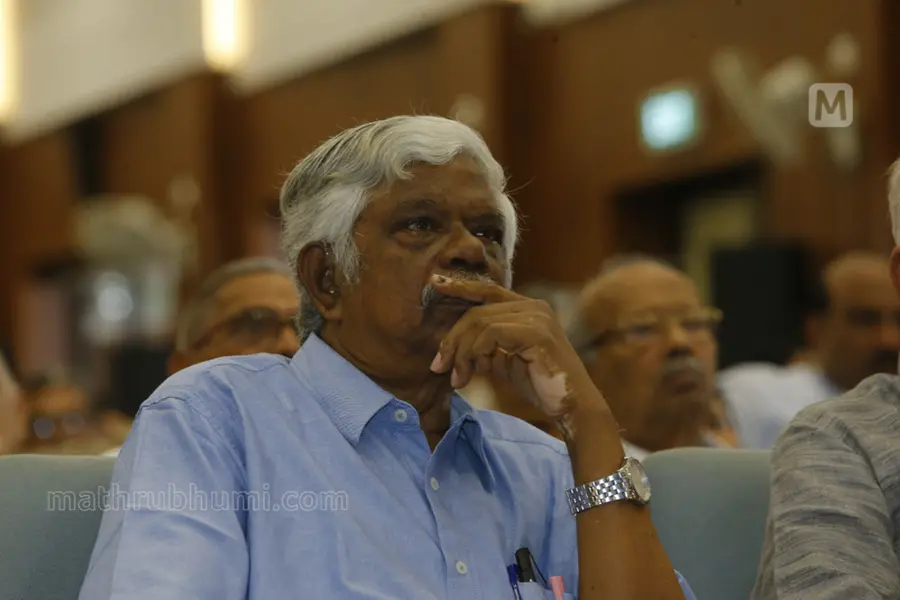
Chennai: Former Madras High Court judge K Chandru has alleged that Prime Minister Narendra Modi effectively controls appointments to the Supreme Court and high courts, despite the existence of the collegium system, raising concerns over transparency and executive influence in the selection of judges.
Speaking at a colloquium organised by the Asian College of Journalism (ACJ) in Chennai on Saturday, Justice Chandru claimed that the BJP-led Centre had found ways to influence judicial appointments after its attempt to establish the National Judicial Appointments Commission (NJAC) was struck down by the Supreme Court.
“Since then, all Supreme Court and High Court judges were directly appointed by Modi, not the collegium,” Justice Chandru said.
He recalled that the Modi government had sought to introduce the NJAC after coming to power in 2014, aiming to replace the existing collegium system. However, the Supreme Court declared the legislation unconstitutional in 2015, retaining the judiciary-led appointment process.
According to Chandru, the government subsequently made no attempt to revive the NJAC because it had discovered more effective ways of influencing judicial appointments.
The former judge also criticised the collegium system itself, arguing that the process remained opaque and lacked a clear constitutional foundation.
“There are 38 judges in Supreme Court and about 1,000 judges in high courts. The appointment process takes place without anyone knowing anything through a collegium system which is not recognised by the Constitution. It is the best ever secret kept in the country,” he said.
Chandru made the remarks while delivering the keynote address at the colloquium titled ‘Who Will Judge the Judges’.
He further argued that India's system of judges selecting judges was unusual among elected democracies, questioning the absence of greater public accountability in the appointment process.
Under the existing framework, the Supreme Court collegium recommends candidates for appointment and elevation to the higher judiciary, while the Union government processes the recommendations and the President formally appoints judges. Chandru's remarks concerned what he described as the Centre's influence over that process.
Former Odisha HC Chief Justice questions lack of women judges
Former Odisha High Court Chief Justice S Muralidhar also raised concerns over judicial appointments, particularly the lack of gender diversity in the Supreme Court.
Delivering a keynote address titled ‘Primus inter pares: A Critique of the office of the Chief Justice of India’, Justice Muralidhar said India was approaching a period in which several Chief Justices of India would assume office without having previously headed a high court.
He also criticised the failure to elevate more women judges to the Supreme Court, questioning the judiciary's commitment to diversity.
“Former CJI D Y Chandrachud was in office for two years. But he could not find a single woman judge suitable to be elevated to Supreme Court. Diversity is only for public consumption,” Justice Muralidhar said.
The colloquium brought together former judges and senior advocates to examine judicial accountability, transparency in appointments, diversity and the functioning of India's higher judiciary.
Senior Supreme Court advocate Raju Ramachandran addressed the gathering on ‘Unwillingness or Inability? Why Impeachments Fail’, examining the challenges surrounding the removal of judges.
Former Punjab and Haryana High Court judge K Kannan spoke on ‘Preparing the Judges to Judge’, while Madras High Court senior advocate R Vaigai delivered a keynote address titled ‘How Fair is the Quality of Justice: lack of diversity in appointments’.
The discussions highlighted continuing concerns among legal experts over the functioning of the collegium, the role of the executive in judicial appointments and the need for greater transparency and diversity in India's higher courts.
Published: 11 Oct 2026, 10:47 am IST
ABOUT THE AUTHOR

Related Topics
Disclaimer: Kindly avoid objectionable, derogatory, unlawful and lewd comments, while responding to reports. Such comments are punishable under cyber laws. Please keep away from personal attacks. The opinions expressed here are the personal opinions of readers and not that of Mathrubhumi.