
In the meantime, the concerned Magistrate should refer the matter to the Family Welfare Committee of the district for settlement of issues
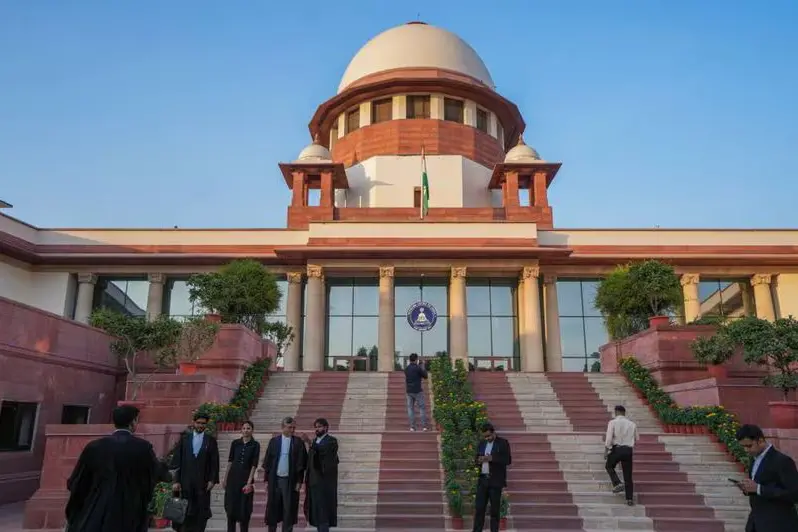
New Delhi: The Supreme Court has upheld the guidelines prepared by the Allahabad High Court in 2022 regarding marital disputes.
The guidelines issued by the Allahabad High Court on June 13, 2022, to prevent misuse of Section 498-A (BNS- 85) of the Indian Penal Code were upheld by a bench headed by Chief Justice B.R. Gavai and Justice Augustine George Masih.
Also Read

The directive states that a two-month 'cooling-off period' should be given after receiving the woman's complaint, without resorting to arrest or any other punitive action immediately. In the meantime, the concerned Magistrate should refer the matter to the Family Welfare Committee (FWC) of the district to settle the issues.
As reported by Bar and Bench, only those cases would be referred to FWC "in which Section 498-A IPC along with, no injury 307 and other sections of the IPC in which the imprisonment is less than 10 years."
Regarding FWCs, the guidelines mandate the institution of one or more Committee in every district, established under the District Legal Services Authority, depending on its geographical size and population. Consisting of a minimum of three members, the constitution and functioning of the FWCs would be periodically reviewed by the District & Sessions Judge or the Principal Judge of the Family Court in that district.
The report submitted by the FWC shall be considered by the Investigating Officer or the Magistrate on its own merits. Following the completion of the two-month "cooling-off period," appropriate action shall be taken by them in accordance with the provisions of the Code of Criminal Procedure.
The guidelines set forth by the Allahabad High Court were derived from the 2017 judgment in Rajesh Sharma & Others v. State of Uttar Pradesh and Another.
Complaint found to be false; woman asked to publicly apologise
The complainant in the case is an IPS officer from Uttar Pradesh. They had filed six criminal cases against her husband and his family. Subsequently, the husband and father-in-law spent more than a hundred days in jail.
The High Court had found the complaint to be false.
The Supreme Court has ordered that the IPS officer and her family, who filed a false complaint against her husband and in-laws, must publish advertisements in English and Hindi newspapers issuing a public apology. They must also share the apology on social media platforms like Facebook, Instagram, and YouTube.
Taking into account the directions issued and the settlement reached between the parties, the Court exercised its powers under Article 142 of the Constitution of India to quash the criminal proceedings and dissolve the couple’s marriage.
Published: 24 Jul 2025, 11:30 am IST
Related Topics
Disclaimer: Kindly avoid objectionable, derogatory, unlawful and lewd comments, while responding to reports. Such comments are punishable under cyber laws. Please keep away from personal attacks. The opinions expressed here are the personal opinions of readers and not that of Mathrubhumi.