
To make it safe for people to speak out, the court is allowing complainants and witnesses to submit evidence anonymously, protecting their identities from potential backlash.
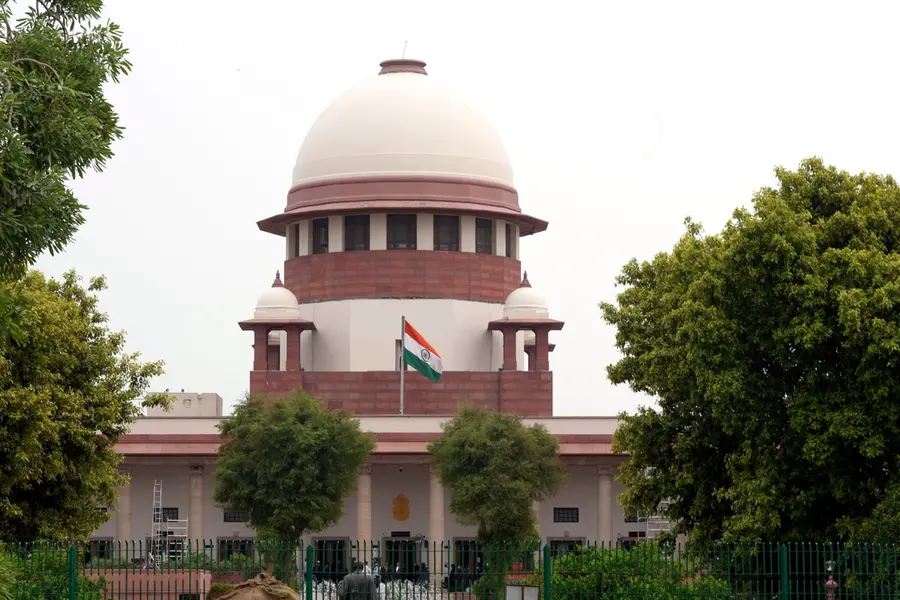
The Supreme Court has uploaded its formal order today, Thursday, August 20, 2026, officially establishing a five-member High-Powered Enquiry Committee (HPEC) to investigate the violent clashes that erupted in Delhi during recent student demonstrations.
Led by retired Supreme Court judge Justice R. Subhash Reddy, the HPEC has been tasked with examining allegations of severe police excesses as well as violence directed against security personnel.
Who is on the Justice Reddy Committee?
The newly formed HPEC is designed to bring a balance of legal wisdom and security experience. Sitting alongside Justice Reddy are Ravi Shankar Jha, former Chief Justice of the Punjab and Haryana High Court, and former Delhi High Court judge Justice Shalinder Kaur.
For investigative and administrative depth, the court selected former CBI Director Rishi Kumar Shukla and retired Meghalaya DGP Dr L.R. Bishnoi.
Importantly, neither the former CBI chief nor the retired DGP hails from any of the states involved in the conflict, ensuring a strictly impartial inquiry. Emphasising their rationale, the Supreme Court bench stated:
"This HPEC (High-Powered Enquiry Committee) has been constituted bearing in mind a wide variety of considerations, including the individual expertise and experience of each of its members, as well as the diversity of the committee, among other factors.
"We are confident that the recommendations of the HPEC will be of invaluable assistance to this Court, and the committee will be able to undertake a comprehensive assessment of all such issues as merit due contemplation," the bench said.
Scope and priorities of the inquiry
This is not a simple, one-off review. The apex court clarified that the HPEC's enquiry is to be a continuous and periodic process, requiring regular interim updates.
At the top of the committee's priority list is examining alleged targeted violence, harassment and molestation of female student protesters. Beyond this, the panel will scrutinise the use of pellet guns, electric batons, lathi charges and tear gas by security forces.
However, the investigation is not a one-way street. The HPEC must also report on the injuries sustained by the police, the emotional trauma suffered by their families, and the widespread damage caused to public assets. It will evaluate potential interim compensation for the injured on both sides.
To make it safe for people to speak out, the court is allowing complainants and witnesses to submit evidence anonymously, protecting their identities from potential backlash.
Safeguards and evidence preservation
For seamless communication, the Supreme Court has appointed three nodal officers: advocates Ashima Mandla, Daksh Kadian and Astha Singh.
In a move to secure the truth, the bench ordered all police and investigating agencies to preserve and submit every scrap of electronic evidence. This includes CCTV footage, drone recordings, body-worn cameras, wireless logs and PCR call records.
The court has also left room for internal accountability. The bench wrote:
"It is further clarified that the constitution of the HPEC by us shall in no way deter or debar the police authorities or other security forces from taking administrative or disciplinary action against such of their officers as may be found to be in contravention of the rules governing their conduct,"
Meanwhile, the court has reserved larger constitutional questions for itself. Crucially, issues regarding surveillance, facial recognition technology and privacy under Article 21 will be decided directly by the Supreme Court.
It is also looking into using its extraordinary powers under Article 142 to quash FIRs against innocent student protesters, noting that the issue concerns "the life and future of innocent students".
Funding, operations and next steps
The government has been directed to fund the entire initiative. Justice Reddy, as chairperson, will receive an honorarium, perks and facilities equivalent to a sitting Supreme Court judge, along with a transit stay in New Delhi.
Regarding the rest of the team's operations, the bench ruled:
"The Members of the HPEC shall be paid such honorarium, for their valuable time and effort, as may be determined/suggested by the Chairperson, the funds whereof shall be provided by the Union of India. The HPEC shall employ a Member Secretary as may be chosen by the Learned Chairperson.
"Similarly, requisite secretarial assistance shall be made available by the Union of India forthwith as per the requirements of the HPEC. We request the HPEC to complete its inquiry and deliberations on the issues and submit its 'First Interim Report' at the earliest,"
The protests began on June 20 at Jantar Mantar and culminated in the massive July 20 Parliament march organised by the Cockroach Janta Party (CJP) over paper leaks.
While student groups alleged brutal manhandling, the Delhi Police maintained that force was only used in self-defence after sections of the crowd threw stones.
This new committee is now tasked with separating fact from friction.
Published: 20 Aug 2026, 06:48 pm IST
Related Topics
Disclaimer: Kindly avoid objectionable, derogatory, unlawful and lewd comments, while responding to reports. Such comments are punishable under cyber laws. Please keep away from personal attacks. The opinions expressed here are the personal opinions of readers and not that of Mathrubhumi.
