
The Supreme Court has denied bail to Umar Khalid and Sharjeel Imam, observing that the evidence cited against them places the duo on a different footing from other accused in the Delhi riots case.
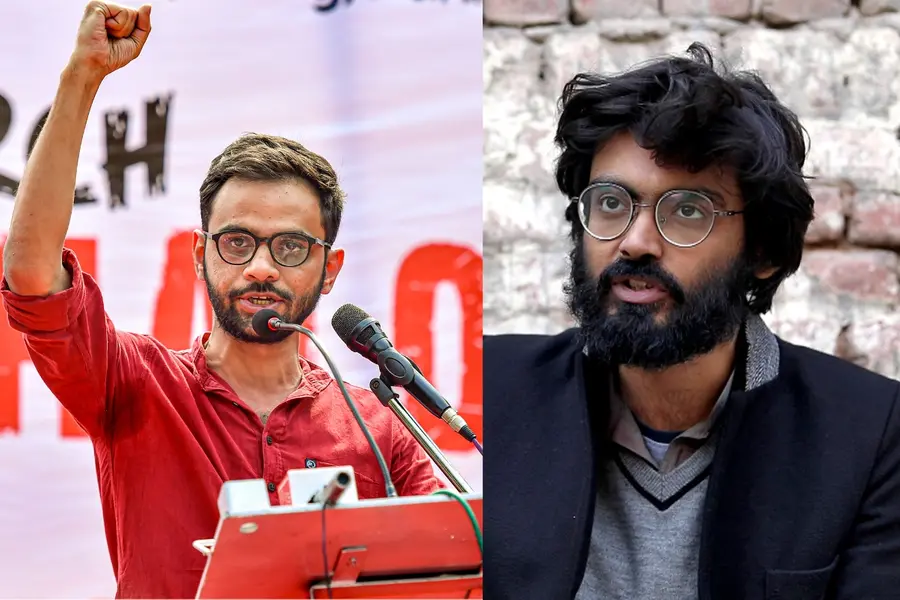
New Delhi: While rejecting their bail pleas, the Supreme Court noted that the prosecution material presented by the Delhi Police distinguishes Umar Khalid and Sharjeel Imam from other accused persons.
According to the police chargesheet, Khalid was described as the central figure in the alleged conspiracy, with Sharjeel Imam portrayed as his protégé.
Also Read

The prosecution relied on multiple forms of evidence, including alleged WhatsApp group chats used for coordination, judicial statements of protected witnesses, call detail records, and forensically verified video clips of speeches. Police placed on record a 720-second phone call between Umar Khalid, who was allegedly in Samastipur, Bihar at the time, and co-accused Natasha Narwal. Investigators also cited a series of calls exchanged among Khalid, Narwal and others following reports of the death of head constable Ratanlal during the violence.
With respect to Sharjeel Imam, police referred to a video clip in which he is allegedly heard making remarks advocating large-scale disruption and escalation of protests. The clip was submitted as part of the prosecution’s case to establish intent and mobilisation.
The chargesheet further alleged that Umar Khalid was present at Jamia Millia Islamia on December 15, 2019, when the first phase of violence broke out, leaving over 100 civilians and 45 police personnel injured. Statements recorded under Section 164 of the CrPC by protected witnesses, identified by code names, described Khalid and Imam as key figures allegedly directing activities on the ground.
Investigators claimed mobile location data corroborated Khalid’s presence at Shaheen Bagh on January 8, 2020, where he was allegedly seen entering an office with others. Police further alleged that Khalid addressed gatherings at protest sites in Seelampur in late January and subsequently held meetings where instructions were allegedly issued to stockpile weapons and materials used during riots.
The chargesheet also mentioned Khalid’s alleged presence at a protest organised at Jantar Mantar on February 10, 2020, and statements suggesting he encouraged wider participation. Towards the end of their submission, police argued that Khalid left Delhi on February 23, 2020, shortly before the riots erupted, claiming this was done to create an alibi.
The Supreme Court, after considering the prosecution material, concluded that the nature and volume of evidence warranted treating the bail pleas of Khalid and Imam differently from other accused, leading to the rejection of their applications.
Published: 06 Jan 2026, 07:57 pm IST
Disclaimer: Kindly avoid objectionable, derogatory, unlawful and lewd comments, while responding to reports. Such comments are punishable under cyber laws. Please keep away from personal attacks. The opinions expressed here are the personal opinions of readers and not that of Mathrubhumi.