
The latest ruling extends a long series of setbacks for the two activists.
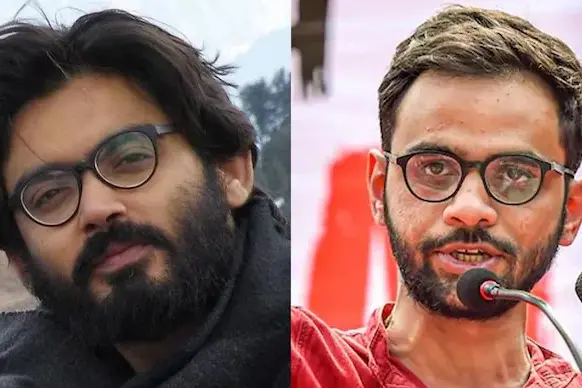
Activists Umar Khalid and Sharjeel Imam face continued imprisonment after the Supreme Court ruled today (Monday, January 5) that their roles were central to the 2020 Delhi riots conspiracy. While five co-accused were granted release, the top court maintained that the duo stands on a different legal level from their peers.
A bench consisting of Justices Aravind Kumar and NV Anjaria delivered the judgment after reserving their decision on 10 December 2025. The court ordered the release of Gulfisha Fatima, Meeran Haider, Shifa Ur Rehman, Mohd. Saleem Khan, and Shadab Ahmad under 12 strict conditions.
However, the judges refused bail for Khalid and Imam. The court noted that while the pair has been in jail for a long time, their detention does not breach constitutional mandates or the specific legal barriers set by the Unlawful Activities (Prevention) Act (UAPA).
A four-year legal marathon
This latest rejection follows a series of courtroom defeats beginning in March 2022, when a Sessions Court first dismissed Khalid’s bail application. The Delhi High Court followed suit in October 2022, stating there was enough initial evidence to suggest a criminal conspiracy.
The battle intensified in September 2025, when the High Court again rejected their pleas. Judges at that time described Khalid and Imam’s roles as grave, pointing to inflammatory speeches intended to trigger mass mobilization among the Muslim community.
The prosecution’s conspiracy theory
Throughout the proceedings, the Delhi Police argued that the 2020 violence was a pre-planned, pan-India conspiracy rather than a spontaneous protest. Prosecutors claimed the unrest was timed to match a visit from the then-US President to gain global media attention and force a regime change. They alleged the issue of the Citizenship Amendment Act (CAA) was used as a catalyst to hide a deeper plan for economic disruption.
The defence’s plea for liberty
Lawyers for the activists consistently attacked the five-year delay in starting a trial. They argued that the prosecution lacked proof of direct violence and relied on massive chargesheets and repeated witness statements to keep their clients in jail. Despite arguments that mere participation in WhatsApp groups is not a crime, the court held that the sheer volume of electronic and physical evidence warranted continued detention.
Impact of the 2020 violence
The case originates from the riots in north-east Delhi that left 53 people dead and over 700 injured. Khalid and Imam have been held under the Unlawful Activities (Prevention) Act since early 2020. Aside from today's ruling, their only relief has been brief, one-week interim bails to attend family weddings in 2022, 2024, and late 2025.
Published: 05 Jan 2026, 01:30 pm IST
Disclaimer: Kindly avoid objectionable, derogatory, unlawful and lewd comments, while responding to reports. Such comments are punishable under cyber laws. Please keep away from personal attacks. The opinions expressed here are the personal opinions of readers and not that of Mathrubhumi.
