
Supreme Court says it cannot direct Centre or states to legislate welfare measures for domestic workers.
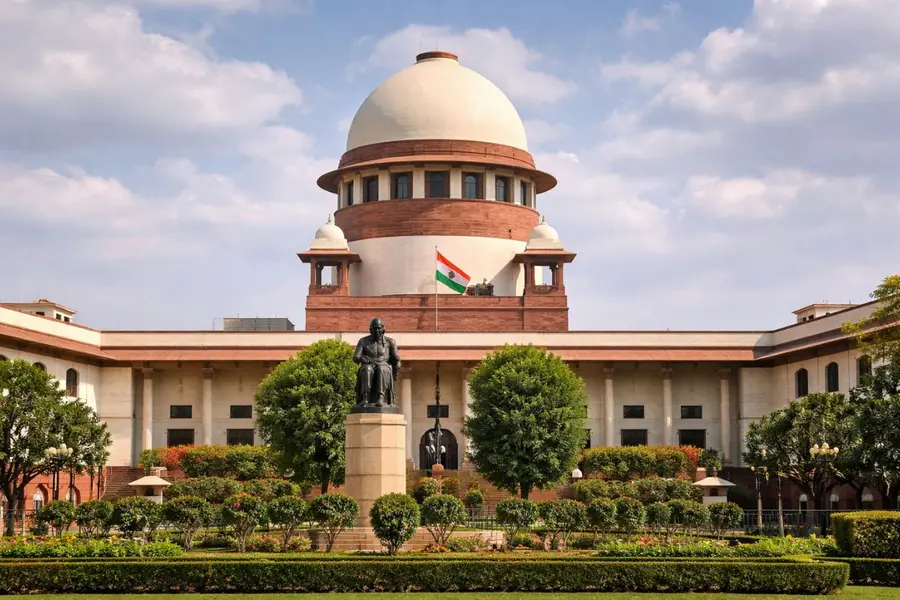
New Delhi: The Supreme Court on Thursday declined to entertain a public interest litigation seeking a comprehensive legal framework and mandatory minimum wages for domestic workers, holding that it cannot issue directions asking the Centre and states to amend or enact laws.
A bench comprising Chief Justice Surya Kant and Justice Joymalya Bagchi acknowledged the hardships faced by millions of domestic helps across the country but maintained that the judiciary cannot intrude into the legislative domain by mandating welfare legislation.
“No enforceable decree or order can be passed unless the legislature is asked to enact a suitable law. Such a direction we are afraid ought not to be issued by this court,” the bench said in its order while disposing of the petition.
During the hearing, the Chief Justice made strong observations on the role of trade unions, remarking, “How many industrial units in the country have been closed, thanks to trade unions? Let us know the realities. All traditional industries in the country, all because of these ‘jhanda’ unions have been closed, all throughout the country. They don't want to work. These trade union leaders are largely responsible for stopping industrial growth in the country.”
While noting that exploitation of workers exists, the CJI said there were alternative ways to address it. “Of course exploitation is there, but there are means to address exploitation. People should have been made more aware of their individual rights, people should have been made more skilled, there were several other reforms which should have been done,” he said.
The court cautioned against judicial overreach in economic and labour policy matters, with the CJI warning of unintended consequences. “Once minimum wages are fixed, people may refuse to hire. Every household will be dragged into litigation,” he said, adding that trade union models had not always succeeded across sectors.
The bench, however, permitted the petitioners — including domestic workers’ union Penn Thozhilalargal Sangam — to continue engaging with the Centre and state governments. “We observe that petitioners may continue to highlight the plight of domestic helps and impress upon the stakeholders to take a final call in relation thereto… and the correspondence shows it is under active consideration by states,” the court said.
Justice Bagchi noted that domestic workers were not entirely without protection. “It is not as if there is no safety net. The Unorganised Workers' Social Security Act does take care of several aspects,” he said, while describing the concerns raised as “well taken”.
The bench also flagged the role of employment agencies in the exploitation of domestic workers and rejected the plea seeking a declaration that non-payment of minimum wages violates Articles 14, 15 and 16 of the Constitution, calling such reliefs legislative in nature.
“All your prayers are legislative in nature. No effective decree can be passed unless the legislature is asked to enact a suitable law, which we are afraid this court cannot do,” the bench said.
Senior advocate Raju Ramachandran, appearing for the petitioners, argued that domestic workers — most of them women — remain among the most vulnerable sections of the unorganised workforce and pointed to international safeguards in countries such as Singapore. He also cited a Supreme Court judgment of January 29, 2025, which had acknowledged repeated, but unsuccessful attempts to frame a comprehensive law for domestic workers.
PTI
Published: 29 Jan 2026, 03:06 pm IST
Related Topics
Disclaimer: Kindly avoid objectionable, derogatory, unlawful and lewd comments, while responding to reports. Such comments are punishable under cyber laws. Please keep away from personal attacks. The opinions expressed here are the personal opinions of readers and not that of Mathrubhumi.
