
The Supreme Court imposed a symbolic Rs 3 lakh cost on Samay Raina, Ranveer Allahbadia and Ashish Chanchlani, criticised their conduct in the disability remarks case and asked the Centre to consider a stricter law to protect persons with disabilities.
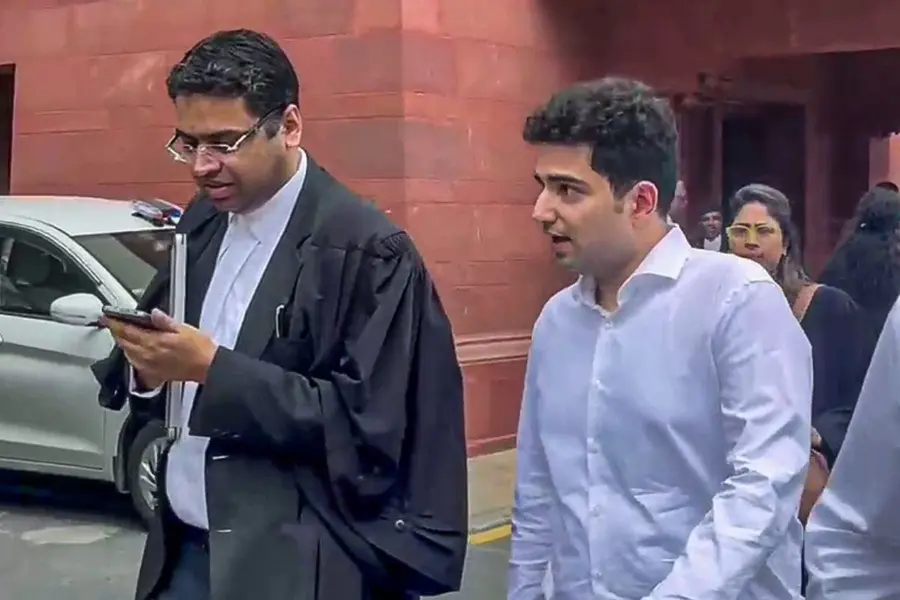
New Delhi: The Supreme Court on Tuesday imposed a cost of Rs 3 lakhs each on comedian Samay Raina and YouTubers Ranveer Allahbadia and Ashish Chanchlani, holding that they had "taken the court for a ride" in a case concerning remarks about persons with disabilities.
The top court came down heavily on the influencers after finding that its earlier directions had not been complied with, while also highlighting that public figures must exercise greater responsibility given their influence over millions of people.
The order was passed by a Bench comprising Chief Justice Surya Kant and Justices Joymalya Bagchi and V. Mohana after the court was informed that Raina had not invited persons with disabilities to participate in his show despite an earlier order.
The case arises from a petition filed by the Cure SMA India Foundation, which alleged that Raina made insensitive remarks about the high cost of treatment for Spinal Muscular Atrophy (SMA) and mocked a person living with the rare genetic disorder during one of his shows. The petition also names content creators Vipun Goyal, Balraj Paramjeet Singh Ghai, Sonali Thakkar and Nishant Jagdish Tanwar.
Earlier in the proceedings, the Supreme Court had directed five social media influencers, including Raina, to issue an unconditional public apology on their platforms for remarks that ridiculed persons with disabilities and those suffering from rare genetic disorders. It had also suggested that they use their platforms to promote awareness by inviting specially abled persons to their shows and helping generate support for the treatment of rare diseases such as SMA.
However, during Tuesday's hearing, senior advocate Aparajita Singh, appearing for Cure SMA India Foundation, informed the Bench that Raina had neither contacted the organisation nor invited any of its members to participate in his programmes. She argued that despite the court's directions, no meaningful effort had been made to engage with the community affected by the remarks.
Expressing strong displeasure, the Bench observed that it had no reason to believe Raina had honoured the assurances given before the court. It further noted that while it was claimed that a compliance affidavit had been filed, no such affidavit was available on record.
"The misconduct is sought to be compounded by stating that a compliance affidavit was filed yesterday, however, no affidavit has been filed," the bench said.
Making pointed observations on the conduct of influencers, Chief Justice Surya Kant remarked that some people appeared to believe they were beyond the jurisdiction of Indian courts while staying abroad.
"Let them suffer now. If this is not arrogance, then we have to change the Oxford dictionary also," the CJI observed, adding, "In public life, the more you respect others, the more respect you earn. You don't humiliate people."
Appearing for the Centre, Solicitor General Tushar Mehta supported the concerns raised by the petitioner and said India's youth had far better role models to look up to. Referring to Raina's recent performances, Mehta argued that the comedian's actions reflected a disregard for the spirit of the court's earlier directions.
"Recently, he (Raina) started a new show where he mocked the system without naming anyone. He said at the beginning, I am doing something which I didn't do in the last series.
"He hangs nimbu and mirchi. He did not name anyone, but it was quite visible. I did not want to go into it but if he (Raina) has not contacted SMA Foundation/persons suffering from SMA then this shows his arrogance," Mehta said.
Beyond the immediate case, the Supreme Court also indicated that stronger legal safeguards may be required to protect the dignity of persons with disabilities. The Bench asked the Central government to examine the possibility of enacting a law that specifically criminalises derogatory remarks targeting persons with disabilities and individuals suffering from rare genetic disorders, drawing parallels with legal protections available under the Scheduled Castes and Scheduled Tribes (Prevention of Atrocities) Act.
The court also issued fresh directions aimed at promoting awareness and inclusion. It asked Raina and the other comedians involved in the case to organise two programmes every month showcasing the achievements and success stories of persons with disabilities. The initiative, the court said, should help create greater public awareness while encouraging financial support for the treatment of people living with SMA and other rare diseases.
With PTI inputs
Published: 14 Jul 2026, 06:05 pm IST
Disclaimer: Kindly avoid objectionable, derogatory, unlawful and lewd comments, while responding to reports. Such comments are punishable under cyber laws. Please keep away from personal attacks. The opinions expressed here are the personal opinions of readers and not that of Mathrubhumi.
