
The Supreme Court has sought an explanation from Greater Noida authorities after a student who joined the CJP protest received a Rs 5 lakh personal bond notice despite the court's earlier protection for student protesters.
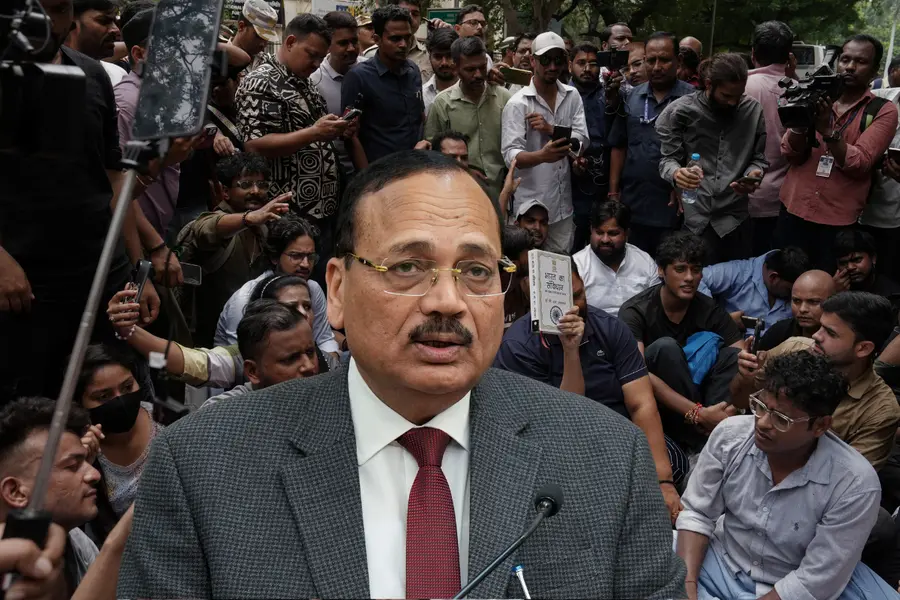
New Delhi: The Supreme Court on Wednesday questioned how a Greater Noida executive magistrate could issue a notice seeking a Rs 5 lakh personal bond from a Gautam Buddha University student who participated in the CJP-led Jantar Mantar protest, despite an earlier court order protecting students from penal action.
Supreme Court questions Greater Noida magistrate
Also Read

A three-judge bench headed by Chief Justice of India Surya Kant criticised the issuance of the notice to Gautam Buddha University student Akshat Tripathi.
The matter was mentioned before the bench by Senior Advocate Biswajeet Bhattacharya, who argued that the notice was contrary to the Supreme Court's earlier directions.
CJI Surya Kant said the court had already issued a clear order that no penal action should be taken against students who participated in the protests.
The CJI questioned how the magistrate could issue such a notice despite the court's directions and said the Supreme Court would seek an explanation from the official.
The bench also comprised Justices Joymalya Bagchi and V Mohana.
Why was the student issued a notice?
According to the police report cited in the case, Tripathi was accused of spreading and instigating what authorities described as anti-government and misleading statements among university students and encouraging them to participate in the CJP-led protest.
The authorities claimed that his activities could create tension and lead to fighting or a breach of peace.
The Executive Magistrate issued the notice on September 4 under Section 130 of the Bharatiya Nagarik Suraksha Sanhita (BNSS), asking Tripathi to show cause why he should not be required to furnish a personal bond of Rs 5 lakh along with two sureties of Rs 5 lakh each.
The notice was subsequently revoked.
Tripathi has denied the allegations and said he had participated in the protest peacefully. He also said he was not attending university classes during the period.
Lawyer alleges contempt
Bhattacharya described the action as an “experiment” involving students and argued that authorities could not create fear among students through such proceedings.
He further submitted that withdrawing the notice did not automatically erase an alleged violation of the Supreme Court's order and argued that contempt had already occurred.
Justice Joymalya Bagchi questioned whether any cause of action remained after the notice had been withdrawn.
The Supreme Court has asked that the facts and the notice be placed on record and indicated that it would seek an explanation from the Greater Noida authority.
What did the Supreme Court order earlier?
On September 1, the Supreme Court had quashed FIRs registered against students who participated in the CJP-led protests between July 20 and 25.
The court had invoked Article 142 of the Constitution, citing the future prospects of young protesters, and directed that criminal proceedings against the students be closed.
The court had also directed the Centre to provide compensation within three months to the families of students who died by suicide over the NEET paper leak.
July 20 protest and violence
The CJP-led protest began on June 20 over alleged irregularities related to NEET. The July 20 march towards Parliament in Delhi resulted in clashes between protesters and security personnel.
Police used lathis and tear gas to disperse protesters attempting to move towards Parliament.
The subsequent Supreme Court proceedings resulted in protection for students involved in the protests and the closure of criminal proceedings covered by the court's September 1 order.
The latest dispute centres on the scope and implementation of the Supreme Court's protection for student protesters. While the Greater Noida notice was later withdrawn, the Supreme Court is now examining whether issuing it in the first place was inconsistent with its earlier directions.
The key issue is therefore not simply whether the notice remains active, but whether an executive authority can initiate proceedings against a student when the Supreme Court has expressly directed that students covered by its order should not face penal action.
The court's decision after receiving the Greater Noida authority's explanation could clarify how lower authorities are expected to implement the September 1 directions and what consequences may follow if such orders are allegedly disregarded.
Published: 09 Sept 2026, 02:23 pm IST
ABOUT THE AUTHOR
Related Topics
Disclaimer: Kindly avoid objectionable, derogatory, unlawful and lewd comments, while responding to reports. Such comments are punishable under cyber laws. Please keep away from personal attacks. The opinions expressed here are the personal opinions of readers and not that of Mathrubhumi.