
The plea stemmed from a proposed mosque in Murshidabad, West Bengal, by a former TMC lawmaker.
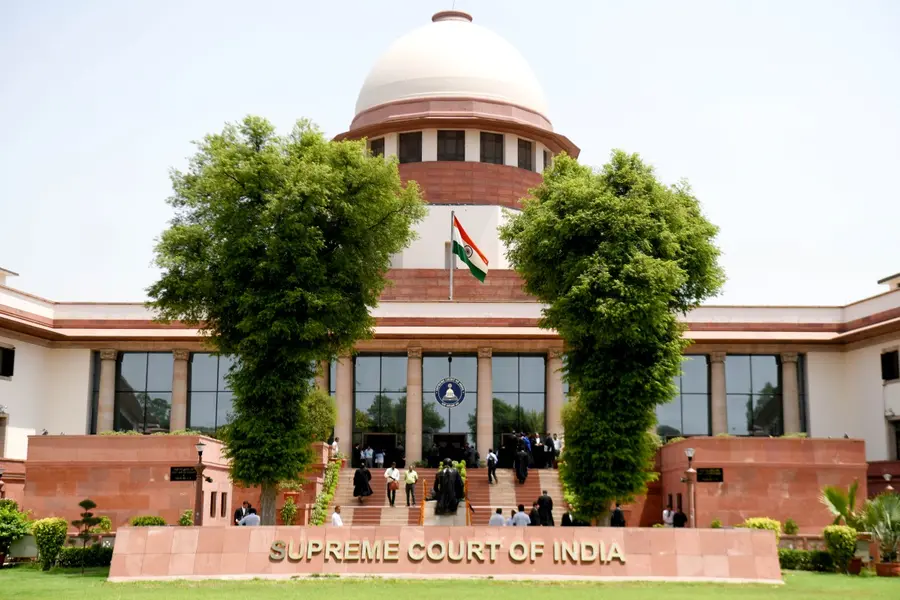
New Delhi: The Supreme Court on Friday dismissed a petition seeking to block the construction or naming of any mosque after the Mughal emperor Babur, rejecting arguments that such structures honour a "cruel invader."
A bench of Justices Vikram Nath and Sandeep Mehta declined to entertain the plea after a brief hearing, during which the petitioner’s counsel specifically flagged a project in Murshidabad, West Bengal. The lawyer argued that Babur was an "anti-Hindu invader" responsible for historical atrocities, making the use of the "Babri Masjid" name inappropriate for new religious sites.
The court, showing little inclination to engage with the merits of the case, reiterated its dismissal multiple times. "We have said 'dismissed' three times by now. You should get the message and stop arguing now," Justice Nath remarked before allowing the petitioner to withdraw the plea.
The Murshidabad Controversy
The legal challenge was prompted by the activities of Humayun Kabir, a suspended Trinamool Congress (TMC) lawmaker and chief of the newly formed Janata Unnayan Party. On Dec. 6, 2025, the anniversary of the 1992 demolition of the original Babri Masjid in Ayodhya, Kabir laid the foundation stone for a replica mosque in Beldanga, Murshidabad.
Kabir has remained defiant in the face of five legal cases filed against him, asserting that the project is protected under India's secular framework.
“Five cases have been filed against me, but no one can stop someone with whom Allah is," Kabir said. "The court has also clearly stated that it is written in the Constitution of India that one can build a mosque; it is a right."
The former legislator further defended his actions by citing religious parity. "As anyone can make a temple or church, so can I," he added, noting that the 37% Muslim population in West Bengal would ensure the project's completion.
A Multipurpose Complex
Beyond the religious structure, Kabir has framed the project as a broader social initiative for the district. On Jan. 2, he detailed plans for a modern complex that includes educational and medical facilities.
"A Babri Masjid will be built here, a hospital will be built, a university will be built, and facilities will be created for the benefit of the people," Kabir announced during a public event in Murshidabad.
The Supreme Court's refusal to intervene mirrors an earlier decision by the Calcutta High Court, which declined to halt the foundation ceremony last December, ruling that the maintenance of law and order remained the responsibility of the state government. Construction on the site, which reportedly spans 11 bighas of land, is currently underway.
With inputs from ANI
Published: 20 Feb 2026, 12:41 pm IST
Related Topics
Disclaimer: Kindly avoid objectionable, derogatory, unlawful and lewd comments, while responding to reports. Such comments are punishable under cyber laws. Please keep away from personal attacks. The opinions expressed here are the personal opinions of readers and not that of Mathrubhumi.
