
The Centre says the century-old Qadeemi Masjid at Krishi Bhawan must be removed for the Central Vista project, arguing that permanent religious structures are incompatible with government premises. The mosque committee wants a prayer facility to continue, and the Delhi High Court will hear the matter on November 23.
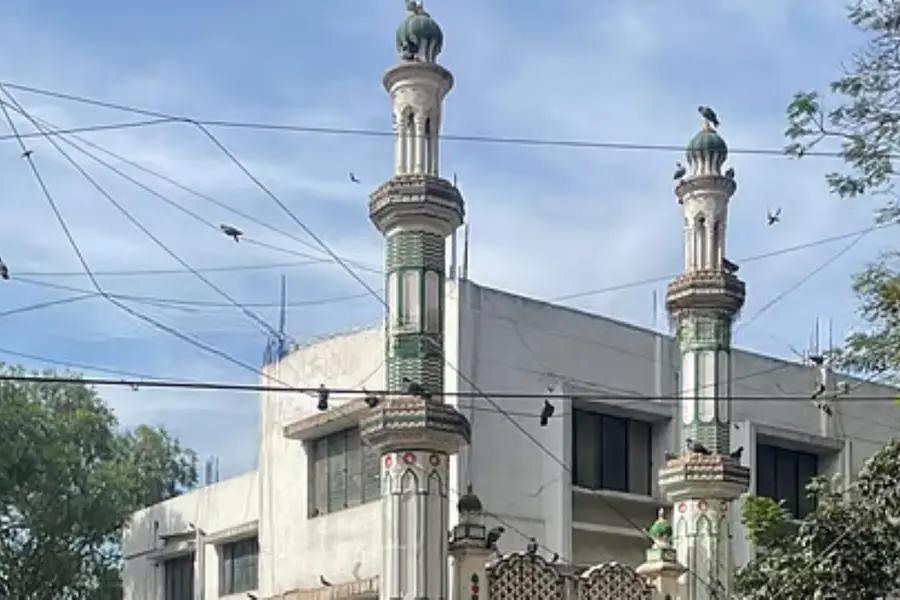
New Delhi: The Centre has opposed the preservation of the historic Qadeemi Masjid inside Krishi Bhawan in New Delhi, telling the Delhi High Court that the mosque must be removed as part of the Central Vista redevelopment project.
In an affidavit filed before the court, the government argued that Krishi Bhawan and the Central Secretariat complex are secular government premises meant exclusively for administrative, governmental and public service activities.
The Centre maintained that retaining a permanent religious structure within a central government office complex is "impermissible and incompatible with the secular character of Government property".
Why does the Centre want the mosque removed?
The government said the Central Vista Redevelopment Master Plan involves rebuilding Common Central Secretariat Buildings 4 and 5 at Plot No. 120, replacing the existing Shastri Bhawan and Krishi Bhawan.
According to the Centre, the redevelopment is intended to modernise infrastructure required for national governance.
The affidavit stated that Qadeemi Masjid is located within the Krishi Bhawan compound on Dr Rajendra Prasad Road, on government land administered by the Land and Development Office (L&DO).
The government also argued that the mosque's managing committee had been granted only permissive possession under an agreement dated November 8, 1940. It said the arrangement did not give the committee any ownership rights or legal interest in the land.
On this basis, the Centre rejected the committee's request to preserve the mosque or provide alternative land for its relocation.
ALOS READ| 23 Indians killed in West Asia conflict, five in Black Sea attacks: MEA
What did the mosque committee tell the court?
The caretaking committee of Qadeemi Masjid approached the Delhi High Court after expressing apprehension that the historic structure could be demolished during the Central Vista redevelopment.
The committee clarified during an earlier hearing that it was not seeking to stop or delay the redevelopment project. Instead, it wanted a prayer facility to continue within the newly planned government buildings.
Senior advocate Salman Khurshid, appearing for the petitioners, argued that the committee was seeking a reasonable and nearby arrangement to ensure that worship could continue.
He invoked Article 25 of the Constitution, which guarantees freedom of conscience and the right to freely profess, practise and propagate religion, subject to constitutional limitations.
However, the Centre argued that Article 25 does not provide a right to insist on worship at a particular location, especially when the land is government property held under a permissive arrangement.
Centre says another mosque is located nearby
Responding to concerns about access to a place of worship, the government told the court that another mosque is situated within a two-kilometre radius of Krishi Bhawan.
It argued that the facility is functional and can serve as a nearby place of worship for people working in the area.
The Centre also maintained that public land within a central administrative zone cannot be permanently reserved for religious purposes.
Why is Qadeemi Masjid significant?
Qadeemi Masjid is believed to be more than 100 years old and is situated inside the Krishi Bhawan complex, which is scheduled for redevelopment.
The mosque is reported to have existed before the construction of the government complex and historically served as a place of worship for Muslim employees working at Krishi Bhawan and nearby government offices.
The Delhi Waqf Board notified the mosque as a Waqf property in 1970, adding another dimension to the dispute over its proposed removal.
The mosque committee's petition has therefore raised questions about the treatment of an existing religious structure on government land during large-scale redevelopment.
ALSO READ | Bengaluru-Mumbai Vande Bharat Sleeper menu: What passengers get for breakfast and dinner
What happens next?
During the November 2 hearing, Justice Anish Dayal asked the Centre whether any specific rules prohibit providing space for prayer for a particular community within government premises.
The judge asked the government's counsel, advocate Nishant Gautam, to convey the question to the Additional Solicitor General representing the Centre.
The matter is scheduled for its next hearing on November 23.
The court's consideration of the Centre's arguments, the mosque committee's claims and the availability of prayer facilities will be important in determining the future of Qadeemi Masjid.
Religious freedom versus redevelopment of government land
The dispute raises questions about how religious freedom under Article 25 applies to places of worship situated on government land.
Article 25 protects the right to practise religion, but the extent of that protection in relation to a specific place of worship can involve questions of land ownership, historical use and the nature of the arrangement under which the religious structure exists.
The Centre's position is that the mosque committee has no ownership rights over the land and cannot demand that a religious structure be retained within a government administrative complex. It has also argued that the availability of another mosque nearby addresses concerns about access to a place of worship.
The petitioners, meanwhile, are seeking continuity of a prayer facility rather than an end to the redevelopment project.
The Delhi High Court's question about whether government rules prohibit providing prayer space to a particular community is significant because it seeks clarification on the policy governing religious facilities within government premises.
The case also brings the historical status of the mosque and its Waqf notification into focus. The court's eventual decision will have to consider the competing legal claims and the specific circumstances of the arrangement involving the property.
Published: 03 Nov 2026, 06:57 pm IST


ABOUT THE AUTHOR

Related Topics
Disclaimer: Kindly avoid objectionable, derogatory, unlawful and lewd comments, while responding to reports. Such comments are punishable under cyber laws. Please keep away from personal attacks. The opinions expressed here are the personal opinions of readers and not that of Mathrubhumi.