
Thousands protest in Mumbai and Delhi, demanding CEC Gyanesh Kumar's resignation over alleged voter-list irregularities.
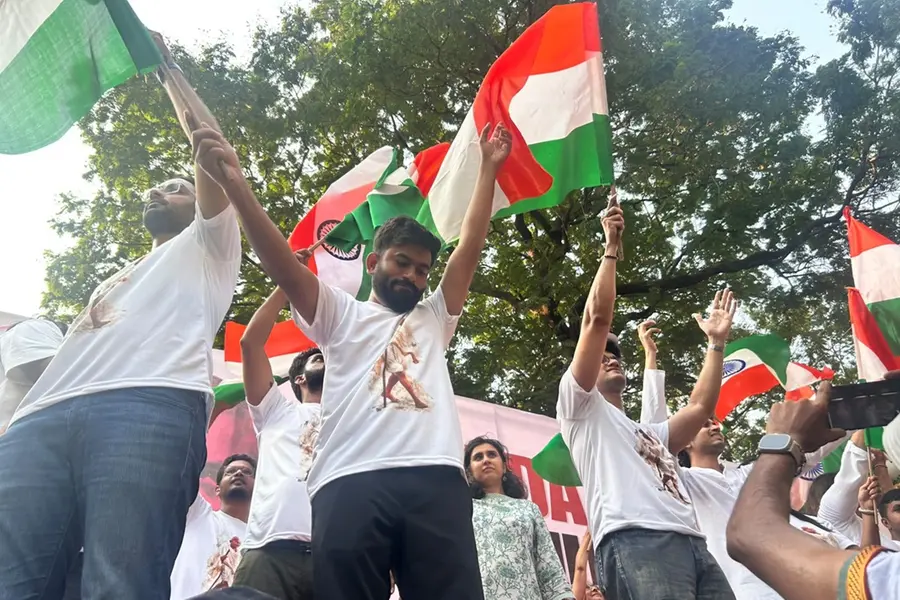
Thousands of protesters took to the streets of Mumbai and New Delhi on Friday, October 2, demanding the immediate resignation of Chief Election Commissioner Gyanesh Kumar over alleged voter-list irregularities. Organised by the Cockroach Janta Party—a youth-led satirical movement that originated online in May—this new wave of demonstrations marks the official launch of the campaign's second phase. Dubbed Season 2, the agitation comes four months after the group established its initial support base during demonstrations in the national capital.
That earlier campaign at Delhi's Jantar Mantar achieved a notable political victory when Union Education Minister Dharmendra Pradhan stepped down amidst widespread public anger over examination discrepancies. Having established its ability to mobilise public pressure on specific policy failures, the youth movement has now shifted its focus directly toward the constitutional authority managing India's elections. Accusing the poll body of partisan conduct and improper voter-roll revisions, the group is insisting that the chief commissioner must step aside.
Symbolic timing and the strategic shift to Mumbai
The choice of October 2 carries intentional historical resonance, aligning with the birth anniversary of Mahatma Gandhi. Earlier in the day, movement convenor Abhijeet Dipke offered floral tributes at Gandhi's statue in south Mumbai. When local police denied permission for the afternoon demonstration at Shivaji Park, citing traffic concerns, noise restrictions, and a lack of civic permits, organisers pointed to anti-colonial history, noting that Mahatma Gandhi never waited for permission from British authorities when launching civil disobedience.
Beyond the symbolic date, moving the epicentre of the campaign from Delhi to Mumbai reflects calculated political strategy. Mumbai was the birthplace of the 1942 Quit India Movement at Gawalia Tank, lending significant historical weight to mass mobilisations. Furthermore, organisers explicitly highlighted regional political sentiments, observing that Maharashtra historically acts as a safeguard for national governance. Political strategists also note that holding further large-scale demonstrations in Delhi faced severe security hurdles, as authorities there were far more prepared to contain repeat street protests.
By establishing a fresh mobilisation centre in India's financial capital, the group aims to tap into lingering public frustration following recent electoral shifts in the state. In the May 2024 parliamentary elections, the opposition alliance secured 30 out of Maharashtra's 48 seats, whereas the ruling coalition won only 17 seats. However, during the assembly elections held just five months later in November, the ruling alliance achieved a dramatic victory, securing 230 out of 288 seats. Movement leaders questioned how political fortunes could transform so thoroughly within such a short window.
Controversy over voter rolls and commission rifts
The immediate catalyst for this second season of protests was a series of investigative media reports detailing significant anomalies in voter registration lists alongside internal friction within the Election Commission. Data cited by opposition figures reveals that while approximately 32 lakh voters were added to Maharashtra's rolls across five years between 2019 and 2024, an extraordinary 39 lakh voters were added in the brief five-month gap between the parliamentary and assembly elections. Allegations of systematic vote manipulation subsequently prompted calls for administrative accountability.
Fueling public suspicion further, investigative reports revealed that two election commissioners, Sukhbir Singh Sandhu and Vivek Joshi, had formally registered written objections on at least 14 separate occasions over ten months regarding voter revision orders issued without their prior knowledge. Although the poll body issued a statement clarifying that all decisions regarding electoral roll revisions were taken unanimously by its three-member panel, the explanation failed to stem public anger. The youth movement continues to demand the poll chief's resignation, full transparency in future appointments to the commission, and an immediate freeze on the 2025 voter lists to prevent further revisions.
Crowd composition, prominent supporters, and local opposition
Despite heavy police barricades at Shivaji Park and heightened security around nearby Dadar railway station, thousands of young demonstrators carrying the national flag and protest placards gathered near Gate 6 on Friday afternoon. The crowd drew several prominent cultural figures, including veteran actors Naseeruddin Shah and Shabana Azmi, alongside popular singer Vishal Dadlani. Regional political groups, including Shiv Sena (UBT) and the Maharashtra Navnirman Sena, extended formal support to the gathering.
The demonstration nevertheless encountered visible local pushback. A parallel counter-protest emerged near the park, organised by a group styling themselves as Gen Next Mumbai, while several neighbourhood residents expressed frustration over traffic disruptions. Meanwhile, Maharashtra Chief Minister Devendra Fadnavis warned that individuals participating in unauthorised protests would face three days in jail before obtaining bail. In response, organisers openly mocked the administration's warnings by referencing the chief minister's own well-known campaign catchphrase regarding political comebacks.
Parallel action in Delhi and the road ahead
While Mumbai served as the primary launching pad for Season 2, parallel demonstrations took place at Jantar Mantar in New Delhi. Police deployed extensive barricades, detained opposition politicians, and temporarily suspended mobile internet services across the central protest zone. Affected citizens at the Delhi rally recounted how the sudden deletion of their names from voter rolls stripped them of fundamental rights and cut off access to vital government welfare benefits. Despite police detaining demonstrators and dropping them miles away on the city outskirts, many advocate and student protesters walked back on foot to resume their sit-in.
Organisers have clarified that Friday's rallies mark only the beginning of an extended nationwide campaign. The movement plans to hold a march to the Election Commission headquarters in New Delhi on Tuesday, followed by countrywide rallies. The agitation will then tour major state capitals—including Kolkata, Goa, Bengaluru, and Ranchi—before culminating in a sustained sit-in back at Delhi's Jantar Mantar until their administrative demands are met.
Published: 02 Oct 2026, 06:17 pm IST
Related Topics
Disclaimer: Kindly avoid objectionable, derogatory, unlawful and lewd comments, while responding to reports. Such comments are punishable under cyber laws. Please keep away from personal attacks. The opinions expressed here are the personal opinions of readers and not that of Mathrubhumi.
